

Support Activities for Forestry
Support Activities for Forestry provide timber cruising, forest inventory, reforestation, fire-break construction, brush clearing, logging road maintenance, and wildfire suppression services under contract to landowners, timber companies and government agencies. The specialists turn landowner requests into permitted work plans, inventory data into harvest or treatment schedules, daily crew assignments into equipment and supply orders, and completed fieldwork into billing and compliance reports. Crew certifications, equipment inspections, environmental permits and safety logs remain with the field supervisor.
What makes this business different
- Seasonal wildfire and planting windows that shift with weather, snowmelt and fire danger ratings
- Permits for prescribed burns, herbicide application, road building and wetland crossings that must be secured before crews mobilize
- Remote job sites with no cell service requiring paper maps, satellite communicators and daily check-in protocols
- Heavy equipment such as feller-bunchers, skidders, masticators and chippers that require daily pre-use inspections and transport permits
- Crew certifications including wildland firefighter quals, chainsaw operator cards, first aid and pesticide applicator licenses
- Detailed daily time, equipment hours, fuel use and chemical application logs for government invoicing
- Landowner and agency approvals at multiple stages before any ground disturbance
- Inventory of seedlings, fencing, herbicide, fuel and safety gear that must be staged at remote drop points
Specialist bots
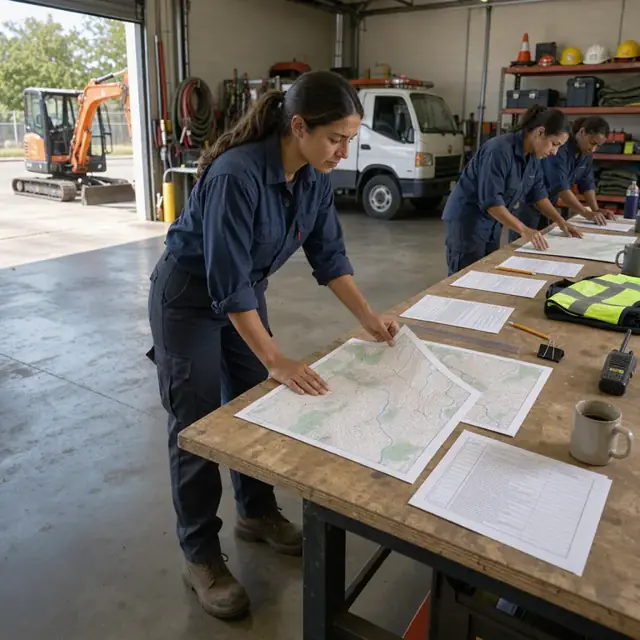
Request Intaker
Convert incoming landowner or agency requests into scoped project tasks with initial feasibility checks.
Works in: Ambitious Tasks, Ambitious Docs, Email Buckets · Workflows: Client request intake and scoping
Automates
- Parses request details and attaches maps
- Checks against seasonal and regulatory calendars
- Drafts scope and estimate documents
- Creates standardized project task
Stops for a person
- The operations manager approves all estimates before sending
- Field supervisor confirms site access feasibility

Permit Coordinator
Assemble and track all environmental permits, applications and supporting documentation required before field work begins.
Works in: Ambitious Docs, Ambitious Tasks, Ambitious Sheets · Workflows: Permit and environmental compliance preparation
Automates
- Identifies required permits by treatment and location
- Populates application templates with project data
- Maintains a master permit calendar with deadlines
- Organizes maps and survey reports into submission packets
Stops for a person
- The field supervisor reviews all technical content before submission
- People sign and submit official permit applications
- Agency responses and conditions are interpreted by licensed staff

Timber Cruise Verifier
Process plot data from field cruisers to produce stand volume reports and treatment maps.
Works in: Ambitious Sheets, Ambitious Docs, Process Optimizer · Workflows: Timber cruise and forest inventory
Automates
- Calculates per-plot volumes and defects
- Generates stand-level summaries and statistical checks
- Produces color-coded treatment priority maps
- Flags plots needing re-measurement
Stops for a person
- The certified cruiser reviews all final volume reports
- Landowner or forester approves inventory before harvest planning

Treatment Scheduler
Match crew qualifications, equipment and weather windows to create daily and weekly treatment schedules.
Works in: Ambitious Sheets, Ambitious Tasks · Workflows: Treatment and crew scheduling
Automates
- Aligns crew certifications to required tasks
- Builds weekly schedules accounting for travel and weather
- Generates daily job hazard and safety briefing templates
- Tracks supply staging locations
Stops for a person
- The crew foreman approves each day's assignment
- Operations manager adjusts schedule for changing fire conditions

Dispatch Coordinator
Prepare daily crew packets, verify certifications and equipment readiness, and notify landowners of arrival.
Works in: Ambitious Tasks, Ambitious Docs, Ambitious Sheets · Workflows: Daily crew dispatch and mobilization
Automates
- Checks crew qualifications against daily requirements
- Generates equipment inspection checklists
- Prepares maps, work orders and satellite communicator assignments
- Drafts landowner notification messages
Stops for a person
- Crew foremen perform and sign all equipment inspections
- A person makes final go-no-go decision based on weather and fire indices
- All official notifications are sent by licensed staff

Field Reporter
Compile daily field logs, application records, photos and progress data into standardized daily reports.
Works in: Ambitious Tasks, Ambitious Docs, Ambitious Sheets · Workflows: Field execution and daily reporting
Automates
- Aggregates hours, acres treated and equipment data
- Formats chemical application and weather logs
- Organizes timestamped site photos
- Flags incomplete or out-of-compliance entries
Stops for a person
- Crew foremen review and correct all daily reports before submission
- The safety officer reviews every incident or near-miss entry
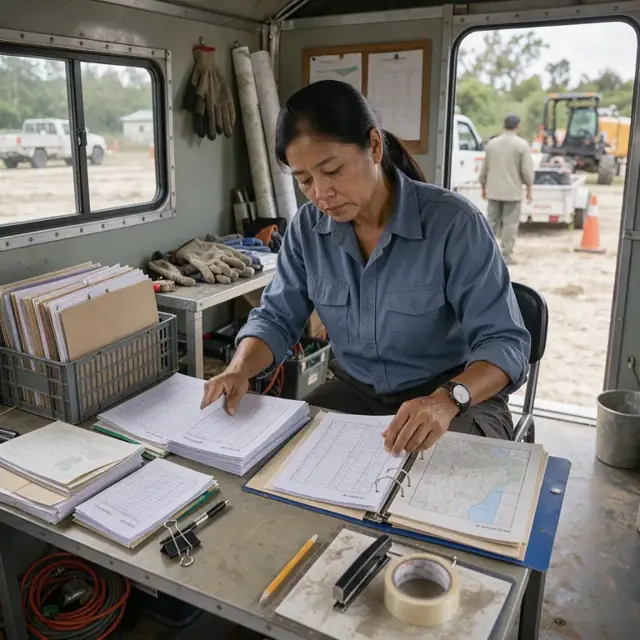
Billing and Compliance Administrator
Assemble project logs into invoices, progress reports and contract closeout documentation for agency and landowner approval.
Works in: Ambitious Sheets, Ambitious Docs, Ambitious Tasks · Workflows: Billing, reporting and compliance closeout
Automates
- Calculates billable units from daily logs
- Generates progress and as-built maps
- Organizes all required compliance attachments
- Tracks contract balances and renewal dates
Stops for a person
- The project manager approves every invoice before sending
- Field supervisor confirms accuracy of all treatment records
- People perform final agency acceptance inspections
Workflows
Client request intake and scoping
Starts when: A landowner, timber company or agency sends a request for cruising, treatment or suppression support
- Capture location, acreage, desired treatment type, timeline and access constraints
- Check against current fire danger, seasonal windows and existing permits
- Draft a scope of work and cost estimate for review
- Create a project task with maps and landowner contacts
- Schedule initial site visit or aerial review
Watch for: Remote sites may require landowner escort for first visit; Fire danger ratings can close windows with less than 24 hours notice
Permit and environmental compliance preparation
Starts when: After scoping is approved or on seasonal renewal dates
- Identify required federal, state and local permits for the treatment type
- Assemble boundary maps, species lists, cultural resource buffers and wetland delineations
- Draft permit applications and supporting documents
- Track submission dates, agency review periods and expiration dates
- Maintain a master calendar of all active permits
Watch for: Some permits require 30-90 day lead times and public comment periods; Cultural and endangered species surveys must often be performed by qualified specialists
Timber cruise and forest inventory
Starts when: Before harvest planning or reforestation projects
- Load plot grid and sample protocols into field tablets
- Record tree species, DBH, height, defect and volume estimates per plot
- Upload plot data and calculate stand-level summaries
- Flag areas needing special treatment or protection
- Produce volume reports and maps for landowner approval
Watch for: Plots are often located off-trail in steep or dense terrain; Data must be accurate enough for contract cruising payment
Treatment and crew scheduling
Starts when: After permits are secured and weather window opens
- Match crew certifications and equipment to treatment type and terrain
- Build daily and weekly crew assignments with travel times
- Stage seedlings, fuel, herbicide and safety supplies at drop points
- Draft daily safety briefings and job hazard analyses
- Adjust schedule for changing fire danger and precipitation forecasts
Watch for: Crew size and equipment must match slope and soil limitations; Daily crew check-in locations change with operational area
Daily crew dispatch and mobilization
Starts when: Each morning before crews leave the yard
- Verify all crew members have current certifications and PPE
- Complete pre-use equipment inspection checklists
- Issue satellite communicators, maps and daily work orders
- Confirm transport permits and fuel loads for heavy equipment
- Send landowner notification of crew arrival windows
Watch for: Wildland fire crews follow strict mobilization time standards; Equipment transporters require oversized load permits on public roads
Field execution and daily reporting
Starts when: Crews arrive on site
- Record start and stop times, equipment hours and crew hours
- Log herbicide or pesticide application rates, weather conditions and buffer compliance
- Photograph completed work and any unexpected conditions
- Report daily acres treated or volume cruised
- Upload safety incidents or near-misses immediately
Watch for: Many sites have no cellular coverage requiring end-of-day data sync; Chemical application logs must be accurate for state audit
Billing, reporting and compliance closeout
Starts when: After each project segment or on monthly cadence
- Compile daily logs into summarized progress reports
- Calculate billable acres, hours or volume and draft invoices
- Assemble as-built maps and compliance documentation
- Track remaining contract value and change orders
- Flag expiring certifications and equipment inspections for renewal
Watch for: Government contracts often require specific daily diaries and photo logs; Final acceptance may require agency inspection before payment
Bot templates for this industry
- Support Activities for Forestry (7 bots)
Source: U.S. Small Business Administration, Office of Size Standards, Table of Small Business Size Standards Matched to North American Industry Classification System Codes, version March 2023 (effective 2023-03-17, NAICS 2022). Size standards are shown for reference only.