

Rice Milling
Rice milling businesses receive paddy rice from suppliers, clean it, mill it to remove hulls and bran, grade the kernels, package finished rice products and ship to wholesale or retail customers. Specialists convert inbound grain tickets into cleaning and milling schedules, track moisture and yield through each stage, manage inventory of paddy, brown and finished rice, schedule maintenance on milling equipment, handle packaging runs by grade and customer specification, and maintain temperature, humidity and pest logs required for food manufacturing.
What makes this business different
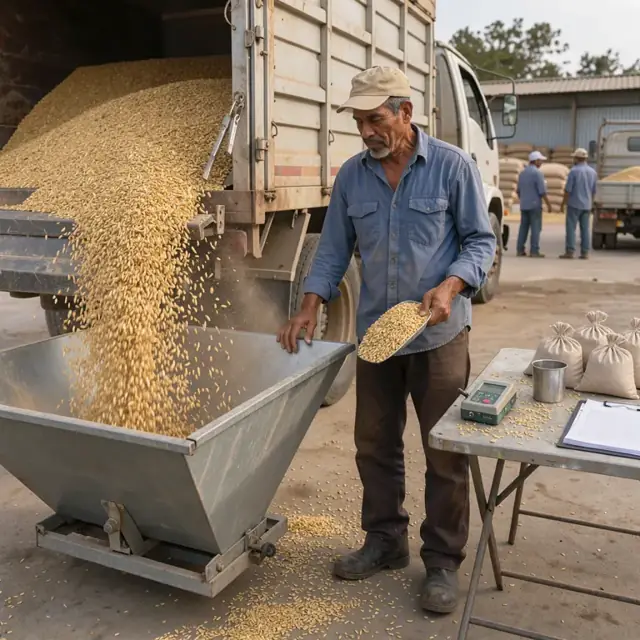
- Paddy rice arrives in bulk truckloads or bags with varying moisture content, variety and quality that must be sampled and logged on receipt
- Milling sequences must respect equipment capacity, dust control and daily cleaning to prevent cross-contamination between long-grain, medium-grain and aromatic varieties
- Yield tracking from paddy to head rice, brokens and bran is continuous and used for supplier payment and inventory reconciliation
- Finished rice must be graded by length, chalkiness and whiteness before packaging; packaging runs follow customer specifications for bag size, labeling and pallet patterns
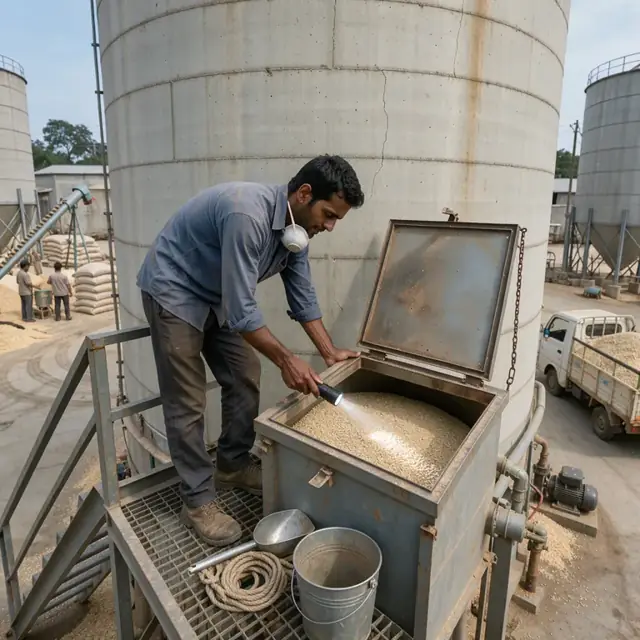
- Temperature and humidity in silos, conveyors and warehouses must stay within safe ranges; pest-control logs and sanitation records are required daily
- Seasonal harvest spikes create large inbound volumes in fall followed by steady outbound shipments year-round
- Equipment maintenance windows must be scheduled around milling runs to avoid downtime during peak processing
Specialist bots
Inbound Receipt and Sampling Specialist
Convert every incoming paddy delivery into logged receipts, quality samples and storage assignments.
Works in: Ambitious Tasks, Ambitious Sheets, Ambitious Docs · Workflows: Inbound paddy rice receipt and sampling
Automates
- Reads scale tickets and supplier delivery data
- Creates sampling tasks with required tests
- Assigns lots to silos based on variety and moisture
- Drafts quality reports and payment tickets
- Flags out-of-spec loads
Stops for a person
- A person physically samples each truckload
- The mill operator approves storage assignments for unusual varieties
- Payments to suppliers are released only after owner review

Milling Schedule Planner
Turn current inventory, orders and equipment status into a daily milling sequence and operator tasks.
Works in: Ambitious Tasks, Ambitious Sheets, Process Optimizer · Workflows: Daily milling schedule and sequencing
Automates
- Sequences varieties to reduce changeovers
- Calculates expected yields per lot
- Assigns target volumes to each milling stage
- Creates shift tasks with quality checkpoints
Stops for a person
- The head miller reviews and adjusts the daily sequence
- Any changeover that requires deep cleaning is confirmed by a person

Process and Yield Monitor
Track real-time milling data, sample output and calculate actual yields against targets.
Works in: Ambitious Sheets, Ambitious Tasks, Process Optimizer · Workflows: Milling process monitoring and yield tracking
Automates
- Logs data from moisture and flow sensors
- Compares head rice and broken percentages to expected values
- Alerts when yield deviates from norms
- Routes by-products to correct bins
Stops for a person
- The mill operator takes and evaluates physical samples at each stage
- Machine setting changes are made only by qualified staff
Inventory Reconciler and Purchasing Planner
Reconcile daily stock movements, project future needs and draft paddy rice purchase orders.
Works in: Ambitious Sheets, Ambitious Tasks, Ambitious Docs · Workflows: Inventory reconciliation and reorder planning
Automates
- Updates silo and warehouse quantities after each run
- Projects weeks of supply by grade
- Drafts reorder quantities based on usage rates
- Flags lots nearing quality limits
Stops for a person
- The owner approves every purchase order before it is sent
- Physical inventory counts are performed by people and compared to system totals

Packaging and Labeling Coordinator
Group customer orders by specification, schedule packaging runs and generate lot-specific labels.
Works in: Ambitious Tasks, Ambitious Docs, Ambitious Sheets · Workflows: Packaging and labeling run scheduling
Automates
- Groups orders by bag size and label type
- Schedules line changeovers to minimize downtime
- Creates labels with variety, grade and traceability codes
- Updates inventory after packaging completion
Stops for a person
- A person verifies label accuracy and applies them to bags
- The owner approves custom label artwork or language

Equipment Maintenance Scheduler
Track runtime on milling machines and generate preventive maintenance checklists and downtime windows.
Works in: Ambitious Tasks, Ambitious Sheets, Process Optimizer · Workflows: Milling equipment maintenance scheduling
Automates
- Accumulates operating hours per machine
- Builds daily, weekly and monthly task lists
- Finds optimal maintenance windows around production
- Records completed work and parts used
Stops for a person
- Technicians perform all repairs and calibrations
- The mill manager approves any scheduled downtime that affects orders

Compliance and Safety Logging Clerk
Generate daily sanitation and environmental checklists, log conditions and track renewal dates for required documents.
Works in: Ambitious Tasks, Ambitious Docs, Ambitious Sheets · Workflows: Food safety, sanitation and compliance logging
Automates
- Creates daily temperature, humidity and sanitation logs
- Records pest control and metal detector results
- Warns before registration or certificate renewals
- Compiles traceability reports by lot
Stops for a person
- Staff perform all physical inspections and sign off on logs
- The owner confirms which requirements apply to each facility and buyer
- People review and file all official records
Workflows
Inbound paddy rice receipt and sampling
Starts when: A supplier truck arrives with paddy rice or a delivery ticket is received
- Record supplier, variety, truck or bin number, gross weight and moisture reading
- Take representative samples and test for dockage, chalk and foreign material
- Assign the load to a storage silo or bin and update inventory sheets
- Draft the scale ticket and quality report for supplier payment
- Flag any loads outside moisture or quality tolerances for review
Watch for: Moisture must be measured immediately upon arrival to prevent spoilage in storage; Variety separation is critical to avoid mixing long-grain with aromatic rice
Daily milling schedule and sequencing
Starts when: End of previous shift or start of business day
- Review current inventory by variety and customer orders due
- Sequence varieties to minimize changeover cleaning on milling line
- Calculate expected yield of head rice, brokens and bran from each lot
- Assign run quantities to the cleaning, hulling, whitening and grading machines
- Create operator tasks with target flow rates and quality checkpoints
Watch for: Equipment must be cleaned between varieties to prevent flavor or color transfer; Daily milling volume cannot exceed dryer or storage capacity downstream
Milling process monitoring and yield tracking
Starts when: Each milling run or shift
- Log moisture, temperature and flow rates at each machine stage
- Sample output after whitening, polishing and grading
- Calculate and record actual yield versus expected for each lot
- Adjust machine settings if head-rice yield falls below target
- Route bran and brokens to designated storage or sale streams
Watch for: Dust and husk must be continuously removed and accounted for; Any deviation in whiteness or broken percentage must be caught before packaging
Inventory reconciliation and reorder planning
Starts when: End of each milling day and weekly
- Reconcile physical stock in silos and warehouses against system records
- Subtract milled quantities and add finished rice to available inventory
- Project weeks of supply by variety and grade
- Draft purchase orders for additional paddy rice to maintain minimum stock
- Flag lots approaching shelf-life or quality limits
Watch for: Moisture migration in storage bins must be monitored weekly; Supplier contracts often require prompt payment based on delivered quality
Packaging and labeling run scheduling
Starts when: When finished rice inventory reaches customer order thresholds
- Group open orders by bag size, label requirements and pallet pattern
- Schedule packaging line changeovers to minimize downtime
- Generate lot-specific labels with variety, grade, pack date and traceability code
- Print and attach compliance statements for each pallet
- Update outbound inventory after each completed run
Watch for: Labels must list exact variety, milling date and allergen-free statement; Pallet patterns and stretch-wrap requirements differ by customer
Milling equipment maintenance scheduling
Starts when: After set hours of operation or on calendar dates
- Track runtime hours on cleaners, hullers, whiteners and graders
- Generate daily, weekly and monthly maintenance checklists
- Schedule downtime windows that avoid peak milling periods
- Record parts replaced and any adjustments made
- Verify calibration of scales, moisture meters and color sorters
Watch for: Bearings and screens wear quickly when processing abrasive rice varieties; Downtime must be coordinated with inbound harvest deliveries
Food safety, sanitation and compliance logging
Starts when: Daily, weekly and on renewal dates
- Generate daily sanitation and pest-control checklists
- Log temperature and humidity in all storage and processing areas
- Record metal-detector and magnet checks
- Track renewal dates for facility registration, fumigation certificates and scale certifications
- Compile lot traceability records for each shipment
Watch for: Rules for rice storage and milling differ by state and buyer requirements; All logs must be kept for traceability during audits
Bot templates for this industry
- Rice Milling (7 bots)
Source: U.S. Small Business Administration, Office of Size Standards, Table of Small Business Size Standards Matched to North American Industry Classification System Codes, version March 2023 (effective 2023-03-17, NAICS 2022). Size standards are shown for reference only.