

Commercial Bakeries
Commercial bakeries produce bread, rolls, buns, cakes, pies and other baked goods in batches for wholesale, foodservice and retail channels. Orders arrive via purchase orders, standing contracts or customer portals; production runs on daily or weekly schedules with long mixing, proofing, baking and cooling cycles. The specialists convert orders into production schedules and ingredient pulls, track flour, yeast and packaging inventory, manage equipment sanitation and preventive maintenance, generate lot-coded labels and temperature logs, and prepare shipping manifests and invoices. Recipes, quality standards, allergen controls and food-safety decisions remain with the baker and quality team.
What makes this business different
- Large batch production with fixed recipes, scaling factors and process parameters that must be followed exactly
- Long lead times for proofing, baking, cooling and packaging that constrain daily output
- Strict inventory rotation of perishable ingredients such as yeast, eggs, dairy and shortenings
- Allergen segregation, sanitation runs between products and lot traceability for recalls
- Equipment cleaning, preventive maintenance and temperature/humidity logs required daily
- Wholesale customer specifications, private-label packaging and delivery or pickup windows
- Regulatory requirements for labeling, nutrition facts, lot coding and food facility registration that the owner confirms
- Standing orders that repeat weekly or monthly with occasional rush or seasonal items
Specialist bots

Order Coordinator
Convert incoming purchase orders and contract updates into confirmed production tasks with full specifications.
Works in: Ambitious Tasks, Ambitious Docs, Email Buckets · Workflows: Order intake and confirmation
Automates
- Reads purchase orders and portal messages
- Extracts quantities, delivery dates, packaging and special instructions
- Checks schedule capacity and lead times
- Drafts acknowledgments and missing-information requests
- Creates the production task
Stops for a person
- The production manager approves schedule changes and rush orders
- Allergen or specification questions are answered by the baker
- A person sends final confirmations and handles pricing exceptions

Production Scheduler
Build daily and weekly production sequences that respect equipment capacity, changeover rules and proofing times.
Works in: Ambitious Sheets, Process Optimizer · Workflows: Daily and weekly production scheduling
Automates
- Aggregates orders by product family
- Sequences batches to reduce sanitation events
- Calculates required oven loads and mixer batches
- Flags allergen and private-label runs
- Suggests optimal shift assignments
Stops for a person
- The head baker reviews and adjusts the final schedule
- Capacity limits are set by the owner

Ingredient and Inventory Manager
Explode production schedules into precise ingredient pulls, maintain lot traceability and keep stock at safe rotation levels.
Works in: Ambitious Sheets, Ambitious Tasks · Workflows: Ingredient scaling and inventory pull
Automates
- Calculates exact ingredient quantities per recipe
- Subtracts current stock and generates pull lists
- Checks lot numbers and best-before dates
- Prints scale tickets
- Updates inventory levels after each pull
Stops for a person
- The baker approves any ingredient substitutions
- Purchasing decisions and spending are done by people
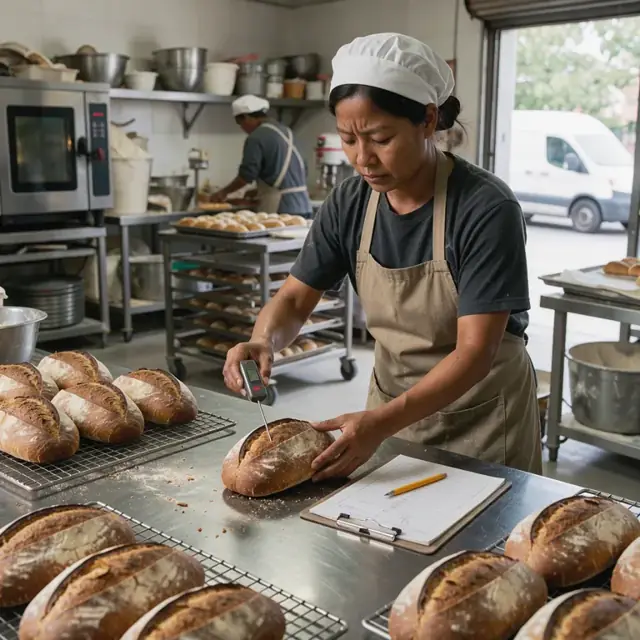
Quality and Safety Clerk
Generate and log required food-safety, sanitation and quality-control checklists for every shift and batch.
Works in: Ambitious Tasks, Ambitious Docs, Ambitious Sheets · Workflows: Quality control and food-safety documentation
Automates
- Creates shift checklists for weights, temperatures and metal detection
- Logs recorded temperatures and sanitation results
- Builds lot traceability reports
- Tracks calibration and maintenance due dates
- Prepares records for customer or audit requests
Stops for a person
- Quality staff perform and initial all physical checks
- The owner confirms which requirements apply
- Corrective actions are taken and documented by people

Labeling and Packaging Specialist
Generate accurate labels, case counts and lot codes that match approved recipes and customer specifications.
Works in: Ambitious Docs, Ambitious Tasks, Ambitious Sheets · Workflows: Labeling, packaging and lot assignment
Automates
- Pulls current ingredient statements, allergens and nutrition data
- Generates labels with correct lot codes and dates
- Matches packaging type to order requirements
- Prints case labels and hold tags
- Records finished quantities against orders
Stops for a person
- The baker or quality lead verifies label accuracy before run
- Artwork and nutrition facts are approved by the owner
- Deviations are reviewed before release

Shipping and Invoicing Coordinator
Prepare shipping manifests, bills of lading and invoice drafts once product is packaged and ready.
Works in: Ambitious Tasks, Ambitious Docs, Ambitious Sheets · Workflows: Shipping, invoicing and customer records
Automates
- Groups finished goods by customer and delivery window
- Creates load manifests and shipping labels
- Drafts invoices including lot numbers
- Records carrier pickup or customer receipt
- Closes production orders and updates inventory
Stops for a person
- A person reviews and sends all invoices
- The driver or warehouse lead confirms load temperature and condition
- Returns or adjustments are approved by the owner

Maintenance and Compliance Tracker
Track daily sanitation, preventive maintenance and regulatory renewal dates so nothing is missed.
Works in: Ambitious Tasks, Ambitious Sheets, Ambitious Docs · Workflows: Equipment maintenance and compliance tracking
Automates
- Generates daily sanitation and startup checklists
- Schedules preventive maintenance by equipment
- Warns before facility registrations or label approvals lapse
- Compiles audit-ready record packets
- Maintains equipment history logs
Stops for a person
- Technicians perform and sign off on all maintenance
- The owner confirms which regulatory filings are required
- Audit responses and corrective actions are handled by people
Workflows
Order intake and confirmation
Starts when: Purchase order, contract update, email, customer portal notification or standing-order cadence
- Parse incoming order for product type, quantity, packaging, delivery date and special instructions
- Check against current production schedule and available capacity
- Confirm lead time, allergen requirements and any private-label specifications
- Draft order acknowledgment and request missing details
- Create production task with full specifications and lot requirements
Watch for: Allergen and cross-contact declarations must match exactly what the baker has approved; Changes after cutoff require quality-team review
Daily and weekly production scheduling
Starts when: End of previous shift or fixed weekly planning meeting
- Aggregate confirmed orders and standing contracts by product family
- Sequence batches to minimize changeovers and sanitation time
- Calculate required dough batches, oven loads and cooling racks
- Assign equipment lines and shift resources
- Flag any special runs for allergens or private label
Watch for: Proofing and baking times are fixed by recipe and cannot be shortened; Oven and mixer capacity must never be exceeded
Ingredient scaling and inventory pull
Starts when: After production schedule is locked
- Explode schedule into exact ingredient quantities by recipe
- Subtract current inventory and generate pull list from dry storage and coolers
- Check lot numbers and expiration dates for each ingredient
- Draft scale tickets for each batch
- Update remaining stock levels and reorder points
Watch for: Yeast, eggs and dairy must be pulled only for the current day's runs; First-in-first-out rotation is mandatory
Quality control and food-safety documentation
Starts when: Start of each shift and after every sanitation
- Generate shift checklist for metal detection, weight checks, temperature logs and visual inspection
- Record oven and cooler temperatures at set intervals
- Log sanitation verification and allergen swab results
- Create lot-coded production records and traceability reports
- Track equipment calibration and preventive maintenance due dates
Watch for: Temperature and sanitation logs must be kept for every batch; The quality manager confirms which checks apply to each product
Labeling, packaging and lot assignment
Starts when: After baking and cooling but before shipment
- Generate labels with correct product name, ingredients, allergens, nutrition facts and lot code
- Match packaging type and count to customer specification
- Print and apply labels to cases or pallets
- Record finished quantities against the production order
- Create hold tags for any quality deviations
Watch for: Allergen statements and lot codes must match the baker-approved master records; Private-label artwork must be the current revision
Shipping, invoicing and customer records
Starts when: When product is packaged and ready for pickup or delivery
- Build load manifest by customer and delivery window
- Draft bills of lading or shipping labels
- Create and send invoice drafts with lot numbers
- Record carrier or customer pickup confirmation
- Update inventory and close production orders
Watch for: Temperature-controlled transport requirements must be noted; Customer returns or short shipments require owner review
Equipment maintenance and compliance tracking
Starts when: Daily at start of shift and on fixed preventive-maintenance calendar
- Generate daily sanitation and startup checklist
- Track preventive maintenance tasks by equipment and due date
- Monitor facility registration, label approvals and renewal dates
- Compile records for third-party audits or customer requests
- Flag any upcoming renewals or inspections
Watch for: Preventive maintenance windows cannot overlap production runs; The owner confirms which regulatory requirements apply to the facility
Bot templates for this industry
- Commercial Bakeries (7 bots)
Source: U.S. Small Business Administration, Office of Size Standards, Table of Small Business Size Standards Matched to North American Industry Classification System Codes, version March 2023 (effective 2023-03-17, NAICS 2022). Size standards are shown for reference only.