

Wood Container and Pallet Manufacturing
Wood container and pallet manufacturers take custom and repeat orders for crates, boxes, pallets and skids, cut lumber to spec, assemble, treat when required and ship or stage for customer pickup. For a shop that builds both one-off export crates and daily runs of standard pallets, the specialists turn incoming orders into cut lists and bills of materials, schedule the saws and nailers, track lumber and fastener inventory, manage heat-treatment and ISPM-15 stamping for international shipments, and route deliveries while the shop floor confirms measurements and treatment records.
What makes this business different
- Custom crate and box orders with precise inside dimensions, load ratings, stacking strength and access doors that must match customer drawings or descriptions exactly
- Mixed production of one-off custom work and high-volume standard pallets or bins that share the same saws and assembly stations
- Lumber and fastener inventory with moisture content tracking, grade requirements and just-in-time purchasing to minimize yard space
- Heat-treatment or fumigation for export pallets meeting international phytosanitary rules, with stamping, tagging and record retention
- Heavy and bulky finished goods that require forklift staging, loading sequences and sometimes customer-arranged pickup
- Cut lists, assembly jigs and nail patterns that change by product type and must be updated when lumber dimensions shift
- Repeat customers who reorder standard pallet sizes on weekly or seasonal schedules with specific branding or color coding
Specialist bots
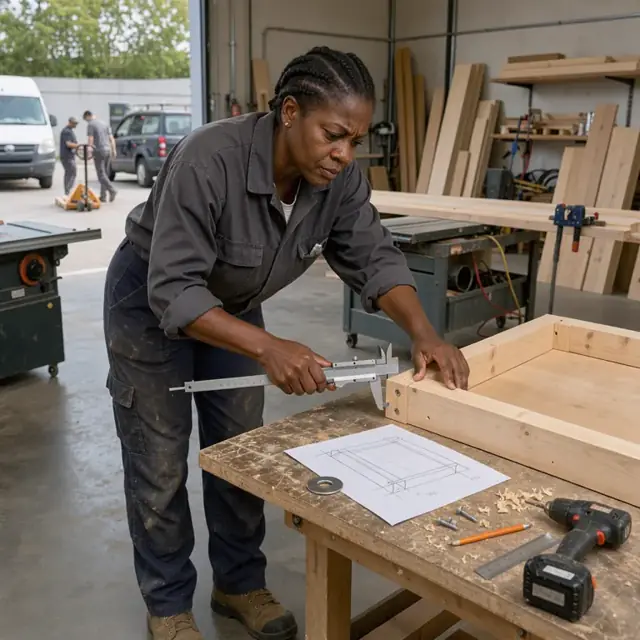
Order Specifier
Convert every incoming customer request into a precise, production-ready specification and cut list.
Works in: Ambitious Tasks, Ambitious Docs, Ambitious Sheets · Workflows: Order intake and specification
Automates
- Reads order messages and extracts dimensions, species, treatment and special features
- Builds initial bill of materials from product templates
- Checks requested date against current schedule
- Creates the master production task
Stops for a person
- Shop supervisor confirms complex custom designs or unusual materials
- Customer must approve any dimension changes before cutting begins
- A person sends order confirmation and payment requests
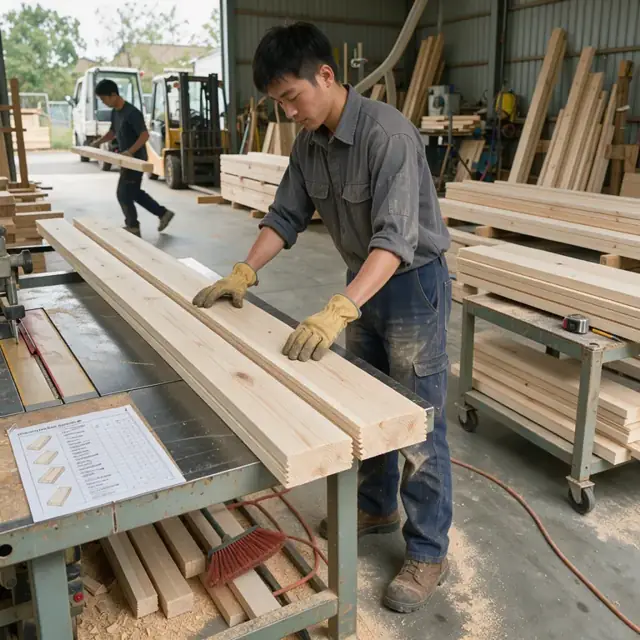
Cut List Optimizer
Transform order specifications into nested cut lists and material pull sheets that minimize waste.
Works in: Ambitious Sheets, Process Optimizer, Ambitious Docs · Workflows: Cut list and bill of materials creation
Automates
- Generates optimized cut patterns for each lumber length
- Nests multiple orders to reduce scrap
- Calculates exact fastener counts
- Adjusts for current inventory and moisture content
Stops for a person
- Saw operator reviews and approves final cut sheets before starting
- Any material substitution must be approved by the shop lead

Shop Production Scheduler
Sequence custom and standard jobs across saws, nailers and treatment to keep the floor running smoothly.
Works in: Ambitious Tasks, Ambitious Sheets · Workflows: Production scheduling and sequencing
Automates
- Builds daily station assignments for each machine and crew
- Inserts treatment cycles at the correct point in the flow
- Balances workload and flags potential bottlenecks
- Updates the shop floor task board
Stops for a person
- The floor lead adjusts schedule for machine breakdowns or urgent orders
- Treatment schedule is confirmed by the certified operator

Lumber and Inventory Tracker
Maintain accurate counts and condition records for all lumber, fasteners and packaging materials.
Works in: Ambitious Sheets, Ambitious Tasks, Ambitious Docs · Workflows: Lumber and consumables inventory
Automates
- Records incoming lumber by grade and moisture
- Subtracts usage from cut lists and assembly logs
- Generates reorder lists when stock is low
- Flags material that fails quality checks
Stops for a person
- Purchasing decisions and payments are made only by the owner
- Moisture meter readings are verified by a person before acceptance

Treatment and Export Coordinator
Schedule heat-treatment cycles, record process data and prepare required international marking documentation.
Works in: Ambitious Tasks, Ambitious Docs, Ambitious Sheets · Workflows: Heat treatment and export marking
Automates
- Creates the daily treatment loading schedule
- Logs chamber temperature and time data
- Generates stamps and treatment certificates
- Attaches records to each order
Stops for a person
- Only the trained operator confirms that each cycle met all parameters
- The owner reviews and approves all export paperwork before release
- Any failed treatment loads are reviewed and signed off by a person

Shipping and Dispatch Planner
Group completed orders for efficient loading, prepare shipping documents and notify customers of pickup or delivery.
Works in: Ambitious Tasks, Ambitious Docs, Ambitious Sheets · Workflows: Shipping, staging and dispatch
Automates
- Groups orders by destination and truck
- Creates optimized loading sequences
- Drafts bills of lading and packing lists
- Sends advance notifications with windows
Stops for a person
- Forklift driver confirms actual loaded quantities and order
- All shipping documents are reviewed and signed by a person before departure

Quality Inspector
Perform dimensional and structural checks on finished pallets and crates before they leave the shop.
Works in: Ambitious Tasks, Ambitious Docs, Ambitious Sheets · Workflows: Quality control and final inspection
Automates
- Generates inspection checklists matched to each order type
- Records measurements and fastener spacing
- Logs rework or scrap reasons
- Updates order status to ready
Stops for a person
- Final sign-off on every batch is performed by an experienced worker
- Any deviation from specifications is reviewed by the shop supervisor
Workflows
Order intake and specification
Starts when: A customer submits an order by email, form, portal message or phone note
- Capture inside and outside dimensions, load rating, wood species, treatment needs and any special features such as hinged lids or dividers
- Check the order against current lumber stock grades and available assembly stations
- Confirm requested ship or pickup date against production schedule and lead time
- Draft bill of materials and cut list from standard templates
- Create a production task with all specifications attached
Watch for: Exact dimensions must be recorded without rounding unless the customer approves; Export orders require early flagging for heat-treatment capacity
Cut list and bill of materials creation
Starts when: After order confirmation and nightly for next day's production
- Explode each order into optimized cut lists by lumber length and grade
- Nest cuts across multiple orders to reduce waste
- Generate fastener and hardware requirements
- Adjust for current lumber inventory and moisture readings
- Output cut sheets for each saw station and a master materials pull list
Watch for: Saw kerf and end trim must be accounted for in every calculation; Grade and defect rules differ by customer specification
Production scheduling and sequencing
Starts when: End of each day for the following day's run
- Sequence custom and standard jobs on each saw, nailing station and assembly table
- Balance workload across shifts and equipment
- Flag jobs needing heat treatment and insert them into the treatment schedule
- Update the live shop floor board with station assignments
- Adjust for any equipment downtime or lumber shortages reported that day
Watch for: Heavy pallets must be scheduled when forklift operators are available; Treatment chamber has fixed cycle times that cannot be interrupted
Lumber and consumables inventory
Starts when: Daily at start of shift and after each major purchase
- Record incoming lumber by species, grade, length and moisture content
- Subtract material used from cut lists and assembly records
- Track fasteners, nails, staples and strapping by type and remaining quantity
- Draft reorder lists when stock falls below reorder points
- Flag any lots that fail moisture or visual grade checks
Watch for: Lumber must be stored by moisture content to prevent warping after assembly; Fastener inventory is consumed in large batches and can run out mid-run
Heat treatment and export marking
Starts when: When a production batch reaches the treatment stage or on a fixed weekly schedule
- Generate treatment schedule for pallets and crates requiring ISPM-15 compliance
- Log chamber load, temperature, time and sensor readings
- Apply or print required stamps, tags and documentation
- Attach treatment records to each customer order
- Flag any loads that fail to meet required core temperature
Watch for: Treatment records must be kept for regulatory audits; Only certain chamber operators can sign off on completed cycles
Shipping, staging and dispatch
Starts when: Morning of each shipment day or when customer pickup is scheduled
- Group completed orders by customer, destination and truck route
- Create loading sequence for flatbeds or enclosed trailers
- Draft bills of lading and packing lists
- Send pickup or delivery notifications with time windows
- Record loaded quantities, photos of staging and any damage notes
Watch for: Weight and balance of pallets affect loading order; Some customers require specific stacking patterns or wrapping
Quality control and final inspection
Starts when: After assembly and before staging or treatment
- Run dimensional, fastener spacing and structural checks against order specs
- Verify treatment stamps and labels are present and legible when required
- Log any rework or scrap and the reason
- Create final approval checklist for each pallet or crate batch
- Update order status to ready for shipment
Watch for: Load-bearing pallets require specific block and deckboard spacing; Visual defects that do not affect strength may still be rejected by customers
Bot templates for this industry
Source: U.S. Small Business Administration, Office of Size Standards, Table of Small Business Size Standards Matched to North American Industry Classification System Codes, version March 2023 (effective 2023-03-17, NAICS 2022). Size standards are shown for reference only.