

Polystyrene Foam Product Manufacturing
Polystyrene foam product manufacturers take customer orders for custom or standard foam shapes, run batch or continuous extrusion and molding lines, track resin beads, blowing agents and tooling, schedule press time around mold changes and curing, and manage cutting, labeling and shipment of lightweight but bulky finished goods. Specialists convert orders into production schedules, maintain inventory of resin and molds, optimize press runs, handle quality and dimensional checks, and prepare shipping paperwork while the production team retains control of machine settings, safety interlocks and blowing-agent handling.
What makes this business different
- Custom dimensions, densities and shapes that require specific mold tooling or CNC hot-wire programming
- High-volume runs of standard items such as shipping coolers, protective packaging inserts and construction boards alongside low-volume custom work
- Continuous monitoring of resin bead inventory, pentane or CO2 blowing agents and regrind percentages
- Mold changes, press changeovers and curing times that constrain daily output
- Dimensional stability and density testing after cooling, with records for each batch
- Labeling, stacking and palletizing of bulky, low-density products that consume trailer space quickly
- Hazardous-material documentation for blowing agents, fire-retardant additives and recycling statements
- Repeat industrial customers who reorder the same protective inserts or cooler kits on a forecast schedule
Specialist bots

Order Intake Specialist
Convert every customer request into a complete, schedulable production order with all technical details.
Works in: Ambitious Tasks, Ambitious Docs, Ambitious Sheets · Workflows: Order intake and specification
Automates
- Parses incoming order messages and attached drawings
- Populates part number, dimensions, density and special instructions
- Checks against existing tooling database
- Drafts acknowledgment and ship-date promise
- Creates the production task
Stops for a person
- Production manager approves new mold requests and non-standard densities
- A person sends the final order confirmation and handles pricing exceptions

Production Scheduler
Build daily press schedules that minimize mold changes while meeting promised ship dates.
Works in: Process Optimizer, Ambitious Sheets · Workflows: Production scheduling and mold planning
Automates
- Groups orders by resin type and mold family
- Sequences jobs to balance curing-rack usage
- Calculates resin and additive needs per run
- Flags required tooling fabrication
- Generates the shift schedule for the floor
Stops for a person
- The shift supervisor adjusts the sequence for machine availability or urgent orders
- Any change that affects a customer promise is approved by the owner
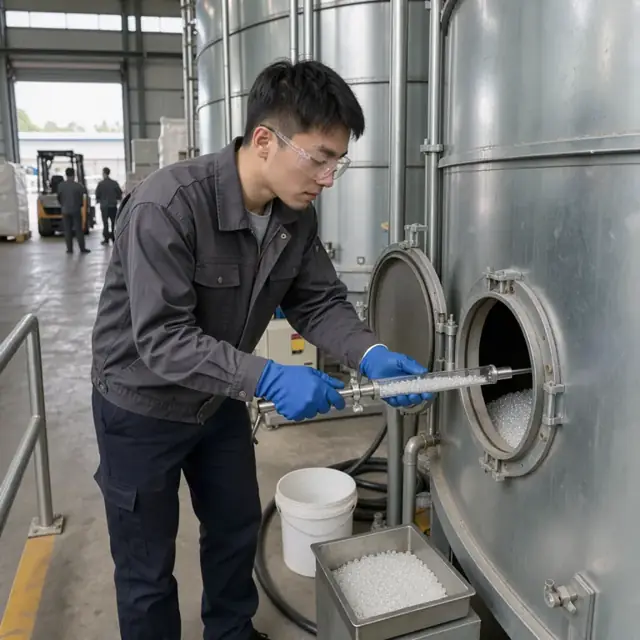
Materials Coordinator
Maintain accurate stock of resin beads, blowing agents, additives and regrind while generating timely purchase lists.
Works in: Ambitious Sheets, Ambitious Tasks, Ambitious Docs · Workflows: Raw material and tooling inventory
Automates
- Explodes the production schedule into raw-material requirements
- Subtracts silo and warehouse inventory
- Drafts purchase orders by supplier
- Tracks regrind percentages and silo moisture
- Alerts when blowing-agent storage limits are approached
Stops for a person
- The owner places all purchases and approves chemical orders
- Any change in regrind ratio that affects product specification is confirmed by the production lead
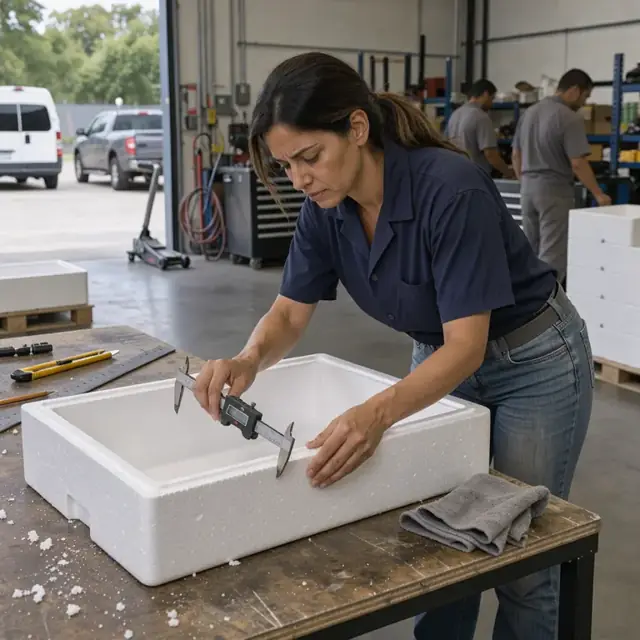
Quality Verifier
Perform and record density, dimensional and cell-structure checks on cooled foam parts and prepare traceability reports.
Works in: Ambitious Tasks, Ambitious Sheets, Ambitious Docs · Workflows: Quality and dimensional verification
Automates
- Creates batch-specific checklists from order specifications
- Logs measurement results from calipers, scales and density meters
- Compares values against tolerances
- Generates lot-traceability and certificate-of-conformance drafts
Stops for a person
- Production technicians enter the actual gauge and scale readings
- The quality lead reviews and signs off on any non-conforming material before it reaches shipping

Shipping Coordinator
Prepare pallets, labels, bills of lading and carrier assignments once production is staged.
Works in: Ambitious Tasks, Ambitious Docs, Ambitious Sheets · Workflows: Packaging and shipping preparation
Automates
- Calculates optimal pallet stacking patterns
- Generates barcode labels and recycling statements
- Drafts bills of lading and any required declarations
- Assigns carriers based on destination and service needs
- Sends tracking updates after pickup
Stops for a person
- A person verifies the physical pallet count and condition before loading
- The owner approves any special freight arrangements or expedited shipments

Tooling Maintenance Coordinator
Track mold condition, schedule preventive maintenance and forecast new tooling needs.
Works in: Ambitious Tasks, Ambitious Sheets, Ambitious Docs · Workflows: Mold and tooling maintenance
Automates
- Records usage cycles after each mold change
- Generates preventive-maintenance checklists
- Maintains a library of mold drawings and CNC programs
- Forecasts tooling replacement based on order pipeline
Stops for a person
- Maintenance technicians perform the actual cleaning and repairs
- The production manager approves any new mold purchase or CNC programming request
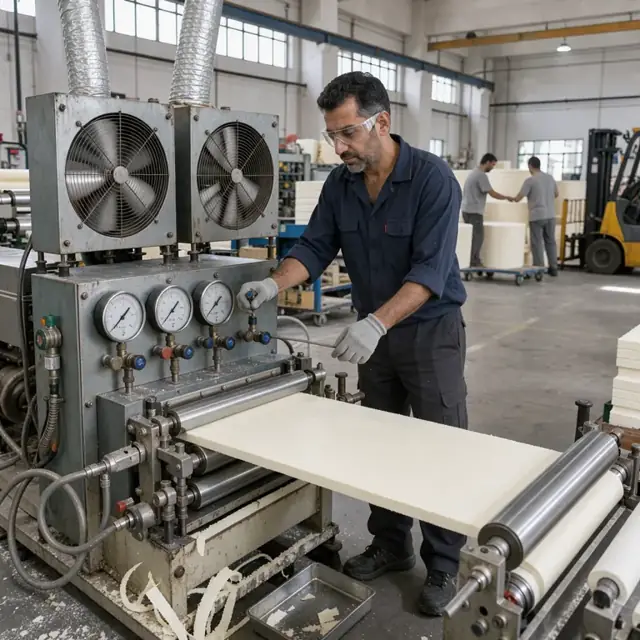
Compliance Coordinator
Maintain daily safety and environmental checklists, log usage of regulated substances and prepare required reports for owner review.
Works in: Ambitious Tasks, Ambitious Sheets, Ambitious Docs · Workflows: Regulatory and safety logging
Automates
- Generates operator checklists for each press
- Reconciles blowing-agent usage against inventory
- Tracks permit and waste-shipment dates
- Organizes material-safety data sheets
- Drafts summary reports
Stops for a person
- The owner confirms which regulatory requirements apply to the specific process and location
- All logs, permits and reports are reviewed and signed by a person before filing or submission
- The bot never certifies compliance
Workflows
Order intake and specification
Starts when: A customer submits an order by form, email, purchase order or portal
- Capture part number, dimensions, density, quantity, material color and any custom features
- Match against existing molds, dies or CNC programs
- Confirm required tooling lead time or new mold fabrication
- Check production schedule availability against press and curing capacity
- Draft order acknowledgment with promised ship date
Watch for: Exact density and cell-size tolerances must be recorded as the production team will use them to set machine parameters; New custom molds require customer-supplied drawings or samples before scheduling
Production scheduling and mold planning
Starts when: Daily at start of shift and after every new order
- Load confirmed orders into the master schedule
- Group by resin type, density and mold family to minimize changeovers
- Sequence jobs considering mold availability, curing racks and cooling time
- Calculate required resin beads, blowing agent and regrind
- Flag any new mold fabrication or CNC programming needed
Watch for: Mold change time can exceed two hours and must be scheduled during off-peak utility periods; Curing space in the warehouse is limited and temperature-controlled
Raw material and tooling inventory
Starts when: After schedule is published and weekly
- Explode production schedule into resin, blowing-agent and additive requirements
- Subtract current stock and open purchase orders
- Generate purchase list for bead suppliers and chemical vendors
- Track mold condition, repair history and storage location
- Monitor regrind levels and adjust mix percentages
Watch for: Resin beads are moisture-sensitive and must be kept in sealed silos; Blowing agents are flammable and subject to storage-quantity limits
Quality and dimensional verification
Starts when: After each batch cools and before packaging
- Record density, cell structure and dimensional measurements from first article and periodic samples
- Compare results against customer specification and internal standards
- Log any deviations and trigger rework or scrap
- Generate batch traceability report linking to raw-material lot numbers
- Draft certificate of conformance for customer review
Watch for: Foam continues to off-gas and shrink slightly after demolding; measurements must be taken at consistent intervals; Fire-retardant additives must be verified at required loading percentages
Packaging and shipping preparation
Starts when: When production is complete and staged
- Calculate pallet stack heights and cube utilization for each order
- Generate labels with product description, density, lot number and recycling statement
- Draft bills of lading and hazardous-material declarations if blowing-agent residues apply
- Assign carrier and service level based on customer requirements
- Record shipment and send tracking information
Watch for: Products are bulky and lightweight; trailer weight is rarely the constraint but cube often is; Stacking patterns must avoid compression damage during transit
Mold and tooling maintenance
Starts when: After each mold change and on a preventive schedule
- Inspect mold for wear, flash and cooling-channel buildup
- Schedule cleaning, repair or replacement
- Update tooling status in the master list
- Forecast when new molds or CNC programs will be required based on order pipeline
- Maintain records of mold life and cost per cycle
Watch for: Aluminum molds are soft and easily damaged if not handled with proper lifting equipment; Preventive maintenance windows must be coordinated with production schedule
Regulatory and safety logging
Starts when: Each production day and on renewal or audit dates
- Generate daily checklist for machine interlocks, ventilation, grounding and PPE
- Log blowing-agent usage and inventory reconciliation
- Track permit, emission, and waste-disposal records
- Maintain material-safety data sheets for all resins and additives
- Prepare reports for periodic regulatory review
Watch for: Local, state and federal rules on volatile organic compounds and flammable blowing agents differ by facility location; The owner or designated safety officer confirms which requirements apply to each machine and process
Bot templates for this industry
Source: U.S. Small Business Administration, Office of Size Standards, Table of Small Business Size Standards Matched to North American Industry Classification System Codes, version March 2023 (effective 2023-03-17, NAICS 2022). Size standards are shown for reference only.