

Tire Manufacturing (except Retreading)
Tire plants compound rubber, build green tires on drums, cure them in presses and perform final inspection before shipping. For a facility that runs daily production of passenger, light-truck and specialty tires, the specialists convert customer orders into a weekly build schedule, turn the schedule into compound recipes and raw-material calls, track each batch through building, curing and inspection, and manage mold changes, cure times and quality holds. Compound formulas, press parameters and DOT traceability stay with the engineers and quality team.
What makes this business different
- Precise rubber-compound recipes that must be mixed in exact sequence and temperatures
- Weekly production schedule driven by OEM and aftermarket orders with strict ship dates
- Heavy equipment including internal mixers, calenders, extruders, tire-building machines and curing presses that require scheduled mold changes
- Raw materials such as natural rubber, carbon black, oils, steel cord, fabric and beads that are ordered by the railcar or truckload
- Cure-cycle parameters, bladder maintenance and press downtime tracking
- Final inspection, X-ray, uniformity testing and DOT serial-number traceability for every tire
- Inventory of green tires, cured tires and finished goods with aging and FIFO rules
- Waste, scrap and rework tracking for uncured rubber and cured defects
Specialist bots
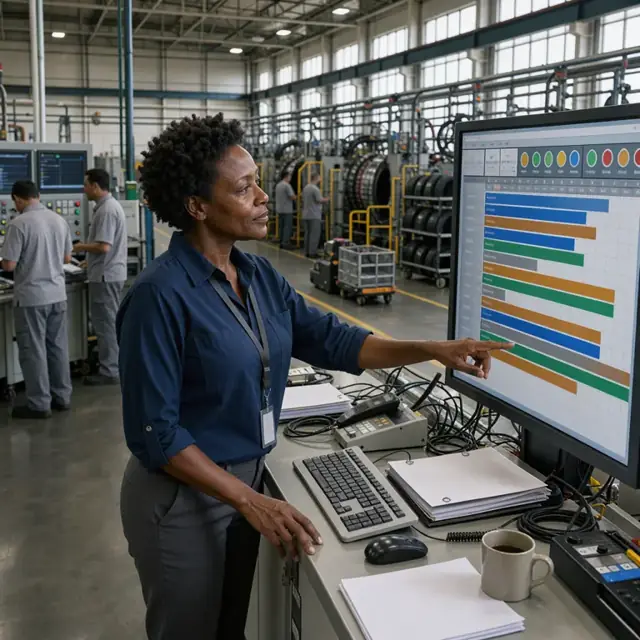
Production Scheduler
Convert incoming orders into a feasible weekly master production schedule that respects mold, press and compound constraints.
Works in: Ambitious Sheets, Ambitious Tasks · Workflows: Order intake and production scheduling
Automates
- Parses order details and required ship dates
- Checks mold and press availability
- Builds the weekly build schedule with changeover times
- Flags capacity or material conflicts for review
Stops for a person
- Planners approve the final weekly schedule before it is released to the floor
- Engineering confirms any custom compound requests

Compound Recipe Technician
Turn each scheduled tire compound into precise batch recipes and mixer instructions.
Works in: Ambitious Docs, Ambitious Sheets, Process Optimizer · Workflows: Rubber compounding and recipe execution
Automates
- Pulls master formulas from the library
- Generates weighed ingredient lists and mixing sequences
- Calculates batch sizes for each mixer
- Records actual versus target parameters after each batch
Stops for a person
- The compounder reviews and signs off on each batch ticket before loading the mixer
- Any deviation from the master recipe requires engineering approval

Raw Materials Coordinator
Calculate and order the exact quantities of rubber, cord, fabric and chemicals needed for the production schedule.
Works in: Ambitious Sheets, Ambitious Tasks, Ambitious Docs · Workflows: Raw material and component replenishment
Automates
- Explodes the schedule into raw-material requirements
- Subtracts current stock and on-order quantities
- Drafts purchase requisitions by supplier
- Tracks shelf-life sensitive chemicals
Stops for a person
- Purchasing places all orders and negotiates with suppliers
- Receiving confirms quantities and condition of incoming bulk materials

Build and Cure Coordinator
Assign specifications to tire-building machines and curing presses and track green tires through the process.
Works in: Ambitious Tasks, Ambitious Docs · Workflows: Tire building and curing operations
Automates
- Assigns drum settings and component sequences to each building station
- Schedules mold changes and cure recipes on presses
- Tracks green-tire inventory between building and curing
- Generates operator checklists for each size
Stops for a person
- Machine operators verify settings before starting a run
- Cure technicians confirm bladder condition and press parameters
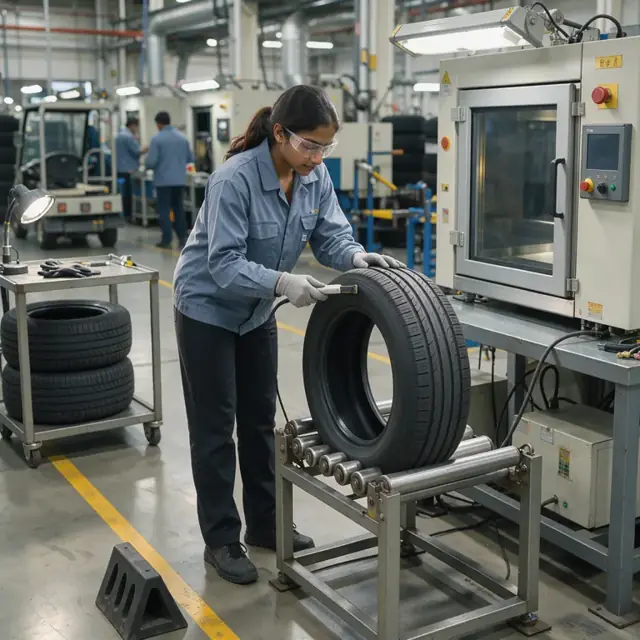
Final Quality Inspector
Route cured tires through inspection stations, capture test data and release only tires that meet all specifications.
Works in: Ambitious Tasks, Ambitious Docs, Ambitious Sheets · Workflows: Final inspection and testing
Automates
- Creates digital inspection tasks for visual, uniformity and X-ray stations
- Records serial numbers and test results
- Flags defective tires for rework or scrap
- Loads traceability records into the database
Stops for a person
- Trained inspectors perform the actual visual and instrument checks
- Quality manager reviews and approves any release of reworked tires

Mold and Press Maintenance Planner
Schedule preventive maintenance on molds, bladders and presses to minimize production downtime.
Works in: Ambitious Tasks, Ambitious Docs · Workflows: Mold and equipment maintenance scheduling
Automates
- Tracks cure cycles and press hours per mold
- Generates cleaning and polishing tasks
- Schedules downtime windows around the production plan
- Maintains changeover procedure documents
Stops for a person
- Maintenance technicians perform the actual mold work
- Production approves all scheduled downtime

Finished Goods and Shipping Coordinator
Manage warehouse inventory of finished tires and prepare accurate shipping documents for each order.
Works in: Ambitious Tasks, Ambitious Sheets, Ambitious Docs · Workflows: Finished goods inventory and shipping
Automates
- Moves tires into locations following FIFO logic
- Matches stock to customer orders and ship dates
- Drafts bills of lading and pallet manifests
- Generates customer-specific labels
Stops for a person
- Warehouse staff physically loads trucks and confirms counts
- Logistics manager approves all outbound shipments
Workflows
Order intake and production scheduling
Starts when: New customer purchase orders or forecast updates arrive
- Parse order for tire size, load rating, speed rating, tread pattern and quantity
- Check against current mold availability and press capacity
- Assign production week and line, factoring in changeover time
- Draft the master production schedule for compounding and building
- Flag any special requirements such as custom compounds or high-visibility sidewalls
Watch for: OEM orders often require sequenced delivery and specific labeling; Mold availability can limit how many sizes run in a given week
Rubber compounding and recipe execution
Starts when: Daily at the start of each mixer shift
- Pull the exact formula from the master recipe library for each compound
- Generate weighed batch tickets for polymers, fillers, oils and curatives
- Create a timed mixing schedule for the Banbury or intermesh mixer
- Record actual temperatures, power draw and dump times
- Trigger mill and calender preparation for the next compound
Watch for: Sequence of addition and exact temperatures are critical to batch consistency; Each batch must be matched to a specific tire build line
Raw material and component replenishment
Starts when: Weekly and when inventory drops below reorder point
- Explode the production schedule into required quantities of rubber, steel cord, fabric, beads and chemicals
- Subtract current warehouse and in-process inventory
- Draft purchase orders for suppliers and railcar schedules
- Schedule just-in-time delivery of beads and cord to the building area
- Track shelf life of accelerators and antioxidants
Watch for: Natural rubber and carbon black arrive in bulk and require climate-controlled storage; Bead wire and steel cord must be protected from moisture
Tire building and curing operations
Starts when: Start of each production shift
- Assign green-tire specifications and drum settings to each building machine
- Generate operator checklists for ply, sidewall and tread application
- Schedule mold and bladder changes on curing presses
- Create cure-time and pressure recipes for each tire size
- Track green tires from building through inspection to curing
Watch for: Building machines must be set for exact breaker angles and stitch pressures; Cure times vary by compound and tire size and must be strictly followed
Final inspection and testing
Starts when: After tires exit the curing presses
- Route tires to visual, uniformity, balance and X-ray stations
- Generate digital inspection checklists and capture serial numbers
- Flag defects for rework or scrap and log root causes
- Apply DOT codes and load the traceability record
- Release passing tires to finished-goods inventory
Watch for: Every tire receives a unique serial number that links back to its batch; Uniformity and X-ray results must be recorded before shipping
Mold and equipment maintenance scheduling
Starts when: Weekly and after each mold change
- Track press hours and cure cycles per mold
- Generate preventive-maintenance tasks for cleaning, polishing and bladder replacement
- Schedule downtime windows that minimize impact on the production schedule
- Maintain a library of approved mold-change procedures
- Log any press or mold issues discovered during production
Watch for: Molds are heavy and require cranes and specialized tooling; Press downtime directly reduces daily output
Finished goods inventory and shipping
Starts when: Daily when finished tires reach target inventory
- Move inspected tires into warehouse locations following FIFO rules
- Match accumulated stock to open customer orders and ship dates
- Draft bills of lading and load sheets for truck or rail
- Generate customer-specific labels and pallet manifests
- Record shipment and update customer order status
Watch for: Tires must be stored away from direct sunlight and ozone; Many shipments are sequenced for just-in-time delivery to assembly plants
Bot templates for this industry
Source: U.S. Small Business Administration, Office of Size Standards, Table of Small Business Size Standards Matched to North American Industry Classification System Codes, version March 2023 (effective 2023-03-17, NAICS 2022). Size standards are shown for reference only.