

Concrete Pipe Manufacturing
Concrete pipe manufacturers produce precast concrete pipe, culverts and manholes using forms, reinforcement cages, concrete mixes and curing processes. Daily work converts customer orders for specific diameters, lengths, joint types and strengths into production schedules, raw material orders, cage fabrication, pouring, curing and delivery. The plant maintains forms, mix designs, reinforcement inventory and quality test records while meeting engineering specifications and local DOT or municipal requirements that the owner confirms.
What makes this business different
- Custom pipe orders with exact diameter, length, wall thickness, joint style, reinforcement and strength class that must match approved submittals
- Heavy forms and cages that require crane or forklift handling and dedicated production bays
- Batch mixing and pouring schedules dictated by concrete set times, cure cycles and yard space
- Raw materials including cement, aggregates, rebar or wire mesh and admixtures kept at safe stock levels with moisture and temperature monitoring
- Quality testing for compression, absorption and joint integrity with documented break reports
- Delivery of heavy pipe using specialized trailers with loading sequences that respect weight limits and site access
- Maintenance of steel forms, headers, pallets and vibration equipment to prevent defects
- Tracking of mix designs, cure times, heat or steam curing logs and chain-of-custody for each production run
Specialist bots
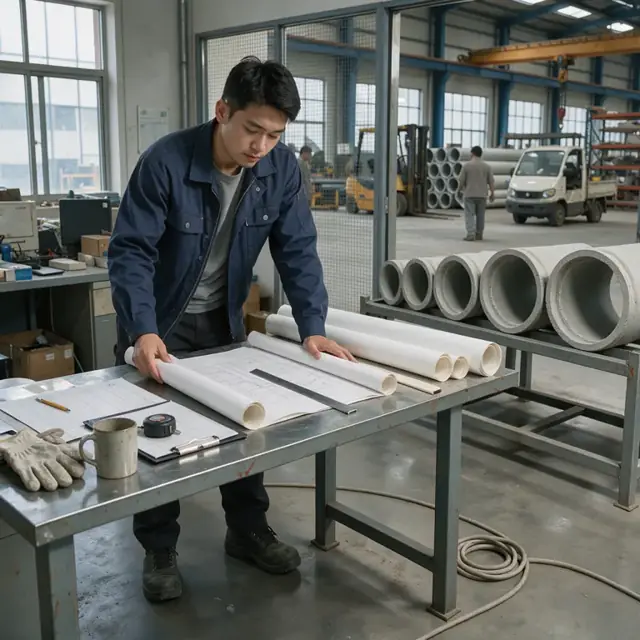
Order and Submittal Reviewer
Convert incoming orders and specifications into production-ready tasks with accurate dimensions and requirements.
Works in: Ambitious Tasks, Ambitious Docs, Contract Analyzer · Workflows: Order and submittal review
Automates
- Reads order documents and extracts diameter, length, joint, class and delivery needs
- Compares specs against approved product capabilities
- Drafts submittal packages with drawings and mix references
- Creates the master order task for the plant
Stops for a person
- Engineering or owner approves any non-standard requests or deviations
- Final submittals are reviewed and stamped by a person before sending

Production Scheduler
Assign forms, bays and pour dates to orders while balancing capacity and curing space.
Works in: Ambitious Sheets, Ambitious Tasks · Workflows: Production scheduling and form assignment
Automates
- Groups orders by diameter to reduce form changes
- Assigns steel forms and production lanes
- Calculates concrete and cage quantities needed
- Builds the weekly pour calendar
Stops for a person
- The plant manager adjusts the schedule for weather or urgent orders
- Owner confirms delivery dates before locking the plan
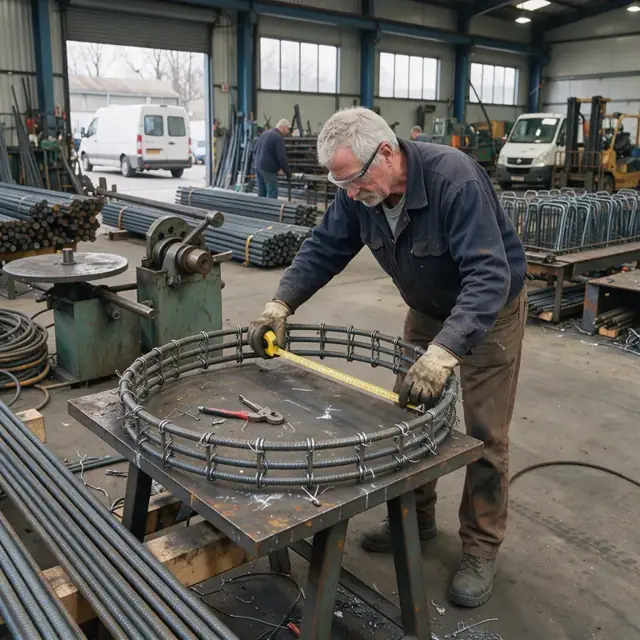
Reinforcement Cage Fabricator
Generate cutting lists, bending schedules and assembly instructions for steel cages that meet each pipe specification.
Works in: Ambitious Sheets, Ambitious Docs, Ambitious Tasks · Workflows: Reinforcement cage fabrication
Automates
- Creates rebar cut and bend lists from order dimensions
- Calculates required circumferential and longitudinal steel
- Produces cage tags and assembly notes
- Withdraws correct rebar inventory
Stops for a person
- Welder or cage builder checks final dimensions before release
- Any change to reinforcement requires engineering approval

Materials and Batching Coordinator
Calculate and order raw materials and generate daily batch tickets adjusted for current stock and moisture.
Works in: Ambitious Sheets, Ambitious Tasks, Process Optimizer · Workflows: Raw material ordering and batching
Automates
- Computes cement, aggregate and admixture quantities from mix designs
- Subtracts silo and yard inventory
- Adjusts for aggregate moisture readings
- Produces batch tickets and purchase lists
Stops for a person
- Plant manager places all material orders and approves spending
- Batch operator verifies actual weights before mixing

Quality Testing Technician
Create test schedules, record results and compile documentation showing each pipe meets the required strength and absorption.
Works in: Ambitious Tasks, Ambitious Docs, Ambitious Sheets · Workflows: Quality testing and documentation, Pouring, curing and stripping
Automates
- Generates compression and absorption test schedules
- Logs break results and cylinder identifications
- Flags failing pipe for review
- Compiles traceability reports for each run
Stops for a person
- Laboratory or owner reviews and signs all test reports
- Decisions to accept or reject pipe are made by people

Shipping and Dispatch Planner
Organize loading sequences, draft bills of lading and track delivery of finished pipe to job sites.
Works in: Ambitious Tasks, Ambitious Docs · Workflows: Shipping, loading and delivery
Automates
- Groups shipments by delivery location and weight
- Determines safe loading order for trailers
- Creates bills of lading with pipe markings
- Tracks delivery status and returns
Stops for a person
- Driver and yard crew confirm load securement before departure
- All shipping documents are approved by a person before release

Form and Equipment Maintenance Coordinator
Track form condition, generate maintenance checklists and schedule repairs to keep production equipment ready.
Works in: Ambitious Tasks, Ambitious Sheets, Ambitious Docs · Workflows: Form and equipment maintenance
Automates
- Generates post-strip cleaning and inspection checklists
- Tracks maintenance intervals for forms, vibrators and cranes
- Logs defects and schedules repairs
- Maintains spare parts inventory for form components
Stops for a person
- Maintenance technician performs and signs off on all repairs
- Plant manager approves any replacement of major form components
Workflows
Order and submittal review
Starts when: New customer order or request for quote arrives by email or portal
- Extract diameter, length, joint type, strength class, quantity and delivery date from the order
- Compare specifications against approved product list and mix designs
- Draft submittal package with shop drawings, mix design and test history
- Flag any non-standard requirements for engineering review
- Create a production-ready order task with all dimensions and notes
Watch for: Joint styles and reinforcement must match exactly what the engineer specified; Any deviation requires written approval before production begins
Production scheduling and form assignment
Starts when: Approved orders and weekly capacity check
- Group orders by pipe diameter and joint type to minimize form changes
- Assign available steel forms and production bays for the week
- Calculate required concrete volume, reinforcement and cage count
- Schedule pour times accounting for set time and cure cycle
- Reserve curing space and mark delivery dates on the yard calendar
Watch for: Forms must be cleaned, oiled and reassembled between sizes; Curing time varies with weather and mix design
Reinforcement cage fabrication
Starts when: One day before scheduled pour
- Pull rebar or wire mesh specifications from the order task
- Generate cutting list and bending schedule for each cage diameter and length
- Draft welding or tying instructions for longitudinal and circumferential steel
- Create inventory withdrawal for raw rebar stock
- Produce cage identification tags that travel with the pipe
Watch for: Cage diameter must allow proper concrete cover per specification; Overlap and weld quality affect structural performance
Raw material ordering and batching
Starts when: After schedule is locked and daily before first pour
- Calculate total cement, aggregate, sand and admixture quantities from mix designs
- Subtract current silo and stockpile inventory
- Draft purchase orders for upcoming concrete and rebar needs
- Generate daily batch tickets with exact weights and water-cement ratios
- Track moisture content adjustments for aggregates
Watch for: Aggregate moisture changes daily and must be measured; Cement and admixtures have shelf-life limits
Pouring, curing and stripping
Starts when: Morning of each scheduled production day
- Generate pre-pour checklist for form condition, cage placement, vibration equipment and safety
- Produce batch tickets and log actual weights and slump
- Create curing schedule with temperature and time targets
- Track when each pipe can be stripped and moved to yard storage
- Record test cylinder identification for each pour
Watch for: Proper vibration prevents honeycombing; Cure time must be met before forms can be stripped
Quality testing and documentation
Starts when: After curing and on test schedule
- Generate test schedule for compression, absorption and joint integrity
- Record break results and calculate average strength
- Flag any pipe that fails specification for rework or scrap
- Compile test reports tied to each production run
- Maintain traceability logs for each pipe segment
Watch for: Test cylinders must be cured under same conditions as the pipe; Owner reviews and signs all test reports before release
Shipping, loading and delivery
Starts when: When pipe is cured, tested and customer requests shipment
- Group orders by delivery address and trailer weight limits
- Create loading sequence to match crane or forklift capability at site
- Draft bill of lading with piece count, weights and identification numbers
- Generate delivery tickets and driver instructions
- Track returned or refused loads and update inventory
Watch for: Pipe is heavy and must be loaded to avoid rolling or cracking; Jobsite access and offloading method affect sequence
Form and equipment maintenance
Starts when: After each use and on scheduled dates
- Generate post-strip checklist for cleaning, oiling, inspection and repair of forms, headers and pallets
- Track vibration equipment, cranes and forklift maintenance intervals
- Log defects found in forms that could cause pipe surface issues
- Schedule rebuild or replacement of worn form components
- Update inventory of spare parts and consumables such as form ties and release agents
Watch for: Form condition directly determines pipe finish quality and rejection rate; Maintenance must be completed between production runs to avoid delays
Bot templates for this industry
- Concrete Pipe Manufacturing (7 bots)
Source: U.S. Small Business Administration, Office of Size Standards, Table of Small Business Size Standards Matched to North American Industry Classification System Codes, version March 2023 (effective 2023-03-17, NAICS 2022). Size standards are shown for reference only.