

Construction Machinery Manufacturing
Construction machinery manufacturers produce custom-configured heavy equipment such as excavators, loaders, graders and compactors. Orders arrive with specific options for engines, hydraulics, buckets, cabs and attachments. The specialists convert sales specifications into engineering releases, bills of materials, production schedules, supplier purchase orders and final quality and delivery documentation. Engineering drawings, weld procedures, torque specs and safety certifications remain with licensed engineers and quality managers.
What makes this business different
- Custom machine configurations with dozens of options for engines, booms, buckets, cabs, controls and attachments that must match the signed specification exactly
- Long-lead purchased components such as engines, hydraulic pumps and electronic controls that require forecast-based ordering
- Complex bills of materials that explode into hundreds of parts per machine with revision control
- Production scheduling across multiple work centers with capacity constraints on welding, painting and assembly bays
- Supplier coordination for castings, forgings and electronics with strict delivery windows
- Serial-number tracking, final inspection checklists, torque logs, weld maps and operator manuals for each unit
- Dealer and end-customer delivery with transport permits, export documentation and commissioning support
- Regulatory paperwork for equipment safety standards, emissions compliance and serial-numbered component traceability that must be prepared for filing by licensed staff
Specialist bots

Order Configuration Engineer
Convert signed customer specifications into a locked engineering release packet for production.
Works in: Ambitious Docs, Ambitious Tasks, Contract Analyzer · Workflows: Order specification review and release
Automates
- Reads the signed order and extracts every selected option
- Validates configuration against the approved option matrix
- Generates the controlled engineering packet
- Assigns the next serial number
- Creates the master production order
Stops for a person
- A licensed engineer approves any non-standard configuration
- The sales or engineering manager releases the final packet
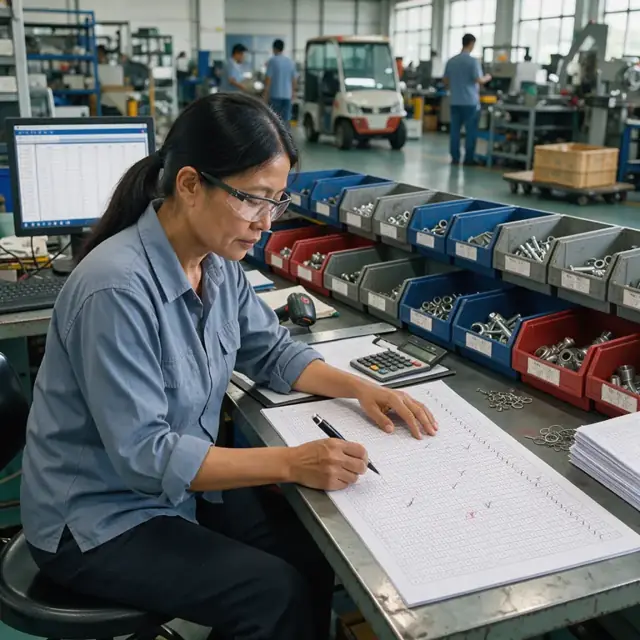
Bill of Materials Specialist
Explode each machine configuration into a complete, revision-controlled bill of materials and kit lists.
Works in: Ambitious Sheets, Ambitious Docs, Ambitious Tasks · Workflows: Bill of materials creation and revision control
Automates
- Generates the multi-level BOM from the configuration
- Pulls latest revision for every part
- Flags long-lead purchased and fabricated items
- Produces bay-specific kit lists
- Stores the released BOM
Stops for a person
- Engineering reviews and approves any BOM change after initial release
- Quality confirms material certifications match the BOM

Procurement Coordinator
Generate purchase orders for long-lead and standard components and track their arrival against the build schedule.
Works in: Ambitious Sheets, Ambitious Tasks, Email Buckets · Workflows: Supplier purchasing and inbound logistics
Automates
- Identifies items to purchase by supplier and lead time
- Drafts purchase orders with correct part numbers and dates
- Tracks inbound shipments and updates inventory
- Alerts on late items that affect the schedule
- Collects supplier certification documents
Stops for a person
- Purchasing manager approves and sends every purchase order
- Receiving confirms material test reports and certifications
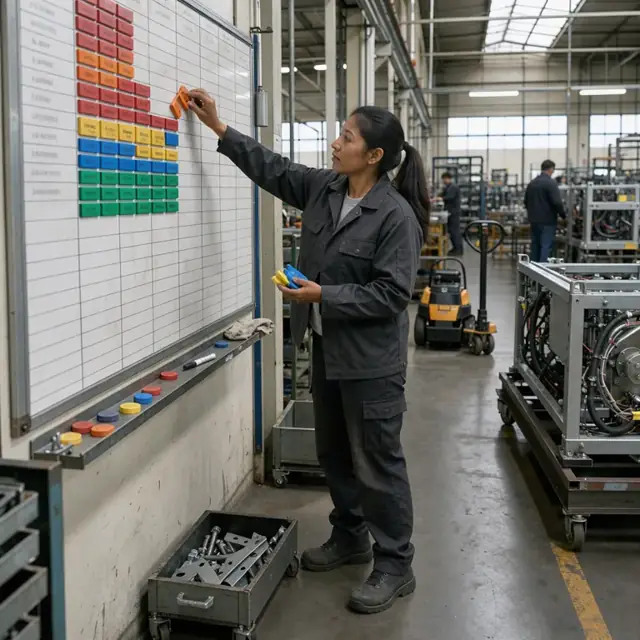
Production Scheduler
Build and maintain the master production schedule across all work centers while balancing capacity constraints.
Works in: Process Optimizer, Ambitious Sheets · Workflows: Production scheduling and capacity planning
Automates
- Loads new orders into the master schedule
- Assigns build slots to welding, paint and assembly bays
- Identifies capacity bottlenecks using the process optimizer
- Generates the weekly build plan for each station
Stops for a person
- The production manager approves the final weekly schedule
- Engineering must sign off on any schedule changes after fabrication has begun
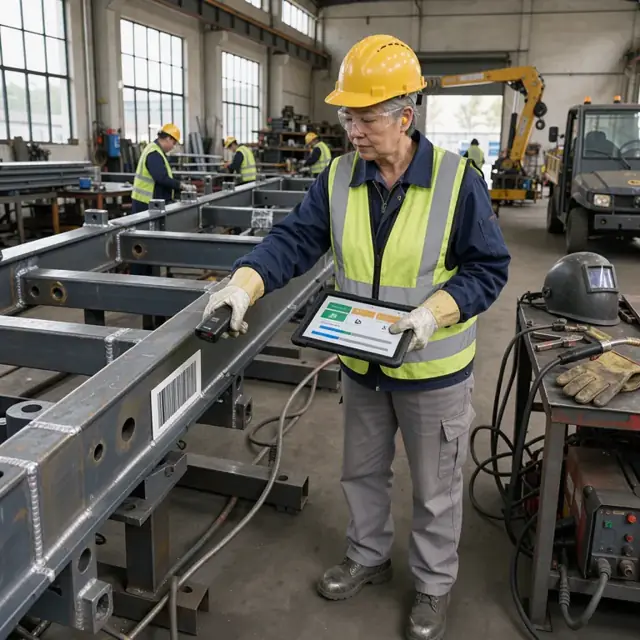
Shop Floor Production Tracker
Issue work instructions and track each machine through every production milestone with required quality documentation.
Works in: Ambitious Tasks, Ambitious Docs, Ambitious Sheets · Workflows: Shop floor production tracking
Automates
- Issues the next unit's kit list and instructions at the start of each shift
- Records completion of each work-center milestone
- Logs torque, weld and dimensional data by serial number
- Holds a unit until all required sign-offs are recorded
Stops for a person
- Welders, assemblers and inspectors personally confirm and sign off each checkpoint
- Quality manager reviews any logged deviations or rework

Final Quality Documenter
Compile final inspection results, test data and certification documents for each completed machine.
Works in: Ambitious Docs, Ambitious Tasks, Ambitious Sheets · Workflows: Final quality inspection and documentation, Regulatory and safety compliance paperwork
Automates
- Generates the configuration-specific final inspection checklist
- Compiles torque logs, weld maps and material certifications
- Drafts the operator manual packet
- Prepares the complete quality documentation file
- Generates safety and emissions checklists checked against owner-confirmed requirements
Stops for a person
- A certified quality inspector performs and signs off the final functional and safety checks
- The quality manager confirms all required documents are present before release
- Licensed staff confirm which regulatory requirements apply and handle all filings

Shipping and Delivery Coordinator
Prepare all shipping, transport and customer handover documentation once a machine passes final quality.
Works in: Ambitious Docs, Ambitious Tasks, Contract Analyzer · Workflows: Shipping, transport and customer handover
Automates
- Drafts the packing list, bill of lading and transport permits
- Schedules transport based on machine dimensions
- Prepares delivery notification and commissioning checklist
- Tracks the unit to customer site and closes the order
Stops for a person
- The owner or shipping manager approves and files all transport and export documents
- The dealer or customer confirms receipt and any commissioning steps
Workflows
Order specification review and release
Starts when: A signed purchase order arrives from sales or a dealer
- Extract all selected options, engine tier, hydraulic package, attachments and special instructions
- Compare configuration against approved option list and engineering standards
- Release a controlled engineering packet with part numbers and revision levels
- Create a master production order with serial number assignment
- Notify engineering and procurement of any non-standard requirements
Watch for: Any deviation from standard options must be approved by engineering before release; Serial numbers are assigned only after configuration is locked
Bill of materials creation and revision control
Starts when: Engineering packet is released or a mid-build change order arrives
- Explode the configuration into a multi-level bill of materials
- Pull current revision levels for every part and subassembly
- Flag long-lead and custom fabricated items
- Generate kit lists for each production bay
- Store the released BOM in the controlled document system
Watch for: Engineering must approve any BOM revision after release; Superseded parts must be quarantined or returned
Supplier purchasing and inbound logistics
Starts when: BOM is released and on a weekly cadence
- Identify items needing purchase by supplier and lead time
- Draft purchase orders with exact part numbers, revisions and delivery dates
- Track inbound shipments against production schedule
- Update inventory for received castings, hydraulics and electronics
- Flag any late items that shift the build schedule
- Collect and file supplier certifications for traceability
Watch for: Engines and major hydraulic components often have long lead times; Supplier certifications and material test reports must be collected before use
Production scheduling and capacity planning
Starts when: Weekly and when new orders are released
- Load confirmed orders into the master schedule by required ship date
- Assign build slots to welding, machining, paint and assembly bays
- Balance workload across limited-capacity stations such as large-part painting
- Run the process optimizer to identify bottlenecks and suggest adjustments
- Publish the weekly build plan to each work center
Watch for: Paint booth and weld bay capacity are frequent constraints; Changes to schedule after steel is cut require engineering approval
Shop floor production tracking
Starts when: Start of each shift and at each work-center handoff
- Issue the next unit's kit list and work instructions to the bay
- Track completion of welding, assembly, painting and testing milestones
- Log torque values, weld inspections and dimensional checks
- Capture any deviations or rework required
- Advance the unit to the next station only after sign-off
Watch for: Critical welds and torque sequences must be documented per serial number; Non-conforming material must be tagged and reviewed by quality
Final quality inspection and documentation
Starts when: Machine reaches final assembly complete status
- Generate the final inspection checklist for that configuration
- Record functional test results, fluid levels and safety device calibration
- Compile torque logs, weld maps and material certifications
- Draft the operator manual and serial-number-specific documentation packet
- Release the machine for shipment once all checks are complete
Watch for: Every machine must have its own signed inspection record; Certain components require third-party verification that only a person can confirm
Shipping, transport and customer handover
Starts when: Final quality packet is approved
- Draft the packing list, bill of lading and any export or transport permits
- Schedule transport based on machine size and destination
- Prepare delivery notification and commissioning checklist for the dealer or customer
- Track the unit until it reaches the customer site
- Close the production order and update finished-goods inventory
Watch for: Oversize transport permits are required for many machines; The owner approves all documents before they are sent or filed
Regulatory and safety compliance paperwork
Starts when: At engineering release, final quality and on renewal dates
- Generate equipment-specific safety and emissions checklists based on configuration
- Compile serial-numbered component traceability records and material certifications
- Track renewal dates for facility permits, welder certifications and test equipment calibration
- Prepare documentation packets for filing with regulatory bodies
- Flag any missing third-party approvals required before shipment
Watch for: Rules differ by destination country, state and end-use application; Only licensed engineers and quality managers can confirm which requirements apply and sign off
Bot templates for this industry
- Construction Machinery Manufacturing (7 bots)
Source: U.S. Small Business Administration, Office of Size Standards, Table of Small Business Size Standards Matched to North American Industry Classification System Codes, version March 2023 (effective 2023-03-17, NAICS 2022). Size standards are shown for reference only.