

Semiconductor Machinery Manufacturing
Semiconductor machinery manufacturers design, assemble, test and ship custom and standard wafer fabrication, deposition, lithography, etching and inspection equipment. For a shop that builds both one-off tools for new processes and repeat production machines, the specialists turn customer specifications into engineering work orders, manage long-lead parts and assemblies, schedule cleanroom integration and test sequences, and track compliance with export controls and safety standards. The engineers and technicians keep process recipes, tolerances and final acceptance criteria.
What makes this business different
- Long-lead-time components such as vacuum pumps, RF generators, precision stages and optics that must be ordered early against a master bill of materials
- Cleanroom assembly and test areas with strict particle, ESD and humidity controls
- Customer-specific configurations that require engineering change orders tracked through every revision
- Factory acceptance tests, site acceptance tests and detailed documentation packages that ship with each tool
- Export-control classifications, end-user certificates and licensing paperwork for international shipments
- Supplier quality audits, incoming material certifications and nonconformance tracking
- Preventive maintenance schedules for assembly jigs, test stands and metrology equipment
Specialist bots

Specification Intake Specialist
Convert incoming customer purchase orders and technical specifications into structured engineering work orders and compliance matrices.
Works in: Ambitious Docs, Ambitious Tasks, Contract Analyzer · Workflows: Customer specification review and order entry
Automates
- Parses requirements from PDFs and emails
- Builds the compliance matrix
- Flags gaps against standard configurations
- Creates the initial engineering work order
- Drafts the order acknowledgment
Stops for a person
- Engineering reviews and approves all flagged gaps and custom work
- Export control questions are escalated to the owner before any response
- A person sends the final acknowledgment and handles deposits

Procurement and Inventory Coordinator
Explode bills of materials into purchase requisitions and track long-lead components through delivery.
Works in: Ambitious Sheets, Ambitious Tasks · Workflows: Long-lead procurement and inventory
Automates
- Generates part lists with lead times
- Creates purchase requisitions
- Monitors supplier confirmations and delivery dates
- Alerts on late items and adjusts inventory records
Stops for a person
- The owner approves and places every purchase order
- Material review board decisions on nonconforming parts are made by people

Engineering Change Coordinator
Manage engineering change orders from request through updated drawings, bills of materials and work orders.
Works in: Ambitious Docs, Ambitious Tasks, Process Optimizer · Workflows: Engineering change order management
Automates
- Logs change requests with impact analysis
- Routes changes to the correct engineering disciplines
- Updates master documents and bills of materials
- Issues revised tasks to production
Stops for a person
- Lead engineers must approve every change before it is released
- The owner reviews cost and schedule impacts

Cleanroom Assembly Scheduler
Sequence module builds, reserve cleanroom space and assign technicians for each tool under construction.
Works in: Ambitious Tasks, Ambitious Sheets · Workflows: Cleanroom assembly scheduling
Automates
- Builds the detailed assembly sequence
- Reserves cleanroom bays and test equipment
- Assigns technicians and required fixtures
- Inserts quality gates and adjusts for late parts
Stops for a person
- Production managers approve the final weekly schedule
- Any changes to technician assignments are confirmed by the team lead

Test and Qualification Coordinator
Generate factory acceptance test protocols, compile test data and produce the final documentation package.
Works in: Ambitious Docs, Ambitious Tasks, Ambitious Sheets · Workflows: Factory acceptance testing and qualification
Automates
- Creates test protocols from the compliance matrix
- Organizes recorded test results
- Generates the as-built report and certificates
- Flags deviations for review
Stops for a person
- Test engineers and the owner review and sign every test report
- Disposition of any failed acceptance criteria is decided by people
Export Compliance and Shipping Clerk
Prepare export classification, end-user documentation and all shipment paperwork for each tool.
Works in: Ambitious Docs, Contract Analyzer, Ambitious Tasks · Workflows: Export compliance and shipment preparation
Automates
- Determines export control classification numbers
- Assembles required certificates and licenses
- Prepares packing lists and manuals
- Drafts instructions for the freight forwarder
Stops for a person
- The owner personally reviews and approves every export filing
- Legal counsel confirms classification when needed

Field Support Coordinator
Prepare site readiness documents, schedule installation resources and track site acceptance results.
Works in: Ambitious Tasks, Ambitious Docs · Workflows: Site acceptance and field support
Automates
- Generates the customer site preparation checklist
- Schedules technician travel and required tools
- Compiles site acceptance test records
- Creates ongoing maintenance schedules
Stops for a person
- on-site service managers approve travel and installation plans
- The owner reviews any site deviation reports before closure
Workflows
Customer specification review and order entry
Starts when: A new purchase order or technical inquiry arrives
- Extract all performance requirements, interface details, wafer size, process chemistry and throughput targets
- Compare requirements against standard product configurations and flag gaps for engineering
- Draft a compliance matrix showing where each requirement is met or requires custom work
- Create an engineering work order with linked specifications and target ship date
- Confirm order acknowledgment and deposit status
Watch for: Every performance claim must be traceable to a verified test or calculation; Export-control red flags must be escalated before any technical discussion proceeds
Long-lead procurement and inventory
Starts when: After order entry and on a weekly cadence
- Explode the bill of materials into purchased parts with lead times and safety stock rules
- Generate purchase requisitions for vacuum, motion, plasma and metrology subsystems
- Track supplier acknowledgments, certificates of conformance and scheduled delivery dates
- Flag late items and trigger rescheduling of downstream assembly
- Maintain inventory of common spares and consumables for test stands
Watch for: Many components are sole-sourced and cannot be substituted without requalification; All incoming material must carry traceability documentation
Engineering change order management
Starts when: A customer requests a modification or an internal issue is discovered
- Log the requested change with justification and impact on cost and schedule
- Route the change to mechanical, electrical, software and process engineering for review
- Update the master bill of materials, drawings and software version
- Issue revised work orders to assembly and test teams
- Track which machines in the field incorporate each revision level
Watch for: Changes must be version-controlled and never implemented without documented approvals; Field retrofits require updated documentation packages
Cleanroom assembly scheduling
Starts when: When long-lead items are confirmed or on a weekly basis
- Sequence module builds, subassembly integration, wiring, plumbing and final tool assembly
- Reserve cleanroom bays and test stands according to tool size and process type
- Assign technicians and required fixtures to each station
- Insert quality hold points and inspection gates
- Adjust the schedule when late parts or engineering changes arrive
Watch for: Cleanroom space is limited and tools can occupy a bay for weeks; Certain steps require two technicians simultaneously
Factory acceptance testing and qualification
Starts when: When a tool reaches final assembly
- Generate the test protocol from the compliance matrix and customer requirements
- Record mechanical, electrical, vacuum, plasma and wafer-handling performance data
- Run process qualification wafers and compare results to acceptance criteria
- Compile the full test report, certificates and as-built documentation
- Flag any deviations for engineering disposition
Watch for: Test wafers and reference samples must be controlled and traceable; All data must be reviewed and signed before shipment
Export compliance and shipment preparation
Starts when: After successful factory acceptance
- Classify the tool under export control lists and confirm license requirements
- Collect end-user certificates and destination country documentation
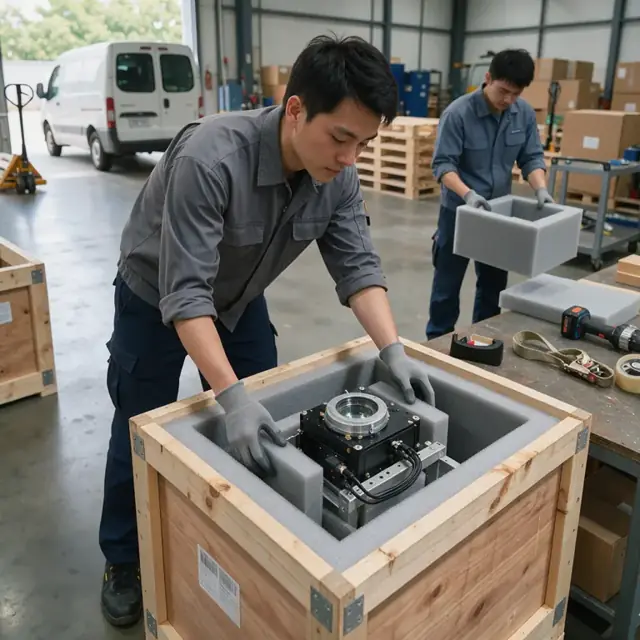
- Prepare the packing list, crate specifications and installation manual set
- Draft shipping instructions and notify the freight forwarder
- File any required electronic export information
Watch for: Different countries have different licensing and documentation rules; The owner must personally approve all export paperwork before filing
Site acceptance and field support
Starts when: Before and after tool shipment
- Draft site preparation checklist for the customer facility
- Schedule and track installation technician travel and required tooling
- Log site acceptance test results and any punch-list items
- Create a maintenance schedule and spare parts recommendation
- Capture lessons learned for the next build
Watch for: Installation may require coordination with the customer's process engineers; Any deviations found on-site must be documented and approved
Bot templates for this industry
Source: U.S. Small Business Administration, Office of Size Standards, Table of Small Business Size Standards Matched to North American Industry Classification System Codes, version March 2023 (effective 2023-03-17, NAICS 2022). Size standards are shown for reference only.