

Speed Changer, Industrial High-Speed Drive and Gear Manufacturing
Manufacturers produce custom and standard speed reducers, increasers, gearboxes and high-speed drives to exact customer specifications. For a shop that receives engineered drawings for industrial gear sets and assembles precision units for OEMs and aftermarket replacement, the specialists turn RFQ messages into priced proposals, drawings into manufacturing routings and bills of material, routings into machine schedules and purchase orders for raw stock and components, and finished units into inspection records, certifications and shipments. Tolerances, heat treatment, balancing and material certifications stay with the machinist and engineer.
What makes this business different
- Custom engineered drawings with precise tolerances, materials, hardness and balancing requirements that must be followed exactly
- Long-lead-time raw materials and subcontracted processes such as heat treating, gear cutting and surface finishing
- Machine capacity and tooling constraints that determine feasible production dates
- Traceability of each gear set or gearbox to its raw material heat numbers and inspection records
- Assembly, run-testing, vibration analysis and final inspection before shipment
- Export documentation, material certifications and customer-specific quality packets
- Repeat OEM customers who reorder the same part numbers on blanket purchase orders
Specialist bots

Quote Engineer
Convert incoming RFQs and drawings into accurate priced proposals with lead times.
Works in: Ambitious Docs, Ambitious Sheets, Contract Analyzer · Workflows: Quote and order intake
Automates
- Reads incoming emails and attached drawings
- Extracts part numbers, quantities, materials and tolerances
- Compares to historical pricing and routings
- Drafts proposal with exceptions and delivery date
- Creates the released order task
Stops for a person
- The engineer reviews all new or complex geometries
- Pricing and lead-time commitments are approved before sending
- Exceptions to customer drawings are confirmed by the owner
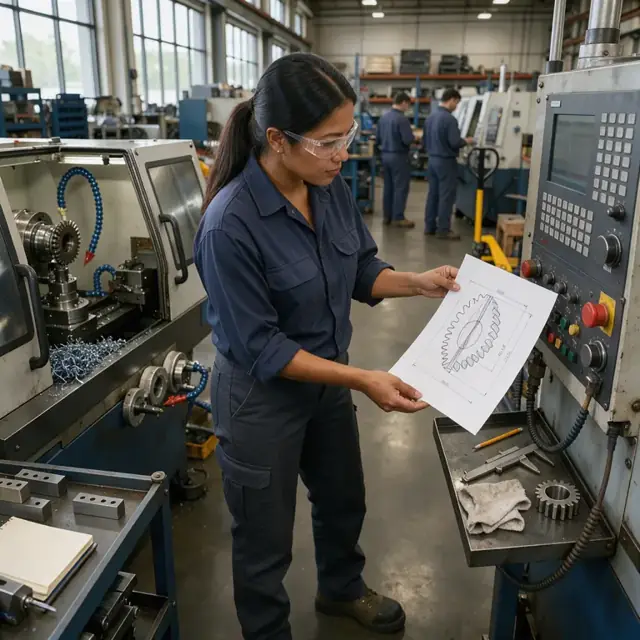
Process and Routing Planner
Create detailed manufacturing routings, bills of material and inspection points from engineering drawings.
Works in: Ambitious Docs, Ambitious Sheets, Process Optimizer · Workflows: Routing and bill-of-material creation
Automates
- Generates operation sequences and machine assignments
- Builds the bill of material from the drawing
- Calculates estimated cycle and lead times
- Attaches required inspection and test specifications
Stops for a person
- The lead machinist or engineer approves the routing before release
- Any changes to proven processes are reviewed

Materials and Purchasing Coordinator
Generate purchase requisitions for raw material, components and subcontract services while maintaining traceability.
Works in: Ambitious Sheets, Ambitious Tasks, Ambitious Docs · Workflows: Material and component purchasing
Automates
- Calculates net requirements from BOM and current stock
- Drafts purchase requisitions grouped by supplier
- Tracks incoming certifications and heat numbers
- Maintains minimum stock levels for hardware
Stops for a person
- The owner approves and places every purchase order
- Material substitutions are reviewed by engineering
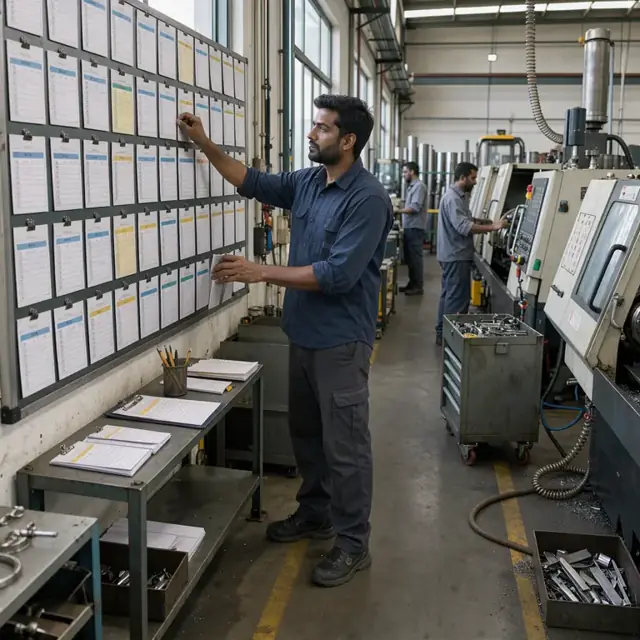
Production Scheduler
Create and maintain machine schedules that respect capacity, tooling and outside processing constraints.
Works in: Ambitious Sheets, Process Optimizer · Workflows: Machine scheduling and capacity planning
Automates
- Loads orders onto work centers by due date and cycle time
- Highlights capacity conflicts and bottlenecks
- Suggests alternate routings or overtime
- Adjusts for supplier or heat-treat delays
Stops for a person
- The shop supervisor approves the weekly schedule
- Rush orders are scheduled only after owner review
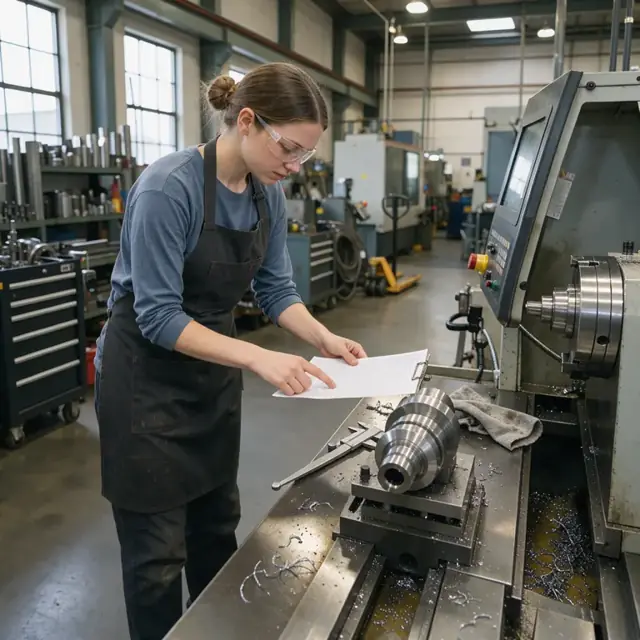
Shop Floor Coordinator
Release work packets to machinists, capture production data and move jobs to the next operation.
Works in: Ambitious Tasks, Ambitious Docs, Ambitious Sheets · Workflows: Shop floor production execution
Automates
- Generates and releases traveler packets with drawings and tooling lists
- Logs setup times, run times and scrap quantities
- Captures in-process inspection data at flagged points
- Routes completed operations to next work center or subcontract
Stops for a person
- The machinist performs first-piece inspection and approves the run
- Any deviation requires engineering review and sign-off before continuation
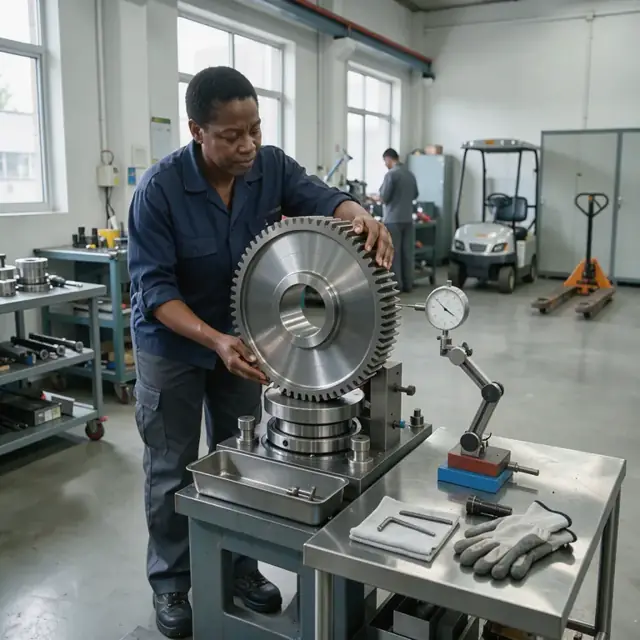
Quality Inspector
Compile final inspection results, test data and documentation packets for each completed gearbox or gear set.
Works in: Ambitious Docs, Ambitious Sheets, Ambitious Tasks · Workflows: Final inspection and testing, Shipping, documentation and invoicing
Automates
- Generates feature-by-feature inspection checklists
- Organizes material certs, hardness and balance reports
- Drafts certificate of conformance and data packets
- Prepares shipping and invoice documentation
Stops for a person
- The inspector personally verifies critical dimensions
- All quality packets are reviewed and signed by the owner before shipment
- Any non-conformance is dispositioned by engineering
Workflows
Quote and order intake
Starts when: A customer sends an RFQ, drawing or purchase order by email or portal
- Extract part numbers, quantities, due dates and all drawing revisions
- Check against existing part files and manufacturing capabilities
- Draft a priced proposal with lead time and exceptions
- Record customer approval and convert to a released manufacturing order
- Create a master task with linked drawings and specifications
Watch for: Tolerances and material callouts must be captured exactly as drawn; Exceptions to print must be flagged and approved before release
Routing and bill-of-material creation
Starts when: New or revised manufacturing order is released
- Explode the drawing into operations, machines, tooling and setup times
- Generate a detailed bill of material for raw stock, purchased components and subcontracted services
- Calculate cycle times and total lead time including queue and outside processing
- Flag critical dimensions and inspection points
- Attach heat-treat, balancing and finishing specifications
Watch for: Gear geometry and tooth profiles require specialized machining sequences; Subcontracted processes must be sequenced correctly in the routing
Material and component purchasing
Starts when: After routing and BOM are approved and weekly
- Subtract current inventory and on-order quantities from BOM requirements
- Draft purchase requisitions for bar stock, forgings, bearings and subcontract services
- Track supplier lead times against the required start dates
- Maintain minimum stock levels for common fasteners and hardware
- Record incoming material certifications and heat numbers
Watch for: Special alloy steels and large-diameter bar have long mill lead times; All incoming material must be traceable to its mill certificate
Machine scheduling and capacity planning
Starts when: Weekly and when new orders arrive
- Load approved orders onto specific machines and work centers using the construction scheduler
- Balance setup and run times across lathes, mills, gear cutters and grinders
- Identify bottlenecks and suggest alternate routings or overtime
- Reserve time for inspection and assembly
- Adjust schedule for supplier delays or rush orders
Watch for: CNC gear grinders and hobbers are limited resources with long setup times; Heat-treat furnace batches affect multiple orders
Shop floor production execution
Starts when: Scheduled operation becomes due
- Release traveler, drawings and tooling list to the machinist
- Capture setup and run times, scrap and rework
- Record in-process inspection results at critical dimensions
- Move completed operation to next step or outside process
- Flag any deviations for engineering review
Watch for: First-piece inspection is mandatory before production run; Any out-of-tolerance condition stops the job until engineering disposition
Final inspection and testing
Starts when: Unit reaches final assembly and test
- Generate inspection checklist from drawing critical features
- Record dimensional, hardness, vibration and runout results
- Compile material certifications, heat-treat records and balance reports
- Draft customer quality data packet
- Release for packaging and shipping once all checks are complete
Watch for: Gear mesh and backlash testing must meet customer specifications; Traceability records must accompany every shipped unit
Shipping, documentation and invoicing
Starts when: Inspection is approved
- Prepare packing list, commercial invoice and certificate of conformance
- Draft shipment notification and tracking information
- Create and send final invoice with supporting quality documents
- Close the manufacturing order and update inventory
- Capture customer feedback or non-conformance reports
Watch for: Heavy gearboxes require special crating and rigging instructions; Export orders need additional end-use and destination documentation
Bot templates for this industry
Source: U.S. Small Business Administration, Office of Size Standards, Table of Small Business Size Standards Matched to North American Industry Classification System Codes, version March 2023 (effective 2023-03-17, NAICS 2022). Size standards are shown for reference only.