

Computer Storage Device Manufacturing
Manufacturers of hard disk drives, solid-state drives, tape storage systems and related computer storage devices produce to forecast, customer order and OEM contracts. Orders are translated into production schedules that respect cleanroom capacity, component lead times and test protocols. Specialists convert sales orders into build plans, manage component inventory and supplier releases, schedule assembly and test cells, track yields and non-conforming material, prepare shipments against customer routing guides, and maintain the compliance and calibration paperwork required by the industry.
What makes this business different
- Long-lead-time electronic components and mechanical parts with strict revision control
- Cleanroom and ESD-controlled assembly areas that limit daily throughput
- High-mix low-volume or forecast-driven batch production with frequent engineering changes
- Detailed yield tracking, failure analysis and return-merchandise-authorization processes
- Customer-specific labeling, firmware flashing, serialization and acceptance-test data packages
- Supplier performance scorecards, incoming-inspection logs and purchase-order acknowledgments
- Calibration records for test equipment, audit readiness, and country-of-origin documentation
Specialist bots

Order Configurator
Convert incoming purchase orders into validated, build-ready production tasks.
Works in: Ambitious Tasks, Ambitious Docs, Contract Analyzer · Workflows: Customer order intake and configuration
Automates
- Reads and extracts order details from emails and portal files
- Validates configuration against current bill of materials
- Checks capacity and lead-time constraints
- Drafts order acknowledgments
- Creates serialized production tasks
Stops for a person
- Engineering approves any deviation from standard configurations
- Sales reviews and sends all customer-facing acknowledgments
- A person releases the order to production
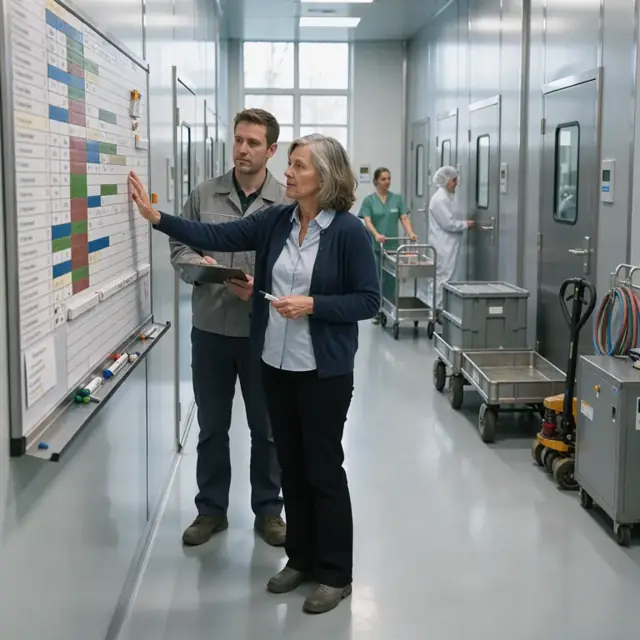
Production Scheduler
Build and maintain the master production schedule against cleanroom and test capacity.
Works in: Process Optimizer, Ambitious Sheets · Workflows: Production scheduling and capacity planning
Automates
- Loads orders and forecast into the master schedule
- Allocates time in cleanroom and test stations
- Identifies bottlenecks using process optimization
- Releases daily build plans
- Adjusts for expected yield loss
Stops for a person
- Manufacturing manager approves the weekly schedule
- Any schedule change affecting customer dates requires sales sign-off
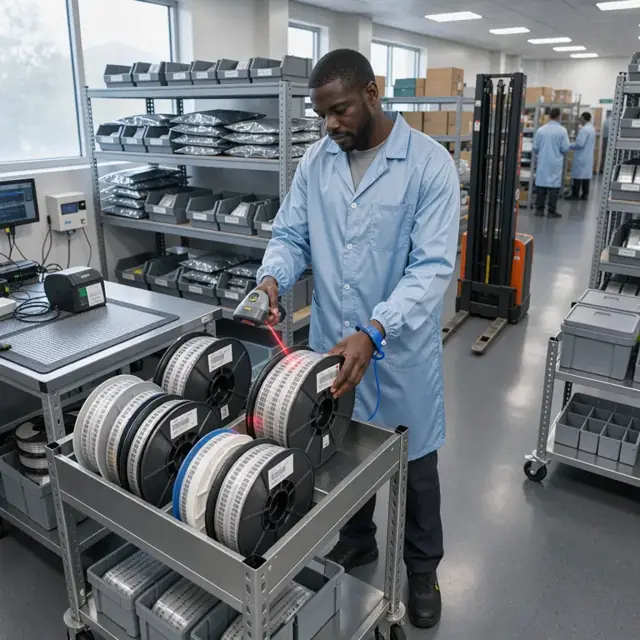
Component Planner
Explode bills of materials, net requirements and generate purchase requisitions for long-lead components.
Works in: Ambitious Sheets, Ambitious Tasks, Ambitious Docs · Workflows: Component procurement and inventory control
Automates
- Calculates gross and net requirements by revision
- Creates supplier-specific purchase requisitions
- Tracks incoming inspection and corrective actions
- Maintains revision and shelf-life records
Stops for a person
- Purchasing places all purchase orders and spends money
- Engineering approves any substitution or last-time buy

Test and Yield Analyst
Capture test data, calculate yields and route failing units for analysis.
Works in: Ambitious Tasks, Ambitious Sheets, Process Optimizer · Workflows: Assembly test and yield management
Automates
- Parses in-process test logs and assigns serial numbers
- Computes first-pass and final yields by lot
- Flags units that fail acceptance criteria
- Prepares summary data packages for customers
Stops for a person
- Failure-analysis engineer reviews all rejected drives
- Quality manager approves yield reports before shipment

Quality Documentation Clerk
Assemble and maintain all lot travelers, calibration records and audit folders.
Works in: Ambitious Docs, Ambitious Sheets, Ambitious Tasks · Workflows: Quality and compliance documentation
Automates
- Compiles test logs, calibration certificates and origin documents
- Checks documents against customer requirements the owner confirms
- Maintains calibration due dates
- Prepares audit-ready digital folders
Stops for a person
- Quality engineer confirms that every requirement the owner has listed is checked
- Management reviews and approves all audit submissions

Shipping Coordinator
Prepare finished goods for shipment according to each customer's routing guide and labeling rules.
Works in: Ambitious Tasks, Ambitious Docs, Ambitious Sheets · Workflows: Shipping fulfillment and customer delivery
Automates
- Matches completed drives to open orders
- Generates customer-specific labels and packing lists
- Creates advance shipment notices
- Closes production orders and updates inventory
Stops for a person
- Logistics manager approves carrier selection and final documents
- A person physically verifies label placement and packaging

RMA and Warranty Coordinator
Log returned drives, drive failure analysis workflow and prepare credit or repair dispositions.
Works in: Ambitious Tasks, Ambitious Docs, Ambitious Sheets · Workflows: RMA and warranty processing
Automates
- Creates RMA records from incoming notices
- Routes units to the failure-analysis queue
- Updates warranty and failure databases
- Drafts credit memos and corrective-action requests
Stops for a person
- Quality engineer determines final disposition on each returned unit
- Finance approves all credit memos before issuance
Workflows
Customer order intake and configuration
Starts when: New purchase order arrives by email, portal or EDI
- Parse order for model, capacity, firmware revision, quantity and requested ship date
- Validate configuration against current approved bill of materials and ECO status
- Check against production capacity and component availability
- Draft order acknowledgment with confirmed ship window
- Create production task with full specification and serialization range
Watch for: OEM customers require specific labeling and data-pack formats; Engineering change orders must be incorporated before build release
Production scheduling and capacity planning
Starts when: Weekly forecast update or new firm order
- Load confirmed orders and forecast into master schedule
- Allocate cleanroom slots, test-station hours and assembly labor
- Run process-optimizer to identify bottlenecks in assembly, test or burn-in
- Release build plan to manufacturing execution system
- Adjust schedule for yield loss and rework loops
Watch for: Cleanroom utilization is strictly limited by gowning and air-flow constraints; Test equipment utilization must be balanced across multiple product families
Component procurement and inventory control
Starts when: After schedule release and on a weekly cadence
- Explode bill of materials for all released builds
- Net requirements against on-hand, on-order and consigned stock
- Generate purchase requisitions by supplier lead time and MOQ
- Track incoming inspection results and supplier corrective actions
- Maintain revision-controlled inventory records and shelf-life for media and chemicals
Watch for: Certain integrated circuits and magnetic heads have long lead times; Obsolete or end-of-life parts require last-time-buy planning
Assembly test and yield management
Starts when: Daily start of each production shift
- Release next work order to cleanroom and test cells
- Capture in-process test data and serialization
- Calculate first-pass and final yield by lot and root cause
- Route non-conforming drives to failure analysis queue
- Generate test-data summary reports for customer acceptance
Watch for: Each drive must receive unique serial number and firmware flash; Yield issues trigger supplier notifications and line stops
Quality and compliance documentation
Starts when: End of each production lot and on audit schedule
- Compile traveler, test logs, calibration certificates and country-of-origin forms
- Check all documents against customer and regulatory requirements the owner confirms
- Maintain equipment calibration schedule and recall list
- Prepare audit-ready folders
- Archive serialized test records for traceability
Watch for: Multiple customers maintain their own qualification and audit lists; All changes to processes or suppliers must be documented
Shipping fulfillment and customer delivery
Starts when: When production lot completes final acceptance test
- Match finished goods to open customer orders and routing guides
- Generate customer-specific labels, packing lists and electronic data files
- Schedule carrier pickup and transmit advance shipment notice
- Close production order and update inventory
- Trigger supplier payment milestones where applicable
Watch for: Many OEMs require specific bar-code formats and electronic files; Export documentation and denied-party screening are required for international shipments
RMA and warranty processing
Starts when: Customer returns a defective unit
- Log incoming RMA with serial number and failure symptom
- Route unit to failure-analysis lab and capture findings
- Determine disposition (repair, scrap, credit)
- Update failure database and supplier scorecards
- Draft return-to-customer or credit memo for approval
Watch for: Warranty periods and terms differ by customer and product line; Failure data are used to drive supplier corrective-action requests
Bot templates for this industry
Source: U.S. Small Business Administration, Office of Size Standards, Table of Small Business Size Standards Matched to North American Industry Classification System Codes, version March 2023 (effective 2023-03-17, NAICS 2022). Size standards are shown for reference only.