

Instruments and Related Products Manufacturing for Measuring, Displaying, and Controlling Industrial Process Variables
Manufacturers of industrial process instruments produce sensors, transmitters, controllers and displays that measure temperature, pressure, flow, level and analytical variables. For a shop that assembles custom-configured transmitters and control panels from components and ships to plant projects, the specialists turn customer specs into buildable orders, orders into component kits and test plans, and completed instruments into calibrated certificates and shipping documents. Calibration standards, traceability and configuration rules stay with the technician.
What makes this business different
- Custom configurations with many options (ranges, outputs, materials, certifications and hazardous-area approvals) that must reach production exactly as specified
- Project-based production with customer-specific build dates, FAT dates and delivery deadlines
- Component traceability from lot numbers through final serial numbers
- Calibration against NIST-traceable standards with documented uncertainty
- Hazardous area certifications, SIL ratings and material certificates that must be kept with each unit
- Factory acceptance test procedures that vary by customer and application
- Repeat industrial customers who reorder spares and request identical replacements
Specialist bots

Order Configurator
Turn customer specifications and purchase orders into verified, buildable instrument configurations.
Works in: Ambitious Tasks, Ambitious Docs, Contract Analyzer · Workflows: Order and specification intake
Automates
- Reads incoming specification sheets and purchase orders
- Maps options to approved part numbers and capabilities
- Checks lead time against production calendar
- Drafts order acknowledgment
- Creates the production task with full configuration
Stops for a person
- Engineering approves any non-catalog configurations
- A person confirms pricing and special terms before acceptance
- Qualified staff verifies hazardous-area and SIL ratings
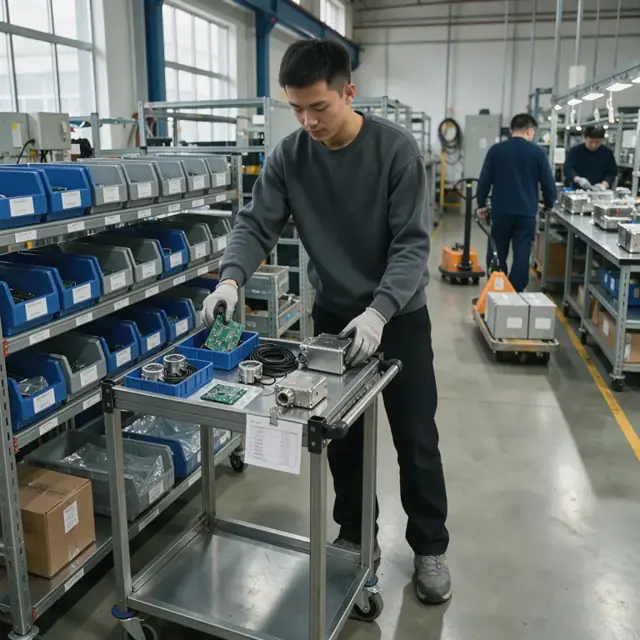
Component Kit Preparer
Convert each instrument order into a complete traceable component kit and work packet.
Works in: Ambitious Sheets, Ambitious Tasks, Ambitious Docs · Workflows: Component kitting and material pull
Automates
- Explodes configuration into bill of materials
- Reserves and allocates components from stock
- Prints kit lists and traceability labels
- Assembles the complete work order packet
Stops for a person
- Technician verifies kit contents before beginning assembly
- Engineering approves any substitution
- A person releases the work order to the floor

Calibration and Test Scheduler
Assign benches, standards and technicians to each instrument for assembly, calibration and testing.
Works in: Ambitious Tasks, Process Optimizer · Workflows: Assembly and calibration scheduling
Automates
- Assigns work based on required equipment and certifications
- Books calibration standards and environmental chambers
- Builds the step-by-step work sequence
- Flags units needing witness testing
Stops for a person
- Lead technician reviews and adjusts the daily schedule
- A person verifies standard calibration status before use

Test and Inspection Verifier
Run and record functional, calibration and inspection tests against acceptance criteria.
Works in: Ambitious Tasks, Ambitious Docs, Ambitious Sheets · Workflows: Functional test and inspection
Automates
- Executes automated test sequences
- Records measured values at each test point
- Compares results to tolerance limits
- Captures supporting photographs and generates draft certificates
Stops for a person
- Qualified technician reviews and signs all test records
- Any out-of-tolerance result is escalated for rework or disposition
- A person confirms test equipment was in calibration during the test

Certification and Documentation Clerk
Compile all material certificates, calibration reports and regulatory documents for each instrument.
Works in: Ambitious Docs, Contract Analyzer, Ambitious Tasks · Workflows: Certification and documentation packaging
Automates
- Gathers traceability and material certificates
- Merges calibration data into final reports
- Generates serialized test reports and packing lists
- Attaches all records to the order file
Stops for a person
- Quality manager reviews and approves the final documentation package
- A person verifies that all customer-specified documents are included
- The owner confirms any export declarations

Shipping and Dispatch Coordinator
Organize final shipment, prepare export papers and notify customers of dispatch.
Works in: Ambitious Tasks, Ambitious Docs, Email Buckets · Workflows: Shipping and project dispatch
Automates
- Groups shipments by project and destination
- Selects carrier and service level
- Drafts shipment notifications and tracking details
- Triggers inventory replenishment for consumed parts
Stops for a person
- A person packs and labels the physical shipment
- The owner approves and releases all commercial invoices and export documents
- Staff logs customer receipt confirmation

Inventory and Replenishment Forecaster
Monitor component usage, maintain stock levels and draft purchase orders for standard parts.
Works in: Ambitious Sheets, Ambitious Tasks, Process Optimizer · Workflows: Inventory and component replenishment
Automates
- Calculates consumption from completed orders
- Compares stock to min/max and forecast demand
- Drafts purchase orders by supplier
- Flags items nearing shelf life or calibration due dates
Stops for a person
- Purchasing manager reviews and places all purchase orders
- Engineering approves any alternate sourcing
- A person performs incoming inspection and lot traceability entry
Workflows
Order and specification intake
Starts when: A customer submits a purchase order, specification sheet or request for quotation
- Capture model, range, output type, process connection, material, approvals and special markings
- Check the configuration against approved part numbers and manufacturing capabilities
- Confirm required lead time against current production schedule and component availability
- Record pricing, terms and any special test or documentation requirements
- Create a build-ready order task with full configuration spec
Watch for: Hazardous area and SIL ratings must be captured exactly and verified against certification scope; Non-standard materials or outputs require engineering review before acceptance
Component kitting and material pull
Starts when: Order released to production
- Explode the configuration into a complete bill of materials
- Reserve and pull sensors, electronics, housings and certificates from inventory
- Flag any long-lead or customer-supplied items
- Print kit list, serial number assignment and traceability labels
- Create a work order packet with configuration drawing
Watch for: Lot and serial traceability required for all critical components; Electrostatic-sensitive devices must be handled per documented procedures
Assembly and calibration scheduling
Starts when: Kitted work order packet ready
- Assign technician and bench based on required certifications and equipment
- Build a timed sequence of assembly, wiring, configuration and calibration steps
- Schedule use of pressure standards, temperature baths or flow rigs
- Flag units requiring third-party certification or witness testing
- Generate data sheet template for as-built values
Watch for: Calibration standards must be current on their own certification cycle; Environmental test chambers have limited slots
Functional test and inspection
Starts when: Unit completes assembly and initial calibration
- Run automated test scripts for output accuracy and response time
- Perform dielectric, hydrostatic and loop-check tests per procedure
- Record all test points against acceptance criteria
- Capture photographs of nameplate, wiring and as-built configuration
- Draft certificate of calibration and conformity
Watch for: Test equipment must be within its calibration window; Certain safety-rated devices require independent verification
Certification and documentation packaging
Starts when: Unit passes final inspection
- Compile material certificates, calibration reports, SIL declarations and hazardous-area labels
- Generate serialized test report and user manual packet
- Create final shipping label with project and tag numbers
- Scan and attach all traceability records to the order
- Draft packing list and commercial invoice when required
Watch for: Documentation must travel with the physical instrument; Export-controlled items require additional declarations
Shipping and project dispatch
Starts when: All documentation approved and packaged
- Group instruments by project or customer delivery date
- Draft shipment method and carrier selection based on value and destination
- Prepare export documents for international orders
- Draft shipment notification and tracking information
- Close the order and trigger reorder suggestions for consumed components
Watch for: Fragile instruments require specific packaging and shock monitoring; Some customers require specific delivery windows or site inspections
Inventory and component replenishment
Starts when: Weekly and after major projects
- Review consumed and reserved components against min/max levels
- Draft purchase orders for standard sensors, electronics and raw materials
- Flag items approaching shelf-life or calibration expiration
- Update forecast based on booked orders and quoted projects
- Maintain traceability records for incoming lots
Watch for: Critical components often have long lead times; Some parts are customer-specified and cannot be substituted
Bot templates for this industry
Source: U.S. Small Business Administration, Office of Size Standards, Table of Small Business Size Standards Matched to North American Industry Classification System Codes, version March 2023 (effective 2023-03-17, NAICS 2022). Size standards are shown for reference only.