

Irradiation Apparatus Manufacturing
Irradiation apparatus manufacturers design, assemble, test and prepare particle accelerators, gamma irradiators and X-ray sterilization systems used in medical device processing, food safety and materials research. For a shop that builds custom and repeat irradiation chambers, the specialists turn client specifications into engineering drawings and bills of materials, coordinate sourcing of radiation sources and shielding, schedule assembly and testing sequences, manage regulatory paperwork for licensing and dosimetry, and prepare shipment and installation plans. Radiation safety officers, engineers and quality inspectors keep final decisions on shielding calculations, source strength and compliance filings.
What makes this business different
- Custom configurations for dose rate, conveyor speed, beam energy and product geometry that must match client validation protocols
- Sourcing and tracking of sealed radioactive sources, high-voltage power supplies, vacuum systems and heavy lead or concrete shielding
- Strict sequencing of assembly, leak testing, dosimetry mapping and performance qualification before any source loading
- Regulatory licensing, registration and reporting to NRC or state radiation control programs with detailed shielding analyses and safety interlocks
- Inventory of high-value, long-lead components and controlled storage for radioactive materials and depleted uranium
- Factory acceptance testing, site acceptance testing and installation qualification with third-party witnesses
- Repeat clients in medical device, food and pharmaceutical sectors who require audit-ready documentation packages
Specialist bots

Specification Intake Specialist
Convert client purchase orders and technical requirements into structured project specifications ready for engineering.
Works in: Ambitious Tasks, Ambitious Docs, Contract Analyzer · Workflows: Client specification intake and validation
Automates
- Parses incoming specifications and extracts dose, geometry and safety parameters
- Checks against catalog limits and flags gaps
- Drafts clarification questions
- Creates the master project task and folder structure
Stops for a person
- Engineering reviews and approves the finalized specification
- Any off-catalog requests require sales and engineering sign-off before proceeding
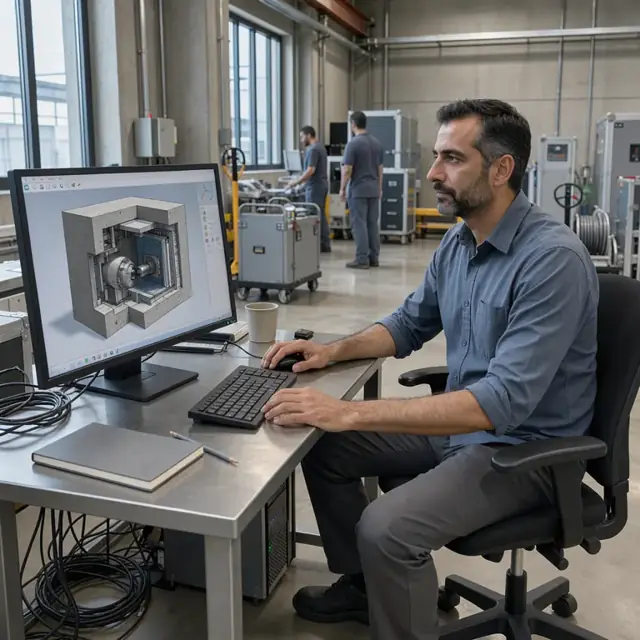
Shielding and Design Engineer
Produce 3D models, shielding calculations and bills of materials from approved specifications.
Works in: Ambitious Docs, Ambitious Sheets, Process Optimizer · Workflows: Engineering design and shielding calculation
Automates
- Generates initial 3D layouts and shielding thickness estimates
- Runs standard point-kernel dose calculations
- Compiles the bill of materials with part numbers and quantities
- Organizes drawing packages for review
Stops for a person
- Licensed engineer approves all final shielding calculations and interlock logic
- Radiation safety officer confirms dose limits meet the requirements the owner confirms

Procurement and Inventory Coordinator
Convert engineering bills of materials into purchase requisitions and maintain controlled inventory of critical components.
Works in: Ambitious Sheets, Ambitious Tasks, Ambitious Docs · Workflows: Component procurement and inventory
Automates
- Explodes bills into line-item requisitions by vendor
- Tracks lead times and updates project schedules
- Monitors stock of shielding materials and calibration sources
- Flags regulatory-restricted purchases
Stops for a person
- Purchasing manager approves and places all orders
- Radiation safety officer verifies licensing before any radioactive source purchase

Assembly Scheduler
Build and maintain the detailed build and test schedule with regulatory hold points.
Works in: Ambitious Tasks, Process Optimizer · Workflows: Assembly and test scheduling
Automates
- Creates Gantt timelines from bill of materials and test requirements
- Reserves test cells and survey meters
- Inserts mandatory quality and safety checkpoints
- Adjusts for source loading and third-party witness dates
Stops for a person
- Production manager approves the final schedule
- Radiation safety officer confirms sequencing of all licensed activities

Quality and Regulatory Documenter
Compile and organize all quality records, test data and regulatory filings for each machine.
Works in: Ambitious Docs, Ambitious Sheets, Ambitious Tasks · Workflows: Quality and regulatory documentation, License and permit tracking
Automates
- Assembles material certificates and test reports into revision-controlled packages
- Formats dosimetry maps and interlock test logs
- Prepares draft registration applications and shielding reports
- Tracks license expiration dates and renewal requirements
Stops for a person
- Quality manager and radiation safety officer review and approve every document before filing
- People confirm that all submissions meet the regulatory requirements they have verified

Shipment and Installation Planner
Prepare shipping, hazardous materials and site installation documentation and schedules.
Works in: Ambitious Tasks, Ambitious Docs, Ambitious Sheets · Workflows: Shipment and field installation planning
Automates
- Generates shipping manifests and declarations
- Creates site preparation checklists and crane specifications
- Drafts on-site acceptance test protocols
- Tracks installation milestones and warranty start
Stops for a person
- Shipping manager approves all transport documents
- Radiation safety officer verifies source transport licensing and procedures

License and Permit Tracker
Monitor all machine licenses, source registrations and training renewals across the product line.
Works in: Ambitious Tasks, Ambitious Sheets, Ambitious Docs · Workflows: License and permit tracking
Automates
- Maintains a master list of license expiration dates
- Calculates remaining source activity for reporting
- Drafts renewal forms with current data
- Reminds of leak test and training due dates
Stops for a person
- The designated radiation safety officer reviews and signs every regulatory filing
- The owner confirms which jurisdiction-specific rules apply to each machine
Workflows
Client specification intake and validation
Starts when: A new inquiry or purchase order arrives by email or portal
- Extract required dose, throughput, product dimensions, energy range and safety features
- Check specifications against standard models and known engineering limits
- Draft a technical clarification list for missing or conflicting requirements
- Create a project folder with the specification sheet and initial risk assessment
- Route the package to engineering for feasibility review
Watch for: Dose and geometry requirements must match the client's product validation exactly; Any deviation from catalog models triggers a formal engineering change request
Engineering design and shielding calculation
Starts when: After specification approval
- Develop 3D models of chamber, conveyor, shielding and beam line
- Run Monte Carlo or point-kernel shielding calculations for dose rates
- Produce bill of materials with radiation sources, interlocks and monitoring equipment
- Generate safety interlock logic and control diagrams
- Package drawings and calculations for regulatory submission
Watch for: Shielding thickness and material must keep external dose below regulatory limits; All calculations and drawings require engineer sign-off before release
Component procurement and inventory
Starts when: After engineering release and on a monthly cadence
- Explode the bill of materials into purchase requisitions by vendor lead time
- Track long-lead items such as cobalt-60 sources, linear accelerator tubes and high-voltage supplies
- Maintain inventory of shielding blocks, dosimetry films and calibration standards
- Flag any obsolescence or regulatory-restricted items
- Update project schedule with confirmed delivery dates
Watch for: Radioactive sources require special licensing and secure transport coordination; High-value items must be received into controlled storage before assembly
Assembly and test scheduling
Starts when: After all major components are on hand
- Build a detailed Gantt schedule for mechanical assembly, vacuum testing, electrical integration and dosimetry mapping
- Reserve test cells and radiation survey equipment
- Coordinate third-party witness availability for factory acceptance tests
- Insert mandatory hold points for quality and radiation safety reviews
- Adjust schedule when source loading or regulatory inspections are required
Watch for: Certain steps can only be performed by licensed radiation workers; Test cells have limited availability and must be scheduled weeks in advance
Quality and regulatory documentation
Starts when: At each hold point and before shipment
- Compile material certificates, weld inspections and leak test results
- Organize dosimetry maps, interlock test reports and performance qualification data
- Draft registration applications and shielding reports
- Maintain revision-controlled document package for each serial number
- Flag any non-conformances for engineering disposition
Watch for: All quality records must be traceable to each machine serial number; Regulatory filings require specific formats and calculations confirmed by the radiation safety officer
Shipment and field installation planning
Starts when: After factory acceptance testing
- Prepare shipping documents, export licenses and hazardous materials declarations for sources
- Draft site preparation checklist and crane requirements
- Create installation schedule with local utility coordination
- Draft on-site acceptance test protocols
- Track post-installation training and warranty start dates
Watch for: Transport of radioactive sources follows strict DOT and IAEA rules; Installation may require coordination with client radiation safety staff
License and permit tracking
Starts when: On a quarterly review cadence and before expiration dates
- List all active machine licenses, source registrations and facility permits
- Calculate remaining source activity and required reporting
- Draft renewal applications with updated shielding calculations
- Remind the radiation safety officer of training and leak test due dates
- Archive previous inspection reports and correspondence
Watch for: License conditions differ by jurisdiction and source type; Only the designated radiation safety officer can confirm which requirements apply
Bot templates for this industry
- Irradiation Apparatus Manufacturing (7 bots)
Source: U.S. Small Business Administration, Office of Size Standards, Table of Small Business Size Standards Matched to North American Industry Classification System Codes, version March 2023 (effective 2023-03-17, NAICS 2022). Size standards are shown for reference only.