

Current-Carrying Wiring Device Manufacturing
Manufacturers of current-carrying wiring devices produce plugs, receptacles, switches, connectors and similar electrical components in batches or to order. The specialists turn sales orders and forecasts into production schedules, raw material and component purchases, work orders with assembly and testing instructions, quality and safety checklists, and shipping documents. Tooling, listings, material certifications and production yields stay with the owner and engineers.
What makes this business different
- Customer orders that mix standard catalog items with custom configurations requiring specific amperage, voltage, pole count, color or certifications
- Production scheduling that balances make-to-stock and make-to-order runs on shared assembly lines and test equipment
- Raw materials and components (copper, plastics, contacts, springs, insulators) purchased against forecasts and minimum order quantities with long lead times
- Tooling and die maintenance tracking, changeovers between product families and calibration of test fixtures
- In-process and final electrical, mechanical and environmental testing with documented results
- Listing maintenance, material safety data sheets, RoHS and conflict-mineral paperwork
- Inventory of finished goods, work-in-process and returned goods with lot traceability
- Seasonal demand spikes for construction and OEM customers requiring capacity planning
Specialist bots

Order Configurator
Convert incoming orders and forecasts into validated production tasks with correct configurations and dates.
Works in: Ambitious Tasks, Ambitious Docs, Contract Analyzer · Workflows: Order intake and configuration validation
Automates
- Reads purchase orders and extracts part numbers, options and quantities
- Validates configurations against approved matrices
- Checks schedule and material availability
- Drafts order acknowledgments
- Creates detailed production tasks
Stops for a person
- Engineering approves any configuration requiring new tooling or listings
- Sales confirms pricing and ship dates before acknowledgment is sent
- A person releases the order to production
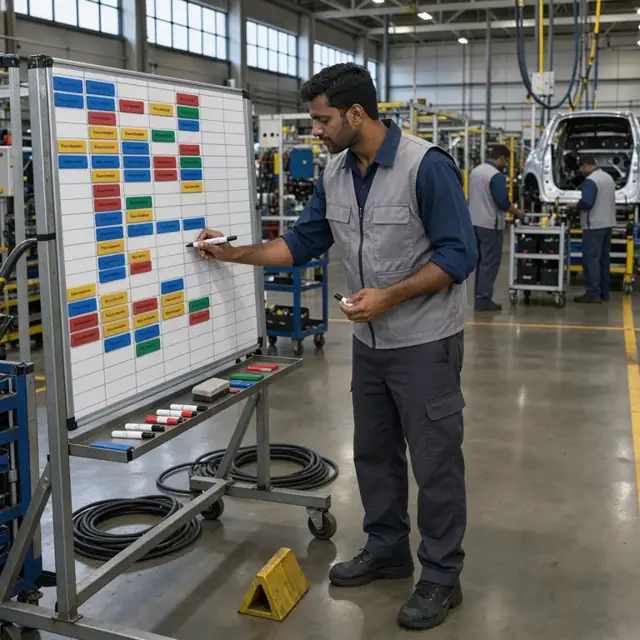
Production Scheduler
Build and balance the master production schedule across assembly lines and test stations.
Works in: Ambitious Sheets, Process Optimizer · Workflows: Production scheduling and line balancing
Automates
- Combines orders and forecasts into weekly schedule
- Assigns runs considering changeover and capacity
- Calculates material and sub-assembly demand
- Flags bottlenecks and suggests adjustments
Stops for a person
- The production manager approves the final schedule
- Changes to tooling or line assignments are confirmed by engineering

Materials Planner
Turn the production schedule into accurate purchase requisitions while maintaining component inventory and traceability.
Works in: Ambitious Sheets, Ambitious Tasks, Ambitious Docs · Workflows: Materials and component procurement, Inventory and traceability management
Automates
- Explodes bills of materials across scheduled orders
- Calculates net requirements after subtracting stock
- Groups requisitions by supplier and lead time
- Tracks lot numbers and certificates of compliance
Stops for a person
- Purchasing places all orders and approves expenditures
- Quality reviews incoming material certifications before acceptance
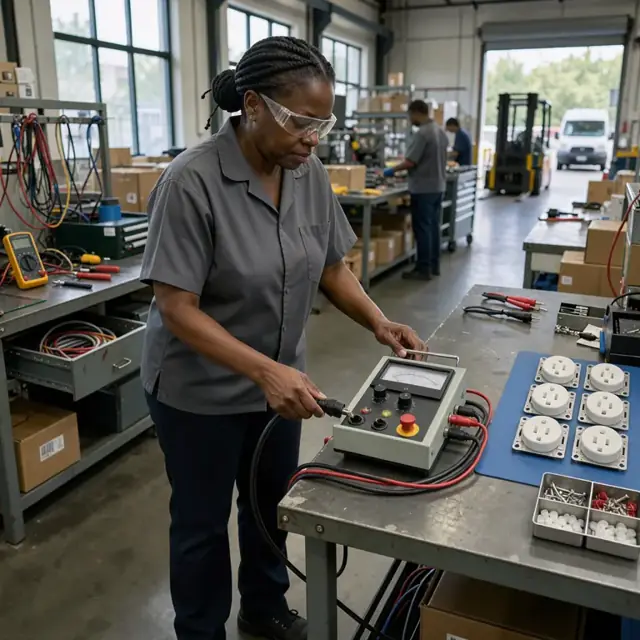
Quality and Test Verifier
Generate test checklists, record results and compile compliance documentation for each batch.
Works in: Ambitious Tasks, Ambitious Docs, Ambitious Sheets · Workflows: Quality and compliance testing, Shipping and compliance documentation
Automates
- Creates product-specific test checklists from listing requirements
- Logs electrical and mechanical test values
- Flags out-of-spec results for review
- Compiles test summaries and certificates of conformance
Stops for a person
- Technicians perform the actual tests and enter raw data
- Engineering or quality manager reviews and signs off on all test reports before shipment
- The owner confirms which listings and certifications apply to each product

Compliance and Documentation Clerk
Maintain tooling records, listing files, material certifications and renewal dates for all regulatory requirements.
Works in: Ambitious Docs, Ambitious Sheets, Ambitious Tasks · Workflows: Quality and compliance testing, Shipping and compliance documentation
Automates
- Tracks listing renewal dates
- Keeps material safety and conflict-mineral files current
- Organizes lot traceability records
- Prepares shipping document packages
Stops for a person
- The owner confirms which regulatory requirements apply to each product family
- All documents sent to customers or agencies are reviewed and approved by a person
- The bot never certifies compliance

Engineering Change Coordinator
Manage tooling changes, drawing revisions and new product introduction data that affect production and quality.
Works in: Ambitious Docs, Ambitious Tasks, Process Optimizer · Workflows: Production scheduling and line balancing, Work order execution and assembly
Automates
- Routes engineering change notices to affected work orders
- Updates bills of materials and assembly instructions
- Calculates impact on current schedule and inventory
- Maintains tooling maintenance and calibration schedule
Stops for a person
- Engineers approve all drawing and process changes
- Production confirms feasibility of change timing
Workflows
Order intake and configuration validation
Starts when: New customer purchase order, quote request or forecast update arrives by email or portal
- Parse order details including part numbers, quantities, custom options, voltage, amperage and certifications
- Validate configuration against approved product matrices and available tooling
- Check against current production schedule and material lead times
- Draft order acknowledgment with confirmed ship date
- Create production task with full bill-of-materials and test requirements
Watch for: Custom configurations must match listed ratings and cannot be assumed; Orders requiring new tooling or listings trigger engineering review
Production scheduling and line balancing
Starts when: Weekly forecast review and after every new firm order
- Combine open orders with forecast to build master schedule
- Assign runs to assembly lines considering changeover times and tooling availability
- Calculate required quantities of sub-assemblies and purchased parts
- Flag capacity constraints on test equipment or skilled stations
- Generate work orders with sequence, quantities and due dates
Watch for: Changeovers between product families consume setup time and scrap; Certain lines are limited by test station throughput
Materials and component procurement
Starts when: After schedule is released and on a weekly cadence
- Explode bill-of-materials across all scheduled work orders
- Subtract on-hand and on-order inventory
- Draft purchase requisitions by supplier with lead-time offsets
- Track minimum order quantities and price breaks
- Monitor incoming inspection results and supplier performance
Watch for: Copper and specialty plastics have long and volatile lead times; Certain components require lot traceability and certificates of compliance
Work order execution and assembly
Starts when: Release of approved work order to the floor
- Pull required materials and tooling to the line
- Issue step-by-step assembly instructions including torque, crimp and insertion specs
- Record operator, timestamp and lot numbers at each station
- Route completed units to in-process inspection or test
- Log yield and scrap by defect code
Watch for: Critical dimensions and electrical values must be verified at multiple stations; Operator certifications for soldering or high-voltage testing must be current
Quality and compliance testing
Starts when: Completion of each production batch or on a sampling schedule
- Generate test checklist matched to the product listing requirements
- Record dielectric, continuity, ground-resistance and mechanical test results
- Capture environmental or endurance test data when required
- Flag failures for rework or material review board
- Compile test reports and retain records by lot
Watch for: Test equipment requires daily calibration verification; Listed products cannot ship without passing all required checks
Inventory and traceability management
Starts when: Daily production close and cycle counts
- Move finished goods from production to stock with lot numbers
- Reconcile work-in-process and scrap
- Perform cycle counts on high-value or long-lead items
- Update traceability records for materials and sub-assemblies
- Flag inventory below reorder point for procurement
Watch for: Lot traceability must be maintained for audits; Returned goods require separate inspection and disposition path
Shipping and compliance documentation
Starts when: When finished goods are ready to ship
- Pull packing list and generate labels with lot and date codes
- Assemble certificate of conformance, test summary and material certifications
- Draft commercial invoice and any required export paperwork
- Schedule carrier pickup and send advance shipping notice
- Close order and update customer portal
Watch for: Certain customers require specific labeling and bar-code formats; International shipments need additional declarations and certifications
Bot templates for this industry
Source: U.S. Small Business Administration, Office of Size Standards, Table of Small Business Size Standards Matched to North American Industry Classification System Codes, version March 2023 (effective 2023-03-17, NAICS 2022). Size standards are shown for reference only.