

Ship Building and Repairing
Shipyards build new vessels and repair existing ones under strict regulatory and classification-society oversight. Custom orders arrive as specifications or repair scopes; the specialists convert inquiries into quoted work, turn approved contracts into production schedules and material orders, track steel, piping and equipment through fabrication and assembly, manage dock and dry-dock usage, and maintain the regulatory paperwork the owner ultimately approves. All welding, coating, electrical and pressure-vessel work stays with licensed trades.
What makes this business different
- Large custom projects with owner-furnished equipment, change orders and milestone payments
- Regulatory and classification-society requirements that govern every stage from design approval through sea trials
- Long-lead material and equipment procurement with mill certificates and traceability
- Dry-dock and pier scheduling that must align with tide tables, weather windows and other vessels
- Welding procedures, NDT records, coating inspections and pressure tests that must be documented per approved plans
- Subcontractor coordination for specialized trades while prime yard labor handles structural steel and outfitting
- Asset tracking for cranes, welding machines, scaffolding and portable generators across multiple work sites
- Progress billing tied to verified milestones and owner or surveyor sign-off
Specialist bots

Estimator
Convert vessel specifications and repair scopes into accurate labor, material and schedule estimates.
Works in: Ambitious Sheets, Ambitious Docs, Process Optimizer · Workflows: Bid and proposal development
Automates
- Parses drawings and specifications to build takeoff lists
- Applies historical labor rates by trade and location
- Builds preliminary schedule outlines
- Flags long-lead items and owner-furnished equipment
- Drafts the risk register and milestone payment schedule
Stops for a person
- The production manager reviews labor and schedule assumptions
- The owner approves the final bid price and terms before submission

Contract Administrator
Review awarded contracts, extract obligations and launch the project master schedule.
Works in: Contract Analyzer, Ambitious Docs, Ambitious Tasks · Workflows: Contract award and kickoff
Automates
- Highlights exceptions in contract clauses
- Extracts milestone dates and payment terms
- Creates the initial project task structure
- Issues requisitions for long-lead material
- Schedules the kickoff meeting
Stops for a person
- The owner reviews and signs the final contract
- The shipyard manager confirms production feasibility before notice to proceed

Materials Coordinator
Turn approved drawings into purchase orders, track material deliveries and maintain traceability.
Works in: Ambitious Sheets, Ambitious Tasks, Ambitious Docs · Workflows: Material and equipment procurement
Automates
- Generates bill-of-material purchase lists
- Tracks vendor lead times and delivery status
- Logs material certifications and heat numbers upon receipt
- Issues material to production work packages
- Alerts when inventory of plate, pipe or consumables drops below reorder points
Stops for a person
- The purchasing manager approves and places every purchase order
- The quality manager inspects and accepts critical materials

Production Scheduler
Build and maintain the master production schedule and dry-dock plan.
Works in: Process Optimizer, Ambitious Tasks · Workflows: Production and dry-dock scheduling
Automates
- Sequences work packages to minimize trade stacking
- Reserves dock and crane time against tide tables
- Adjusts for weather and change orders
- Publishes weekly look-ahead reports
- Identifies critical-path activities
Stops for a person
- The yard superintendent approves the weekly schedule
- Production foremen confirm daily assignments
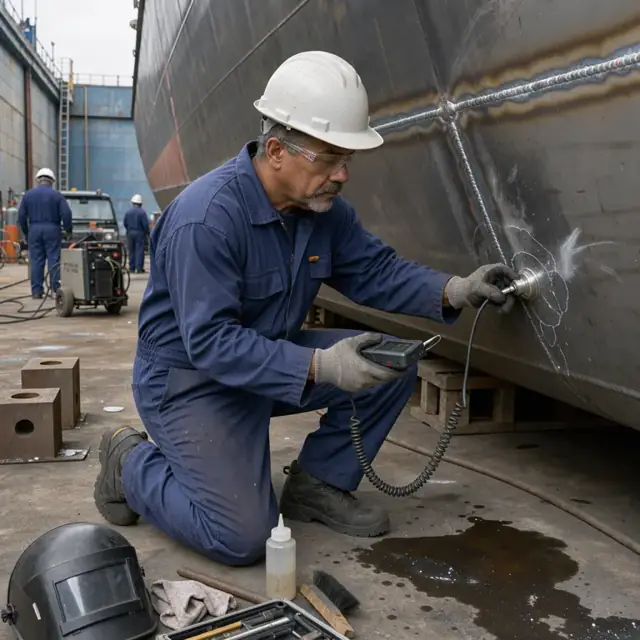
Quality and Inspection Clerk
Generate inspection plans, schedule surveyors and compile test and as-built records.
Works in: Ambitious Docs, Ambitious Tasks, Ambitious Sheets · Workflows: Quality assurance and regulatory inspections
Automates
- Creates hold-point checklists from approved procedures
- Schedules NDT and classification surveys
- Logs test results and inspection reports
- Maintains welder and procedure qualification matrices
- Assembles red-line and as-built drawing packages
Stops for a person
- The quality manager reviews all inspection results
- The owner or classification surveyor signs off on completed inspections

Dock and Vessel Operations Coordinator
Manage vessel movements, dock assignments and daily services while tracking safety permits.
Works in: Ambitious Tasks, Ambitious Docs · Workflows: Dock and vessel operations
Automates
- Prepares docking calculations and stability sheets
- Coordinates tugs, pilots and line handlers
- Tracks daily utility services to each vessel
- Issues and logs hot-work and confined-space permits
- Compiles daily progress and surveyor photographs
Stops for a person
- The dock master approves every vessel movement
- The safety officer reviews all permits before work begins

Progress Billing Specialist
Calculate percent complete, compile supporting records and draft milestone invoices.
Works in: Ambitious Sheets, Ambitious Docs, Ambitious Tasks · Workflows: Progress billing and closeout
Automates
- Pulls verified progress from the production schedule
- Assembles inspection and test documentation
- Calculates amounts due per contract milestones
- Tracks change orders against the original contract sum
- Prepares final closeout and warranty packages
Stops for a person
- The project manager verifies all progress claims
- The owner or lending institution approves every invoice before payment
Workflows
Bid and proposal development
Starts when: Request for quote or repair specification arrives
- Parse the vessel specifications, drawings and scope of work
- Break the job into work packages and estimate labor hours by trade
- Draft material and equipment takeoff from drawings and historical data
- Assemble the bid package with schedule outline and terms
- Produce a risk register and proposed milestones for owner review
Watch for: Accurate takeoff of steel weights, pipe lengths and cable runs directly affects margin; Owner-furnished equipment and government-furnished material must be identified early
Contract award and kickoff
Starts when: Customer awards the contract or issues a purchase order
- Review contract clauses against standard terms and flag exceptions
- Extract key dates, milestones, liquidated damages and payment terms
- Create the master project task list and assign work packages
- Order long-lead items and issue subcontractor requests for quotation
- Schedule the pre-production meeting and first progress meeting
Watch for: Change-order process must be established before steel is cut; Classification society and flag-state approvals required before production begins
Material and equipment procurement
Starts when: After contract award and at each design freeze
- Explode bill of materials from approved drawings
- Generate purchase requisitions with material certifications required
- Track mill orders, vendor lead times and delivery to yard
- Inspect and log receipt of steel plates, pipe, valves and outfitting items
- Maintain heat numbers, mill certificates and traceability records
Watch for: Certain grades of steel and pressure-vessel materials have long procurement cycles; All material must be stored and protected from corrosion until issued to the job
Production and dry-dock scheduling
Starts when: Weekly and before each dry-docking
- Load approved work packages into the master schedule
- Sequence steel erection, piping, electrical and outfitting to avoid trade stacking
- Reserve dry-dock or pier space against tide tables and other vessel commitments
- Adjust schedule for weather delays and change orders
- Publish weekly look-ahead and daily work assignments
Watch for: Critical path often runs through crane lifts, welding sequences and coating windows; Dry-dock usage is limited and must be coordinated with port authorities
Quality assurance and regulatory inspections
Starts when: At each hold point and milestone
- Generate inspection and test plans from approved procedures
- Schedule third-party NDT, coating inspectors and classification surveyors
- Log results of visual, ultrasonic, magnetic-particle and hydrostatic tests
- Track welder qualifications and procedure specifications in use
- Compile red-line drawings and as-built documentation
Watch for: Certain inspections must occur before the next trade covers the work; Regulatory bodies may require independent verification at key stages
Dock and vessel operations
Starts when: Vessel arrival or undocking request
- Prepare docking plan and calculate stability conditions
- Coordinate line handling, tugs and pilot services
- Track daily vessel services such as power, water, waste removal and compressed air
- Monitor hot-work permits, fire watches and confined-space entries
- Record daily progress photos and surveyor notes
Watch for: Safety and environmental rules govern every activity on the water; Vessel movement requires coordination with harbor authorities
Progress billing and closeout
Starts when: End of each agreed milestone or month
- Calculate percent complete by work package against verified progress
- Compile supporting documentation and inspection records
- Draft invoice and application for payment for owner approval
- Track change orders and adjustments to contract sum
- Assemble final as-built drawings, test reports and warranty documentation
Watch for: Payment is released only after owner or surveyor verifies the milestone; Final closeout requires all regulatory certificates and release of liens
Bot templates for this industry
- Ship Building and Repairing (7 bots)
Source: U.S. Small Business Administration, Office of Size Standards, Table of Small Business Size Standards Matched to North American Industry Classification System Codes, version March 2023 (effective 2023-03-17, NAICS 2022). Size standards are shown for reference only.