

Fish and Seafood Retailers
Fish and seafood retailers buy fresh, frozen and live product daily from suppliers, cut to order, maintain ice beds and tanks, and sell over the counter or fulfill custom orders for pickup and delivery. Specialists turn supplier lists and catch reports into purchase orders, track ice and temperature logs, convert customer requests into precise fillet and portion specs, schedule daily cutting and display plans, manage live-tank inventory and generate labels that include species, origin, harvest method and safe-handling instructions.
What makes this business different
- Daily or every-other-day purchases based on fresh catch reports, weather and tide conditions
- Precise temperature and ice-bed monitoring with continuous logs for food safety
- Species-specific handling: live tanks for lobster and crab, ice for finfish, frozen for shrimp and squid
- Custom cutting orders (fillets, steaks, portions, whole dressed fish) with exact weight and trim requests
- Allergen and cross-contact protocols for shellfish versus finfish
- Labeling that includes species name, country of origin, wild or farmed, and safe-handling instructions
- Seasonal volume swings such as holiday shellfish demand and summer grilling fish
- Live product mortality tracking and supplier return policies
- Counter service that mixes walk-in sales with advance orders for events and restaurants
Specialist bots

Catch Buyer
Convert daily catch reports and supplier offers into purchase orders while tracking receipts and live inventory.
Works in: Ambitious Sheets, Ambitious Tasks, Email Buckets · Workflows: Daily purchasing and receiving
Automates
- Parses supplier catch reports and prices by species
- Drafts purchase orders by volume and price
- Logs received weights, temperatures and condition
- Updates tank and ice-bed counts automatically
Stops for a person
- The owner approves all purchase orders before sending
- Any quality disputes or returns are handled by a person

Order Specifier
Turn every custom seafood request into a precise cutting specification and confirmation.
Works in: Ambitious Tasks, Ambitious Docs, Email Buckets · Workflows: Custom order intake and specification
Automates
- Extracts species, cut, weight and special instructions from incoming orders
- Checks current inventory and daily catch
- Builds a kitchen-ready spec sheet for the cutter
- Drafts customer confirmation with pricing
Stops for a person
- The cutter reviews any unusual trim or portion requests
- Allergen and cross-contact notes are verified by a person before acceptance
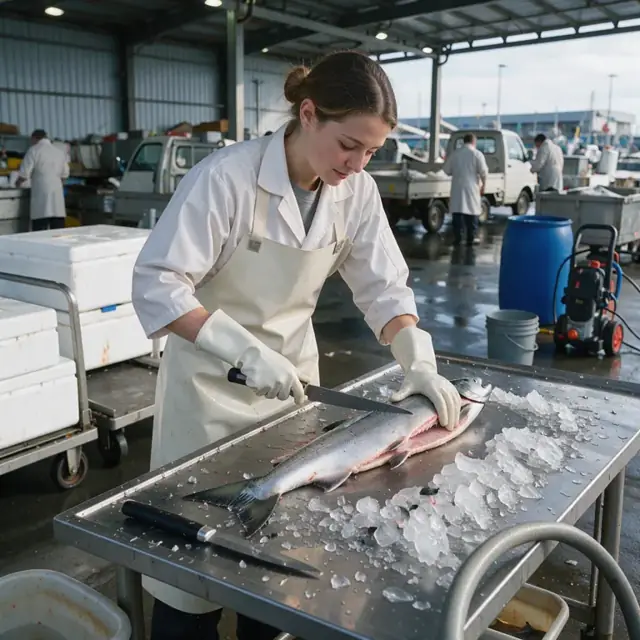
Cut Planner
Sequence daily cutting tasks, display replenishment and label generation while preventing cross-contact.
Works in: Ambitious Tasks, Process Optimizer, Ambitious Docs · Workflows: Daily cutting and display schedule
Automates
- Lists pending orders and case needs by species
- Creates a timed cutting sequence that separates shellfish and finfish
- Generates scale labels with origin and handling text
- Schedules ice changes and case rotation
Stops for a person
- The lead cutter approves the final daily sequence
- A person verifies all labels before they reach the scale
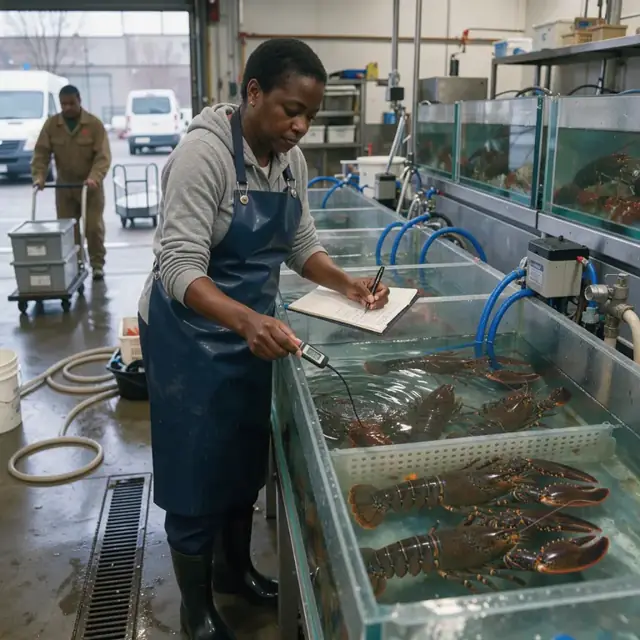
Tank and Inventory Manager
Monitor live tanks, ice beds, frozen stock and spoilage risk while maintaining daily counts.
Works in: Ambitious Sheets, Ambitious Tasks · Workflows: Inventory and live-tank management
Automates
- Tracks counts across fresh, frozen and live categories
- Logs water quality and ice usage
- Calculates daily par levels and flags near-spoilage items
- Prepares supplier return lists for dead product
Stops for a person
- The owner reviews and sends all supplier credits
- Water chemistry adjustments are performed by a person
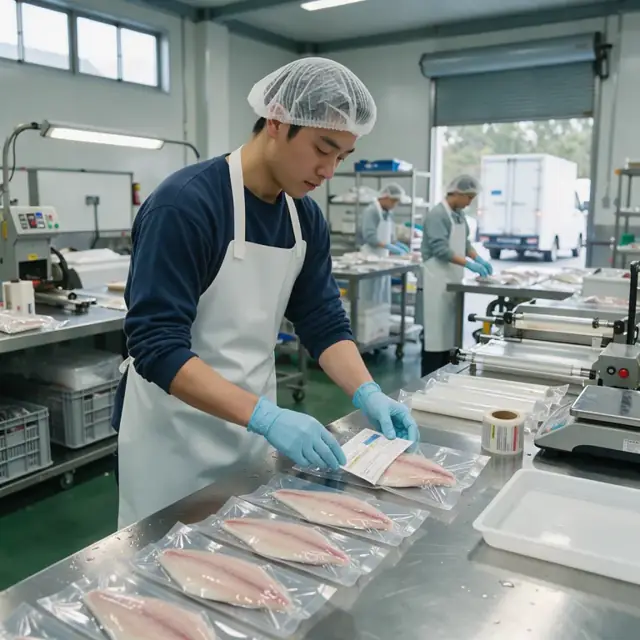
Labeling and Safety Clerk
Generate accurate origin and safe-handling labels and compile daily temperature and sanitation logs.
Works in: Ambitious Docs, Ambitious Sheets, Ambitious Tasks · Workflows: Labeling and food-safety documentation
Automates
- Pulls species, origin and harvest data for each label
- Creates daily temperature and ice logs
- Maintains supplier certificate tracking
- Builds sanitation and corrective-action summaries
Stops for a person
- The owner confirms which local labeling rules apply
- All logs and records are reviewed and signed by a person
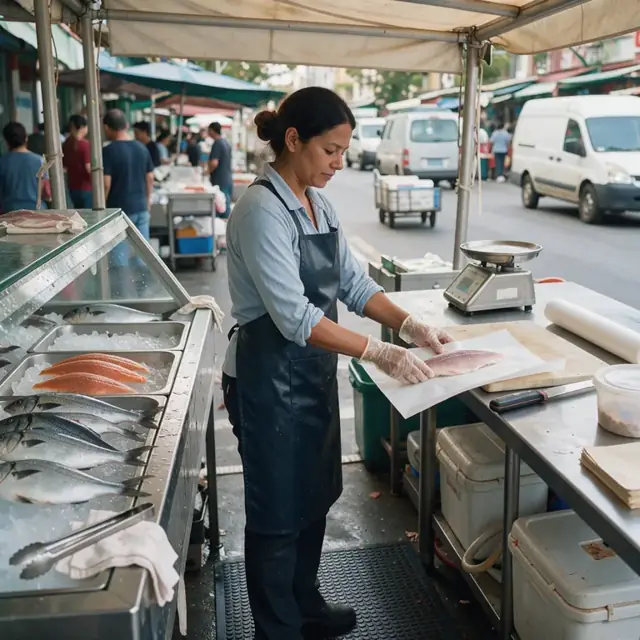
Counter Sales Coordinator
Pull, weigh, label and record counter and pickup orders while updating live inventory.
Works in: Ambitious Tasks, Ambitious Sheets · Workflows: Counter sales and order fulfillment
Automates
- Pulls pre-ordered items from the case
- Calculates final weights and prints labels at the scale
- Records each sale against inventory in real time
- Adds handling cards to packages
Stops for a person
- A person performs the final handoff and payment
- Any custom wrapping or special requests are handled by staff

Delivery Route Dispatcher
Group delivery orders, plan chilled routes and track temperature during transport.
Works in: Ambitious Tasks, Ambitious Docs · Workflows: Delivery and route planning
Automates
- Groups orders by area and time window
- Builds route sequence that respects temperature requirements
- Drafts customer arrival notifications
- Logs delivery confirmations and temperature checks
Stops for a person
- The driver approves final route changes due to traffic or weather
- All customer messages are released only after owner approval
Workflows
Daily purchasing and receiving
Starts when: Supplier catch reports arrive each morning or on a set schedule
- Review catch reports, prices and availability by species
- Draft purchase orders by supplier for fresh, frozen and live items
- Record incoming weights, temperatures and condition upon receipt
- Update live inventory counts for tanks and ice beds
- Flag any short weights or quality issues for supplier credit
Watch for: Purchases must align with expected same-day or next-day sales to limit waste; Live product requires immediate transfer to aerated tanks at correct salinity and temperature
Custom order intake and specification
Starts when: A customer places an order by phone, form, email or in-person request
- Capture species, cut type, exact weight, trim level and any special instructions
- Check against current inventory and daily catch availability
- Confirm pickup time or delivery window against the cutting schedule
- Draft a confirmation with price and safe-handling notes
- Create a task for the cutter with a precise spec sheet
Watch for: Shellfish allergy notes must be captured exactly and never assumed; Weight ranges and tolerances are critical for portion orders
Daily cutting and display schedule
Starts when: After morning receiving and before counter opening
- List all pending custom orders and counter stock needs by species
- Sequence cutting tasks to minimize cross-contact between shellfish and finfish
- Assign fillet, steak, portion and whole-dress jobs with target weights
- Schedule ice-bed replenishment and case rotation times
- Generate scale-ready labels with species, origin and handling instructions
Watch for: Knives and boards must be switched between species groups; Display ice must be maintained at proper temperature throughout the day
Inventory and live-tank management
Starts when: Morning after receiving and again at close of business
- Count and record all fresh, frozen and live stock by species
- Track ice usage and replenish schedule
- Monitor water quality and temperature in live tanks
- Calculate par levels and flag items nearing spoilage for priority sale
- Draft supplier return or credit requests for dead or substandard product
Watch for: Live inventory mortality must be logged daily; Frozen items require rotation to maintain quality
Labeling and food-safety documentation
Starts when: With every cut item and on a daily cadence
- Generate labels showing species, origin, wild or farmed status and safe-handling steps
- Create daily temperature and ice-bed logs from recorded readings
- Track supplier certificates of origin and harvest method
- Maintain sanitation checklists for cutting surfaces and display cases
- Prepare end-of-day summary of logged temperatures and any corrective actions
Watch for: Country-of-origin and method-of-production labeling rules must be followed precisely; Temperature logs are required for regulatory review at any time
Counter sales and order fulfillment
Starts when: Customer arrives at counter or for scheduled pickup
- Pull any pre-cut or custom-ordered items from the case or cooler
- Weigh and label the final package at the scale
- Add safe-handling and cooking suggestion cards when appropriate
- Process payment and print or email receipt
- Record sale against inventory to update counts in real time
Watch for: Items must be kept on ice or at proper chilled temperature until handed to the customer; Cross-contact between shellfish and other products must be avoided at the scale
Delivery and route planning
Starts when: After morning cutting schedule is complete
- Group all delivery and event orders by geographic area and time window
- Build a chilled transport route that keeps product at safe temperature
- Draft customer notifications with estimated arrival windows
- Record proof of delivery and any temperature checks during the run
- Update inventory and flag any returns or quality issues
Watch for: Seafood must remain at or below 40 °F during all transport; Live product requires special ventilated containers and temperature packs
Bot templates for this industry
- Fish and Seafood Retailers (7 bots)
Source: U.S. Small Business Administration, Office of Size Standards, Table of Small Business Size Standards Matched to North American Industry Classification System Codes, version March 2023 (effective 2023-03-17, NAICS 2022). Size standards are shown for reference only.