

Other Support Activities for Air Transportation
Operators provide ramp services, aircraft de-icing, ground power, pushback, baggage and cargo handling, fueling coordination, and hangar maintenance for commercial, cargo, and private aircraft. For a fixed-base operator serving scheduled airlines and general-aviation flights, the specialists convert gate and ramp requests into assigned slots and equipment, turn flight schedules into sequenced ground-support tasks, maintain de-icing fluid and ground-power inventories, generate load sheets and manifests, plan pushback and towing routes, and track all required ramp permits, equipment inspections and safety logs. The licensed ramp supervisors retain authority over safety calls and final sign-offs.
What makes this business different
- Tight coordination with airline operations centers, pilots, and air-traffic control for exact arrival, departure, and turn times
- Ramp safety rules, including foreign-object debris control, aircraft movement areas, and personal protective equipment requirements
- Weather-dependent operations such as de-icing, snow removal, and lightning hold procedures that change hourly
- Specialized ground-support equipment that must be inspected, fueled, and positioned before each aircraft movement
- Weight-and-balance load sheets, cargo manifests, and dangerous-goods declarations that must be accurate before pushback
- Fuel-farm coordination, spill-response plans, and environmental logs required by airport authority
- Recurring equipment certifications, ramp-worker training records, and airport badge renewals
Specialist bots
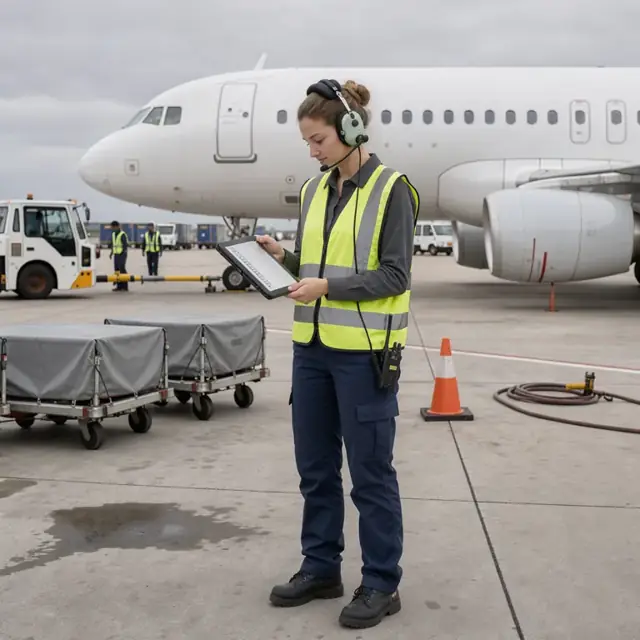
Flight Coordinator
Convert every incoming flight request and schedule change into a confirmed ramp service task with correct aircraft details.
Works in: Ambitious Tasks, Email Buckets, Ambitious Docs · Workflows: Flight and service request intake
Automates
- Parses airline messages and pilot requests
- Validates aircraft type against available equipment
- Creates the master service task
- Drafts confirmations for airline operations
Stops for a person
- Ramp supervisor approves any special handling requests
- Pilot or airline operations must confirm last-minute changes

Ramp Scheduler
Build daily gate and equipment schedules that avoid conflicts and respect turn times.
Works in: Ambitious Sheets, Ambitious Tasks · Workflows: Ramp and gate scheduling
Automates
- Imports airline flight schedules
- Assigns gates and hardstands
- Sequences all ground services around scheduled times
- Highlights weather or closure impacts
Stops for a person
- The ramp supervisor reviews and releases the final daily plan
- Airline gate preferences are confirmed by operations staff
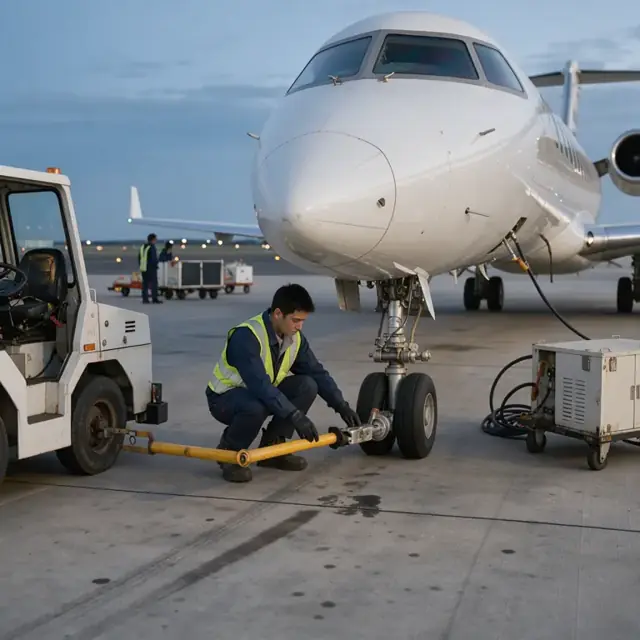
Ground Equipment Dispatcher
Assign and sequence the correct ground-support equipment and operators to each aircraft movement.
Works in: Ambitious Tasks, Ambitious Sheets, Process Optimizer · Workflows: Ground support equipment dispatch
Automates
- Matches equipment to aircraft type and requested services
- Assigns nearest certified units
- Creates timed dispatch tasks for drivers
- Tracks equipment location and status
Stops for a person
- Equipment operators confirm readiness before movement
- Ramp supervisor can override assignments for safety

Load Planner
Calculate accurate weight-and-balance load sheets and prepare cargo manifests from final numbers.
Works in: Ambitious Sheets, Ambitious Docs, Ambitious Tasks · Workflows: Load sheet and manifest preparation
Automates
- Combines passenger, baggage, and cargo weights
- Runs aircraft-specific weight-and-balance calculations
- Generates the final load sheet
- Prepares dangerous-goods declarations when needed
Stops for a person
- The captain or first officer must sign the final load sheet
- Any last-minute changes are verified by ground crew before release

Fluid and Consumables Steward
Monitor de-icing fluid, fuel, and consumable stocks and prepare timely replenishment orders.
Works in: Ambitious Sheets, Ambitious Tasks, Ambitious Docs · Workflows: De-icing fluid, fuel, and consumables replenishment
Automates
- Tracks daily usage against flight volume and weather
- Calculates reorder quantities
- Drafts purchase and transfer requests
- Schedules delivery to avoid ramp congestion
Stops for a person
- The operations manager approves all purchases
- Quality tests on received fluids are performed and logged by certified staff

Ramp Safety and Compliance Clerk
Maintain daily safety checklists, equipment inspection records, and permit tracking for all ramp operations.
Works in: Ambitious Tasks, Ambitious Docs, Ambitious Sheets · Workflows: Ramp safety and permit tracking
Automates
- Generates shift safety and foreign-object-debris checklists
- Logs all required activities and inspections
- Tracks expiration of permits, certifications, and training
- Compiles records for audits
Stops for a person
- Ramp supervisors confirm each daily checklist
- Licensed personnel perform and sign off on specialized inspections
- People review and submit any authority paperwork

Post-Flight Billing Coordinator
Assemble service records after departure, draft accurate invoices, and archive required documentation.
Works in: Ambitious Docs, Ambitious Sheets, Ambitious Tasks · Workflows: Post-flight closeout and billing
Automates
- Pulls completed task logs and load sheets
- Calculates charges by service and aircraft category
- Drafts invoices with supporting attachments
- Archives records for the required period
Stops for a person
- The operations manager reviews every invoice before sending
- Airline or aircraft owner must approve any disputed charges
Workflows
Flight and service request intake
Starts when: Airline message, pilot radio call, or scheduled flight arrives in the system
- Capture airline, flight number, aircraft type, estimated arrival, requested services and special handling notes
- Check against current ramp and gate availability
- Confirm any dangerous-goods or oversized-cargo declarations
- Create a master service task for the aircraft
- Draft acknowledgment to the airline or pilot
Watch for: Exact tail number and aircraft type determine compatible ground equipment; Last-minute schedule changes from the airline must be reflected instantly
Ramp and gate scheduling
Starts when: Daily flight schedule published or updated
- Import airline schedule and overlay any ad-hoc general-aviation requests
- Assign gates, hardstands, and tug positions without conflicts
- Sequence de-icing, fueling, baggage, and catering calls around scheduled turn times
- Flag aircraft requiring longer pushback or tow distances
- Publish the daily ramp plan to all teams
Watch for: Runway and taxiway closures or weather minimums can force immediate resequencing; Gate assignments must respect airline branding and jet-bridge compatibility
Ground support equipment dispatch
Starts when: Aircraft reaches top-of-descent or a set time before arrival
- Identify required equipment for each service (tugs, ground power units, air start, belt loaders, de-icers)
- Assign the nearest available and certified unit to the aircraft
- Create sequenced dispatch tasks for operators
- Track equipment movement on the ramp via task updates
- Log any equipment faults for maintenance
Watch for: Equipment must be positioned before the aircraft arrives and removed before pushback; Cold-weather de-icing trucks have limited fluid capacity per shift
Load sheet and manifest preparation
Starts when: Baggage and cargo are staged for the flight
- Collect final passenger count, baggage weights, and cargo manifests
- Calculate zero-fuel weight, takeoff weight, and center-of-gravity using aircraft-specific formulas
- Produce the final load sheet and dangerous-goods declaration if required
- Transmit the signed load sheet to the flight crew for approval
- File copies for airport and airline records
Watch for: Last-minute passenger or cargo changes require recalculation before final weight-and-balance sign-off; Hazardous materials must be listed exactly as required by regulations
De-icing fluid, fuel, and consumables replenishment
Starts when: End of each shift and when stock hits reorder point
- Check remaining de-icing fluid, glycol, ground-power fuel, and nitrogen levels
- Compare usage against flight volume and weather forecast
- Draft purchase orders or transfer requests to the fuel farm or supplier
- Schedule delivery windows that avoid peak ramp activity
- Update inventory sheets after each delivery
Watch for: De-icing fluid must be tested for purity before use and logged; Environmental spill kits must be restocked immediately after any use
Ramp safety and permit tracking
Starts when: Start of each shift, after any incident, and on recurring dates
- Generate daily ramp safety checklist including foreign-object debris sweep, equipment inspections, and personnel PPE verification
- Log all de-icing, fueling, and towing activities with times and operator names
- Track expiration dates for ramp permits, equipment certifications, and worker training records
- Maintain incident and near-miss logs
- Prepare documentation for airport authority audits
Watch for: Airport authority requires specific forms and retention periods; Only licensed personnel may perform certain operations such as fuel receipt or de-icing
Post-flight closeout and billing
Starts when: Aircraft departs or goes on blocks
- Confirm all services were completed and any discrepancies noted
- Assemble final service report, load sheet, and fuel slip
- Calculate charges by service type and aircraft size
- Draft invoice and supporting documents for the airline or owner
- Archive all records for the required retention period
Watch for: Discrepancies must be reconciled with the airline before invoicing; Certain services require signed acceptance before billing
Bot templates for this industry
Source: U.S. Small Business Administration, Office of Size Standards, Table of Small Business Size Standards Matched to North American Industry Classification System Codes, version March 2023 (effective 2023-03-17, NAICS 2022). Size standards are shown for reference only.