

Motion Picture and Video Production
Motion picture and video production companies develop scripts, secure locations and permits, schedule shoots, manage talent and crew, capture footage, handle post-production editing and visual effects, and deliver final masters. For an independent production house that shoots commercials, short films and corporate videos, the specialists turn client briefs into confirmed treatments and budgets, treatments into location and permit packages, shoot schedules into call sheets and equipment lists, and raw footage into edited deliverables with approvals at every handoff. Creative decisions, final sign-off and client billing stay with the director and producer.
What makes this business different
- Script and treatment development with multiple revision cycles that must match client brand guidelines
- Location scouting, municipal permits, insurance certificates and talent releases that must be secured before any shoot day
- Union and non-union crew scheduling, equipment rentals and weather contingencies for outdoor shoots
- Large volumes of raw footage, dailies, sound, graphics and visual effects assets that require organized versioning and storage
- Client review and approval loops at script, rough cut, fine cut and final delivery stages
- Music licensing, stock footage clearances, SAG-AFTRA paperwork and final master deliverables in multiple formats
- Repeat clients who commission series work and need consistent branding across multiple video projects
Specialist bots

Project Intake Coordinator
Turn every client brief into a structured project folder with treatment and budget drafts.
Works in: Ambitious Tasks, Ambitious Docs, Ambitious Sheets · Workflows: Project intake and treatment development
Automates
- Reads incoming briefs and populates project specs
- Drafts initial treatment outlines and mood references
- Builds preliminary budget templates by production phase
- Creates the master project folder structure
- Tracks revision cycles between client and producer
Stops for a person
- The producer approves all creative treatments and budgets before they are sent
- Client-facing proposals are reviewed and sent only by a person

Pre-Production Manager
Convert approved treatments into location packages, permit drafts and crew deal memos.
Works in: Ambitious Docs, Ambitious Tasks, Contract Analyzer · Workflows: Pre-production planning and permitting
Automates
- Breaks down treatments into location and crew requirements
- Drafts permit applications and insurance requests
- Prepares talent and location release templates
- Builds the 30-60-90 day production calendar
- Tracks outstanding signed documents
Stops for a person
- The producer signs all contracts and approves final insurance certificates
- Location scouts and permit submissions are handled by people

Shoot Day Scheduler
Build daily call sheets, equipment lists and weather-contingency plans for each shoot day.
Works in: Ambitious Tasks, Ambitious Sheets · Workflows: Shoot scheduling and call sheet creation
Automates
- Assigns crew and talent to confirmed shoot dates
- Incorporates weather data into backup plans
- Generates call sheets with all contact and location details
- Allocates specific camera, lighting and grip packages
- Distributes call sheets once approved
Stops for a person
- The director or producer adjusts the schedule based on creative or availability changes
- All call sheets are reviewed by a person before distribution

Production Asset Organizer
Log, organize and report on all raw footage, sound files and camera notes from each shoot day.
Works in: Ambitious Tasks, Ambitious Sheets, Ambitious Docs · Workflows: Production asset and footage intake
Automates
- Creates structured folder systems for each day's footage
- Parses camera reports and script notes into tracking sheets
- Flags technical issues for the director of photography
- Generates daily production reports
- Notifies the editor when dailies are ready
Stops for a person
- The director reviews and approves the daily report before it is shared
- Backup and archiving steps are confirmed by the producer

Post-Production Coordinator
Manage editing timelines, client review cycles and final master preparation.
Works in: Ambitious Tasks, Ambitious Docs, Ambitious Sheets · Workflows: Post-production editing and review cycles
Automates
- Tracks revision notes across rough and fine cuts
- Exports review copies at each approval stage
- Maintains a master list of required graphics and music cues
- Prepares delivery specification checklists
- Organizes all versioned project files
Stops for a person
- The editor and director approve every cut before client review
- Final masters are reviewed and approved by the producer before delivery

Delivery and Finance Clerk
Compile final deliverables, expenses and generate invoices once production is complete.
Works in: Ambitious Docs, Ambitious Sheets, Ambitious Tasks · Workflows: Final delivery and billing
Automates
- Packages masters in all required formats and specs
- Aggregates receipts and time cards into cost reports
- Drafts the final invoice showing approved variances
- Creates transmittal notes and delivery checklists
- Moves completed projects to archive storage
Stops for a person
- The producer confirms all expenses and approves the final invoice before sending
- Delivery occurs only after client acceptance is confirmed by a person
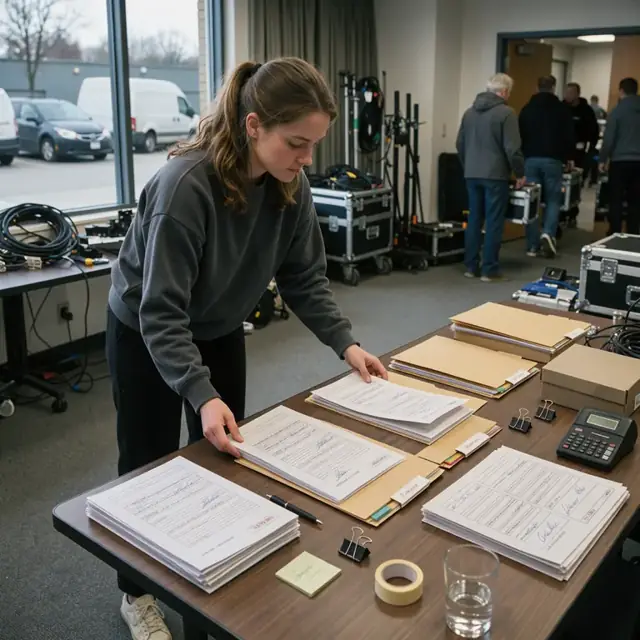
Clearance and Compliance Specialist
Track all signed releases, music licenses, permit closeouts and clearance documentation.
Works in: Ambitious Docs, Contract Analyzer, Ambitious Tasks · Workflows: Clearances, releases and permit closeout
Automates
- Organizes executed talent and location releases
- Checks music and stock footage license terms
- Tracks permit final filings and insurance closeouts
- Maintains a master clearance checklist per project
- Flags any missing documents before final delivery
Stops for a person
- The producer confirms which clearances are required for the project's distribution plan
- All legal documents are reviewed and filed by people
- The bot never certifies compliance
Workflows
Project intake and treatment development
Starts when: A prospective client sends a brief, RFP or inquiry
- Capture project type, objectives, target length, brand guidelines and key deliverables
- Draft a creative treatment and mood board from the brief
- Estimate budget categories including pre-production, shoot days, post-production and deliverables
- Send the treatment and budget draft for producer review
- Create a project folder with all intake materials
Watch for: Creative treatments must align exactly with client brand voice and never assume unstated preferences; Budget estimates require producer approval before sharing with the client
Pre-production planning and permitting
Starts when: Project is greenlit and treatment is approved
- Break down the script or treatment into shot list, locations and required crew roles
- Identify and scout potential locations, then draft permit applications
- Compile insurance, talent agreements, location releases and crew deal memos
- Build the equipment and props list from the shot breakdown
- Create the initial 30-60-90 day production calendar
Watch for: Permits and certificates of insurance must be in place before any location or talent booking; Union rules or preferred vendor lists may constrain crew and gear choices
Shoot scheduling and call sheet creation
Starts when: One week before each shoot day or on location confirmation
- Assign confirmed crew, talent and locations to specific shoot days
- Incorporate weather forecasts and backup indoor options for exterior scenes
- Generate daily call sheets with times, addresses, parking and contact information
- Allocate camera, lighting, grip and sound equipment per shot list
- Distribute call sheets and confirm attendance
Watch for: Talent and union crew availability windows are fixed and non-negotiable; Equipment rental windows must match exact shoot dates to control costs
Production asset and footage intake
Starts when: Each shoot day ends or dailies are uploaded
- Log all raw footage, sound files, camera reports and script supervisor notes
- Organize files by scene, take and camera into a structured folder system
- Flag any technical issues such as dropped frames or audio problems
- Create a daily report summarizing footage captured and remaining shots
- Notify the editor that dailies are ready for review
Watch for: Multiple terabytes of footage must be backed up immediately and versioned clearly; Sound and camera metadata must stay linked to each clip
Post-production editing and review cycles
Starts when: Dailies are approved and editor begins assembly
- Assemble rough cut from selected takes and script
- Incorporate visual effects placeholders, graphics, music and sound design
- Export review copies at each stage (rough cut, fine cut, color graded)
- Track all client and director revision notes in one central sheet
- Prepare final master files with closed captions, versions and delivery specs
Watch for: Client feedback must be captured in writing and never assumed from verbal notes; Music and stock footage licenses must be verified before final export
Final delivery and billing
Starts when: Final master is approved by the client
- Package all required formats, subtitles and ancillary files
- Upload or deliver masters via approved method with transmittal note
- Compile all production expenses, receipts and time cards
- Generate the final invoice with approved budget variances noted
- Archive the complete project in long-term storage
Watch for: Delivery specifications differ by platform and must match client requirements exactly; Invoices can only be sent after producer confirms all costs are entered
Clearances, releases and permit closeout
Starts when: End of each production phase and on final delivery
- Collect and organize all signed talent releases, location agreements and music licenses
- Verify that permits have been closed out with municipalities
- Log insurance claims or incidents if any occurred
- Check that all visual effects and stock elements have proper clearances
- Prepare a final production binder checklist
Watch for: Rules vary by jurisdiction, union status and distribution plans; The producer confirms which clearances and filings are required for each project
Bot templates for this industry
- Motion Picture and Video Production (7 bots)
Source: U.S. Small Business Administration, Office of Size Standards, Table of Small Business Size Standards Matched to North American Industry Classification System Codes, version March 2023 (effective 2023-03-17, NAICS 2022). Size standards are shown for reference only.