

Wired Telecommunications Carriers
Wired telecommunications carriers install, maintain and operate fiber, copper and coaxial lines that deliver voice, data and video services to homes and businesses. For an operator that provisions new circuits, monitors network health, schedules field techs for installs and repairs, and handles service orders and billing, the specialists turn customer requests into validated orders, orders into work tickets and schedules, network alarms into dispatch plans, and usage data into invoices while keeping regulatory filings, pole attachments and right-of-way permits current.
What makes this business different
- Service orders that require exact address, circuit type, bandwidth, VLAN and demarcation details
- Coordination with utilities for pole attachments, conduit access and right-of-way permits
- Field dispatch for installs, repairs, locates and maintenance that must meet regulatory intervals
- Continuous network monitoring with alarms routed by severity and ticket type
- Regulatory filings, annual reports, tariff updates and universal-service fund paperwork
- Asset and inventory tracking for fiber strands, copper pairs, repeaters, splice cases and test equipment
- Billing that reconciles usage, MRC, NRC, taxes and credits across circuits
Specialist bots
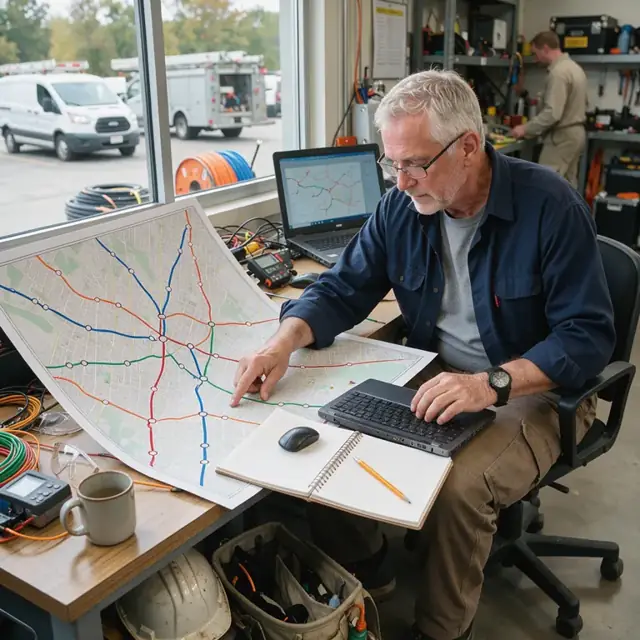
Order Validator
Turn every incoming service request into a validated order with correct circuit details and pricing.
Works in: Ambitious Tasks, Ambitious Docs, Contract Analyzer · Workflows: Service order intake and validation
Automates
- Reads order messages and portal submissions
- Validates address and capacity availability
- Checks for existing circuits at the location
- Drafts confirmation with terms and install window
- Creates the validated order task
Stops for a person
- Network engineer approves non-standard configurations
- Salesperson confirms final pricing and contract terms
- A person sends the order confirmation to the customer

Circuit Provisioner
Assign inventory, generate configurations and create installation tickets for new circuits.
Works in: Ambitious Docs, Ambitious Sheets, Ambitious Tasks · Workflows: Circuit provisioning and activation
Automates
- Reserves fiber strands or copper pairs from inventory
- Builds equipment configuration files
- Creates and assigns work tickets
- Schedules activation within required windows
- Updates asset records with new assignments
Stops for a person
- Network engineer reviews complex designs
- Field supervisor confirms schedule feasibility
- A person approves the final activation command

Network Monitor
Classify alarms, create trouble tickets and notify technicians when service is impacted.
Works in: Ambitious Tasks, Ambitious Docs, Process Optimizer · Workflows: Network monitoring and alarm response
Automates
- Receives and categorizes alarms by severity
- Correlates alarms with maintenance records
- Opens or updates trouble tickets
- Drafts dispatch notifications
- Logs resolution timeline
Stops for a person
- On-call engineer decides on major outage escalations
- Technician confirms root cause in the field
- A person closes tickets after service restoration

Dispatch Coordinator
Match work tickets to available technicians, build daily routes and track field activity.
Works in: Ambitious Tasks, Ambitious Docs · Workflows: Field technician dispatch and scheduling
Automates
- Assigns tickets based on skill, location and schedule
- Optimizes daily routes considering travel and permit windows
- Sends ticket packets with maps and materials lists
- Tracks technician check-ins and job completion
- Updates inventory after material use
Stops for a person
- Field supervisor approves final daily schedule
- Technicians report exceptions and safety issues
- A person authorizes emergency after-hours dispatch
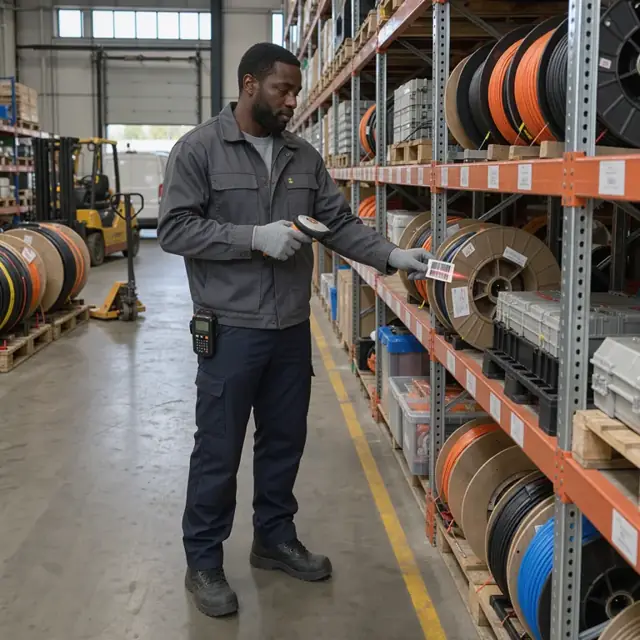
Inventory Manager
Reconcile physical assets, track fiber and equipment inventory and generate reorder lists.
Works in: Ambitious Sheets, Ambitious Tasks, Ambitious Docs · Workflows: Asset and inventory management
Automates
- Compares field reports against database records
- Tracks fiber strands, splice cases and test gear
- Calculates reorder quantities for consumables
- Flags underutilized assets
- Updates records after installs and retirements
Stops for a person
- Warehouse staff performs physical cycle counts
- Procurement places all purchase orders
- Engineering confirms reclamation of stranded assets

Billing Analyst
Reconcile usage records, apply tariffs and draft monthly invoices for review.
Works in: Ambitious Sheets, Ambitious Docs, Ambitious Tasks · Workflows: Billing and usage reconciliation
Automates
- Pulls and matches usage data to contracts
- Calculates MRC, NRC, taxes and adjustments
- Generates draft invoices and reports
- Flags accounts needing manual review
- Prepares supporting documentation for disputes
Stops for a person
- Finance lead reviews and approves all invoices
- Account manager handles customer billing disputes
- A person sends final invoices to customers

Regulatory Compliance Clerk
Track permit and filing deadlines, maintain regulatory checklists and alert on upcoming renewals.
Works in: Ambitious Docs, Ambitious Tasks, Ambitious Sheets · Workflows: Regulatory filings and permit management
Automates
- Compiles data for required filings
- Tracks pole attachment and right-of-way permit expirations
- Generates safety and construction checklists
- Sends advance warnings on renewal dates
- Maintains utility and municipal contact lists
Stops for a person
- Legal and regulatory staff review and file all official documents
- The owner confirms which local rules apply to each jurisdiction
- A person handles all interactions with utilities and municipalities
Workflows
Service order intake and validation
Starts when: Customer submits order by portal, email or direct message
- Parse the requested service type, address, bandwidth, demarcation and contact details
- Validate address against serviceability database and available fiber or copper capacity
- Check for existing accounts or circuits at the location
- Draft the order confirmation with pricing, install window and terms
- Create a validated order task for provisioning
Watch for: Exact circuit details must match engineering records; Address validation failures require manual review before commitment
Circuit provisioning and activation
Starts when: Validated service order is approved
- Assign available fiber strand, copper pair or VLAN from inventory
- Generate configuration for head-end equipment, ONTs and demarcation devices
- Create work ticket for field installation or remote activation
- Schedule the install or turn-up date within regulatory windows
- Update asset records with new circuit details
Watch for: Capacity must be reserved in real time to avoid double-booking; Regulatory intervals for new installs must be observed
Network monitoring and alarm response
Starts when: Alarm received from network management system or customer report
- Classify alarm by severity, affected circuit and location
- Correlate with known maintenance or outages
- Create or update a trouble ticket
- Notify on-call technician and draft dispatch if field visit is required
- Log resolution steps and close ticket when service is restored
Watch for: Certain alarms require response inside regulatory time limits; False positives must be filtered before dispatch
Field technician dispatch and scheduling
Starts when: Work ticket created for install, repair or maintenance
- Match ticket requirements to technician skills, location and availability
- Build daily route respecting travel time, safety windows and permit restrictions
- Send technician the ticket details, maps, required materials and safety notes
- Track arrival, completion and any follow-up needs
- Update inventory after materials are consumed
Watch for: Permits and locates must be completed before dispatch; After-hours emergencies follow priority escalation rules
Asset and inventory management
Starts when: Weekly and after every field activity
- Reconcile physical assets against provisioning and trouble-ticket records
- Track fiber strands, splice cases, repeaters and test equipment by location
- Generate reorder list for consumables nearing reorder points
- Flag stranded or underutilized assets for reclamation
- Update records when equipment is installed, moved or retired
Watch for: Accurate strand and pair counts are required for regulatory reporting; High-value test equipment must be tracked at all times
Billing and usage reconciliation
Starts when: Monthly billing cycle and after usage uploads
- Pull usage data from mediation systems for each circuit
- Reconcile metered usage against contracted MRC and NRC
- Apply taxes, credits, adjustments and late fees
- Draft invoices and usage reports for review
- Flag accounts with discrepancies for investigation
Watch for: Tariff rules and regulatory surcharges must be applied correctly; Disputes require supporting circuit and usage documentation
Regulatory filings and permit management
Starts when: Quarterly, annually and on permit or renewal dates
- Compile data for annual reports, tariff updates and universal-service filings
- Track pole attachment agreements, right-of-way permits and franchise fees
- Generate checklists for construction, excavation and safety compliance
- Alert on upcoming renewal or inspection dates
- Maintain current contact list for utility and municipal partners
Watch for: Filing deadlines are fixed by regulatory calendar; Local rules for pole loading and dig-once policies vary by jurisdiction
Bot templates for this industry
- Wired Telecommunications Carriers (7 bots)
Source: U.S. Small Business Administration, Office of Size Standards, Table of Small Business Size Standards Matched to North American Industry Classification System Codes, version March 2023 (effective 2023-03-17, NAICS 2022). Size standards are shown for reference only.