

Solid Waste Combustors and Incinerators
Solid waste combustors and incinerators receive, weigh, inspect, store and thermally treat non-hazardous solid waste in controlled high-temperature units. The specialists turn incoming waste manifests and scale tickets into verified intake records, schedule daily combustion runs, track ash and residue for disposal or reuse, maintain emission-control equipment logs, and prepare regulatory reports. Operating permits, stack-test schedules, continuous emission monitoring and ash-handling procedures remain with the facility manager.
What makes this business different
- Incoming loads must be inspected for prohibited materials before acceptance
- Daily combustion schedules that respect unit temperature, residence time and feed rates
- Continuous emission monitoring systems that log data in real time
- Ash and residue tracking with sampling, testing and approved disposal or beneficial-use pathways
- Stack testing, permit renewals, annual emissions inventories and compliance reporting deadlines
- Maintenance of scrubbers, baghouses, injectors and other air-pollution-control devices
- Weighbridge tickets, chain-of-custody manifests and waste-origin documentation
- Seasonal spikes in certain waste streams such as yard waste or construction debris
Specialist bots

Intake Verifier
Turn every arriving waste load into an inspected, documented and inventoried intake record.
Works in: Ambitious Tasks, Ambitious Docs, Ambitious Sheets · Workflows: Waste intake and inspection
Automates
- Reads scale tickets and electronic manifests
- Checks waste type against permitted categories
- Creates visual-inspection checklist
- Assigns staging location
- Updates combustion-feed inventory
Stops for a person
- Facility operator confirms rejection of prohibited loads
- Random sampling decisions and lab test requests are approved by people
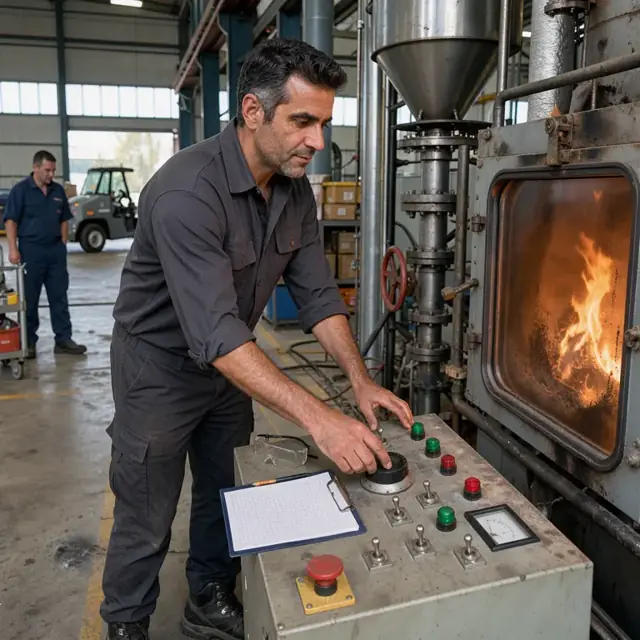
Combustion Scheduler
Convert accepted waste inventory into a stable daily feed schedule that respects all operating limits.
Works in: Ambitious Tasks, Process Optimizer, Ambitious Sheets · Workflows: Daily combustion scheduling
Automates
- Calculates blended heating values
- Builds timed feed sequence
- Balances waste types across bunkers
- Reserves time for planned maintenance
- Generates shift handover checklist
Stops for a person
- The shift supervisor approves the final feed schedule
- Any deviation from permitted parameters requires operator sign-off

Emission Monitor
Pull continuous emission data, flag excursions and compile averages for reporting.
Works in: Ambitious Sheets, Ambitious Docs, Ambitious Tasks · Workflows: Emission monitoring and control
Automates
- Collects real-time CEMS readings
- Calculates daily and rolling averages
- Flags values outside operating envelopes
- Prepares quarterly data summaries
Stops for a person
- The facility manager reviews and signs every report
- Corrective actions for exceedances are directed by licensed operators

Ash and Residue Coordinator
Track ash production, testing, handling and final disposition.
Works in: Ambitious Sheets, Ambitious Docs, Ambitious Tasks · Workflows: Ash handling and residue management
Automates
- Records ash weights after each cycle
- Schedules required laboratory tests
- Determines approved reuse or disposal route
- Prepares shipping manifests
Stops for a person
- The environmental manager selects final disposition pathway
- Ash sampling and lab results are reviewed by people before transport
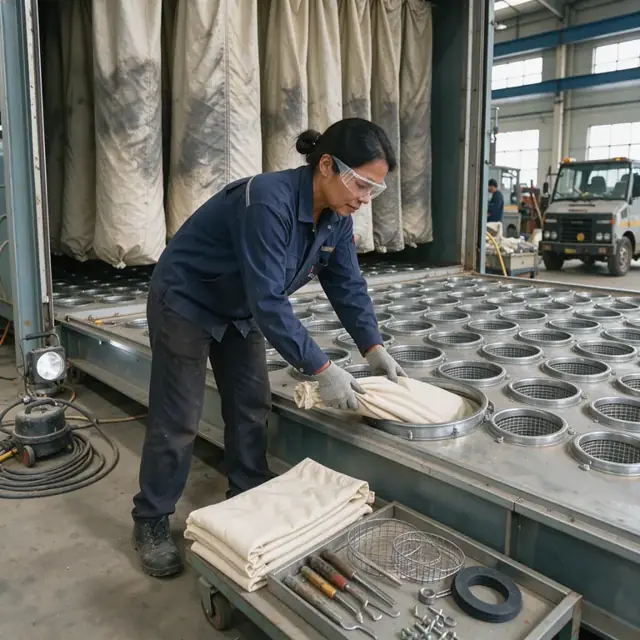
Maintenance and Inspection Tracker
Generate and record preventive maintenance, inspections and stack-test schedules for all combustion and control equipment.
Works in: Ambitious Tasks, Ambitious Docs, Process Optimizer · Workflows: Equipment maintenance and inspections
Automates
- Creates recurring maintenance tasks
- Tracks completion of inspections
- Monitors stack-test and permit deadlines
- Calculates control-device efficiency metrics
Stops for a person
- Certified technicians perform and sign off on critical inspections
- The plant manager approves any maintenance that causes downtime

Regulatory Reporting Clerk
Assemble operating data and draft monthly, quarterly and annual regulatory reports for review.
Works in: Ambitious Docs, Ambitious Sheets, Ambitious Tasks · Workflows: Regulatory reporting and permit compliance
Automates
- Compiles emission, ash and operating-hour totals
- Populates standard report templates
- Tracks permit and renewal dates
- Organizes records for inspections
Stops for a person
- The responsible official reviews and signs every submission
- People confirm that all limits and reporting requirements are met before filing

Billing and Manifest Reconciler
Match scale tickets and manifests to customer accounts and prepare accurate invoices.
Works in: Ambitious Sheets, Ambitious Docs, Ambitious Tasks · Workflows: Customer billing and manifest reconciliation
Automates
- Matches tickets to manifests
- Calculates tipping fees
- Reconciles accepted versus billed weights
- Drafts invoices
Stops for a person
- The billing manager approves and sends all invoices
- Discrepancies with haulers are resolved by facility staff
Workflows
Waste intake and inspection
Starts when: A waste hauler arrives at the gate or scale
- Capture manifest, origin, waste type and weight from scale ticket
- Perform visual and random sampling inspection for prohibited items
- Record acceptance or rejection decision with reason
- Assign storage bunker or staging area and create intake task
- Update daily combustion feed inventory
Watch for: Certain waste streams require laboratory testing before acceptance; Rejected loads must be documented and returned to the generator
Daily combustion scheduling
Starts when: Start of each operating shift or after intake cutoff
- Review accepted waste inventory and heating value estimates
- Build a feed schedule that respects unit temperature setpoints and residence-time rules
- Balance multiple waste types to maintain stable combustion
- Incorporate planned maintenance windows and emission-control checks
- Produce a shift handover checklist
Watch for: Feed rate cannot exceed permitted maximum; Certain high-moisture or low-BTU wastes must be blended
Emission monitoring and control
Starts when: Continuous during operation and after any upset
- Pull data from continuous emission monitors for oxygen, carbon monoxide, NOx, SO2 and particulates
- Flag any readings outside the operating envelope
- Log corrective actions taken by the operator
- Compile daily averages and rolling averages for reporting
- Prepare data for quarterly or annual emissions reports
Watch for: CEMS must be kept calibrated and in compliance with permit conditions; Any exceedance triggers immediate operator notification
Ash handling and residue management
Starts when: After each combustion cycle or daily
- Record ash weight and sample collection
- Send samples for required metals and dioxin testing
- Determine disposal or beneficial-use pathway
- Prepare shipping manifests for ash transport
- Track landfill or reuse volumes
Watch for: Ash must be kept wetted to control dust; Some ash streams require stabilization before transport
Equipment maintenance and inspections
Starts when: On scheduled intervals or after alarms
- Generate preventive-maintenance tasks for boilers, grates, scrubbers and baghouses
- Record completed inspections and part replacements
- Track stack-test due dates and prepare test protocols
- Maintain records of air-pollution-control device efficiency
- Flag any overdue items for escalation
Watch for: Certain inspections must be performed by certified technicians; Downtime for maintenance must be reported to regulators
Regulatory reporting and permit compliance
Starts when: Monthly, quarterly, annual and renewal dates
- Compile operating data, emission totals and ash volumes
- Draft monthly discharge monitoring reports and annual emissions inventories
- Track permit condition deadlines and renewal applications
- Organize documentation for upcoming inspections
- Maintain current versions of all operating and monitoring plans
Watch for: Reporting formats and limits are set by federal, state and local permits; All submissions are reviewed and signed by the responsible official
Customer billing and manifest reconciliation
Starts when: End of each billing cycle and after each load
- Match scale tickets to customer accounts
- Calculate tipping fees and any surcharges
- Reconcile manifests with final disposal records
- Draft invoices for approval
- Archive completed manifests for the required retention period
Watch for: Some customers require specific manifest formats; Discrepancies between delivered and accepted weights must be resolved
Bot templates for this industry
Source: U.S. Small Business Administration, Office of Size Standards, Table of Small Business Size Standards Matched to North American Industry Classification System Codes, version March 2023 (effective 2023-03-17, NAICS 2022). Size standards are shown for reference only.