

Blood and Organ Banks
Blood and organ banks collect, process, test, store and distribute blood products and organs for transplant. For a facility that schedules donors, collects whole blood and apheresis products, performs required testing, maintains inventory of blood components and coordinates organ procurement with hospitals and transplant centers, the specialists turn donor messages and hospital requests into scheduled appointments, convert collections into tested and labeled inventory, manage cold-chain storage and expiration, and coordinate timely delivery of blood products or organs while handling strict regulatory documentation.
What makes this business different
- Strict donor eligibility screening that includes medical history, vital signs and deferral rules
- Collection schedules that must align with fixed blood drives, hospital demand and organ procurement timing
- Multiple blood components (whole blood, platelets, plasma, red cells) with different processing paths and shelf lives
- Temperature-controlled storage and transport with continuous monitoring and alarm response
- Mandatory infectious disease testing, labeling, traceability and lookback records for every unit
- Coordination with hospitals for STAT orders, massive transfusion protocols and organ recovery logistics
- Inventory management that balances perishable products with minimum stock levels by blood type and component
- Detailed paperwork for FDA, AABB, state health departments and transplant networks that people must review and approve
Specialist bots
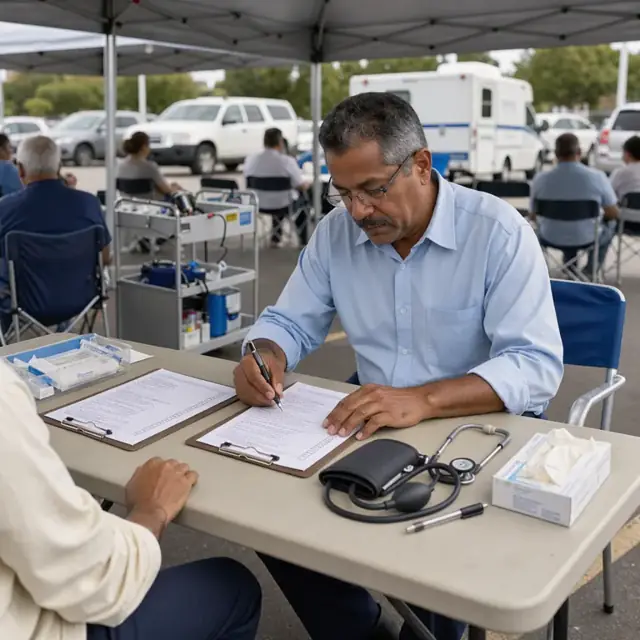
Donor Intake Coordinator
Convert every donor inquiry or hospital referral into a screened, scheduled donation appointment with complete eligibility documentation.
Works in: Ambitious Tasks, Ambitious Docs, Email Buckets · Workflows: Donor intake and eligibility
Automates
- Reads incoming donor messages and online forms
- Applies the standardized eligibility questionnaire
- Checks against current deferral list
- Books the appointment on the correct equipment and staff slot
- Drafts the confirmation and preparation instructions
Stops for a person
- Medical staff review and approve all deferral decisions
- Complex medical histories are escalated to a qualified health professional
- A person makes the final call on any borderline eligibility
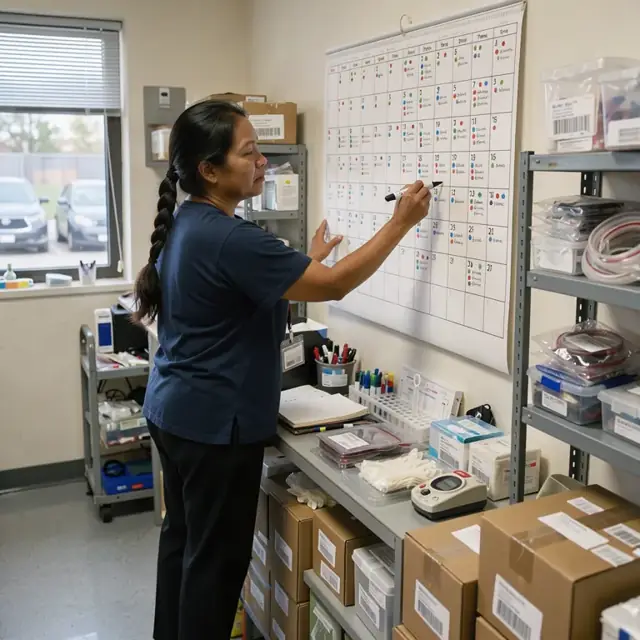
Collection Scheduler
Forecast hospital demand and create balanced daily collection schedules for blood drives and fixed sites.
Works in: Ambitious Sheets, Process Optimizer, Ambitious Tasks · Workflows: Collection day scheduling and staffing
Automates
- Forecasts component needs from recent hospital orders
- Assigns staff and equipment to each collection location
- Balances fixed drives with on-demand appointments
- Adjusts schedule when urgent organ cases arise
- Produces the daily collection target sheet
Stops for a person
- The medical director approves changes to staffing or drive locations
- A supervisor reviews the final daily schedule before it is published

Processing and Testing Coordinator
Track each collected unit through labeling, component separation, infectious disease testing and final quarantine release.
Works in: Ambitious Tasks, Ambitious Docs, Ambitious Sheets · Workflows: Processing and infectious disease testing
Automates
- Assigns unique donation identification numbers
- Routes units to the correct processing workflow
- Orders the required test panel for each donation
- Holds units in quarantine until all results are logged
- Applies final product labels with expiration dates
Stops for a person
- Laboratory staff review and sign off on all test results
- Any reactive test result is investigated and confirmed by a person before final disposition

Inventory and Cold Chain Manager
Maintain real-time visibility of all blood components in storage, monitor temperatures and manage rotation to minimize waste.
Works in: Ambitious Sheets, Ambitious Tasks, Ambitious Docs · Workflows: Inventory tracking and rotation
Automates
- Adds newly released units to active inventory
- Monitors temperature data from all storage devices
- Flags units nearing expiration for priority issue
- Calculates current stock levels by blood type and component
- Generates alerts when stock falls below minimum thresholds
Stops for a person
- Staff perform physical inventory counts and confirm system accuracy
- Decisions to discard or modify short-dated units are made by qualified personnel

Order Fulfillment and Delivery Coordinator
Match hospital orders to available inventory, prepare validated shipments and maintain chain-of-custody documentation.
Works in: Ambitious Tasks, Ambitious Docs, Contract Analyzer · Workflows: Hospital order fulfillment and delivery
Automates
- Checks requested products against current inventory
- Reserves compatible units and initiates compatibility testing when required
- Generates packing lists and shipping manifests
- Prepares temperature-controlled shipping containers
- Tracks delivery status until receipt is confirmed
Stops for a person
- A qualified technologist performs and reviews compatibility testing
- The distribution supervisor approves all STAT and unmatched unit releases
- A person signs the final chain-of-custody transfer record
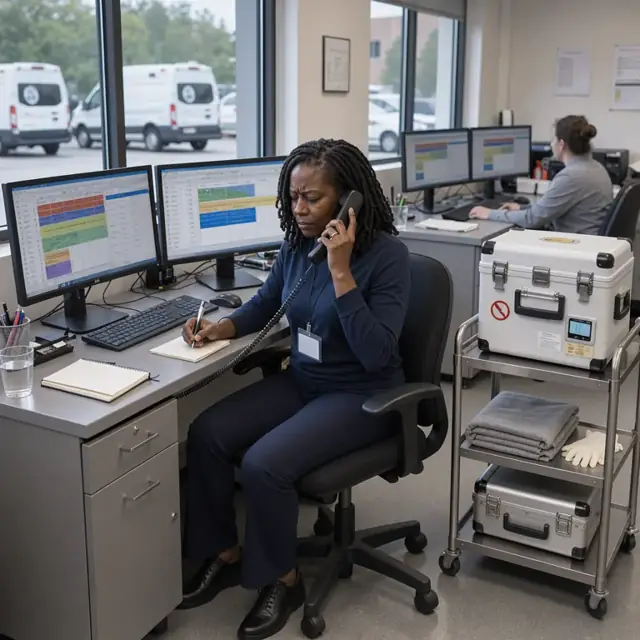
Organ Procurement Coordinator
Coordinate timing and documentation between donor hospitals, recovery teams and transplant centers for each organ offer.
Works in: Ambitious Tasks, Ambitious Docs · Workflows: Organ procurement coordination
Automates
- Logs potential donor information and matches against recipient criteria
- Builds a timeline for recovery, transport and implantation
- Notifies all required teams of scheduled times
- Prepares the organ-specific documentation package
- Tracks the organ from recovery through final delivery
Stops for a person
- Transplant surgeons and procurement teams approve all scheduling decisions
- Medical staff confirm recipient suitability and consent before proceeding
- A person reviews and signs all organ transport and implantation records

Regulatory Documentation Clerk
Compile daily collection, testing and distribution records, track equipment and license renewals, and organize deviation reports for review.
Works in: Ambitious Docs, Ambitious Sheets, Ambitious Tasks · Workflows: Regulatory and quality documentation
Automates
- Assembles daily production and distribution records
- Generates deviation and nonconformance reports
- Tracks renewal dates for licenses, certifications and validations
- Maintains lookback and traceability files
- Prepares summary reports for quality review meetings
Stops for a person
- The quality assurance team reviews and approves every deviation investigation
- A qualified individual confirms that all required records are complete before filing
- People perform all regulatory submissions and responses
Workflows
Donor intake and eligibility
Starts when: A potential donor contacts the center by phone, form, email or text or a hospital refers a donor
- Capture donor contact details, preferred donation type and any prior donation history
- Screen against current eligibility criteria including medications, travel and health conditions
- Schedule the appointment on an open slot that matches the requested component type
- Send a confirmation with preparation instructions and create a donor-specific intake task
- Flag any temporary or permanent deferrals for follow-up review
Watch for: Eligibility questions must be asked exactly as written in the approved questionnaire; Certain travel or medical histories trigger immediate deferral that only medical staff can override
Collection day scheduling and staffing
Starts when: Weekly forecast based on hospital orders and fixed drive calendar
- Forecast expected hospital demand by blood type and component for the coming week
- Assign collection staff, phlebotomists and equipment to each drive or fixed site
- Balance donor appointments with walk-in capacity and organ procurement call availability
- Adjust schedule when a drive is added or a hospital places a large order
- Generate daily collection target sheet by component type
Watch for: Apheresis machines have limited slots per day and require specific trained staff; Organ procurement calls can interrupt scheduled blood collections at any time
Processing and infectious disease testing
Starts when: After each collection is completed and logged
- Create a unique donation identification number and scan all attached tubing and samples
- Route the unit to the correct processing path for the component type collected
- Order and track required infectious disease tests for each donation
- Quarantine the unit until all test results are received and reviewed
- Label the final component with ABO/Rh, expiration and special attributes
Watch for: Each unit must remain traceable from donor to final disposition at all times; Positive test results trigger immediate quarantine, notification and lookback procedures
Inventory tracking and rotation
Starts when: Continuous as units are processed, expire or are issued
- Add newly processed units to active inventory by blood type, component and attributes
- Monitor temperature logs for all refrigerators, freezers and transport containers
- Identify and remove units approaching expiration for possible modification or discard
- Maintain minimum stock levels and generate reorder alerts to collection teams
- Track irradiation, leukoreduction and other modifications performed
Watch for: Red cells, platelets and plasma each have different temperature requirements and shelf lives; Short-dated units must be offered to hospitals before they expire
Hospital order fulfillment and delivery
Starts when: A hospital or transplant center places an order by phone, secure portal or direct message
- Verify the order against current inventory and blood type compatibility rules
- Reserve the specific units and prepare any crossmatch or compatibility testing
- Package the products in validated shipping containers with temperature monitors
- Coordinate pickup or delivery timing especially for STAT and organ-related orders
- Generate the shipping manifest and transfer records for the chain of custody
Watch for: Organ transport follows much tighter time windows than blood components; Massive transfusion protocol orders require rapid release of unmatched units
Organ procurement coordination
Starts when: Notification of a potential donor from a hospital or organ procurement organization
- Log the potential donor details and coordinate with the recovery team schedule
- Match the organ offer against the transplant center waitlist and recipient criteria
- Schedule the recovery procedure and arrange transport logistics
- Prepare all required documentation for the organ and the recipient facility
- Track the organ from recovery through delivery and transplantation
Watch for: Cold ischemia time limits are extremely strict and drive all scheduling; Multiple transplant teams may need to be coordinated simultaneously
Regulatory and quality documentation
Starts when: Daily at close of business and on fixed reporting dates
- Compile collection, testing and distribution records for the day
- Generate deviation reports for any temperature excursions or processing errors
- Track renewal dates for facility licenses, staff certifications and equipment validations
- Prepare summary reports for internal quality review
- Maintain lookback and traceability files for every unit
Watch for: All records must be stored for the exact period required by regulation; Any deviation must be investigated and closed by qualified staff before product release
Bot templates for this industry
- Blood and Organ Banks (7 bots)
Source: U.S. Small Business Administration, Office of Size Standards, Table of Small Business Size Standards Matched to North American Industry Classification System Codes, version March 2023 (effective 2023-03-17, NAICS 2022). Size standards are shown for reference only.