

Specialty (except Psychiatric and Substance Abuse) Hospitals
Specialty hospitals focus on cardiac, orthopedic, cancer, rehabilitation or women's health cases. They turn referrals into authorized admissions, build daily procedure and operating-room schedules, ensure specialized implants and supplies are ready per case, assemble clinical documentation for signatures, prepare charges for billing, track regulatory logs and licenses, and coordinate patient discharge and follow-up. All clinical, medical and financial decisions stay with licensed staff and the medical director.
What makes this business different
- Referrals and prior authorizations required from insurance carriers before elective procedures
- Block scheduling for operating rooms, procedure suites and specialized equipment
- High-value implants, prosthetics and single-use specialty supplies that must be on hand per case
- Detailed clinical documentation, operative reports, imaging and consent forms filed on time
- Coordination with referring physicians, anesthesiologists, surgeons and rehab teams
- State licensing, accreditation surveys, infection logs, radiation safety records and controlled-substance counts
- Patient transport, pre-op instructions, post-discharge follow-up and readmission tracking
Specialist bots

Referral and Authorization Coordinator
Convert every incoming referral into a verified, authorized case ready for scheduling.
Works in: Ambitious Tasks, Ambitious Docs, Email Buckets · Workflows: Referral and authorization intake
Automates
- Reads referral documents and extracts key data
- Drafts and submits prior-authorization requests
- Tracks authorization status across payers
- Assembles the complete intake packet
- Creates the patient task for scheduling
Stops for a person
- Clinical staff review medical necessity and attached records
- A person approves and sends all authorization submissions
- The medical director reviews denials and appeals
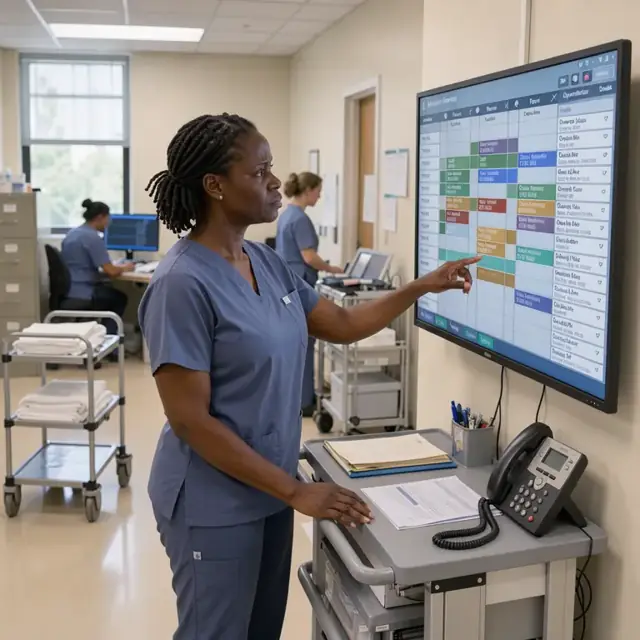
Operating Room Scheduler
Build daily operating room and procedure schedules that respect block time, equipment and staffing.
Works in: Ambitious Tasks, Ambitious Sheets · Workflows: Operating room and procedure scheduling
Automates
- Checks surgeon availability and room blocks
- Assigns equipment, implants and staff per case
- Sends pre-op packets to patients
- Publishes the next-day schedule to all teams
Stops for a person
- The surgeon confirms the final schedule
- Anesthesia and nursing approve staffing levels
- Changes to block time are made only by the owner

Implant and Specialty Supply Coordinator
Ensure the exact implants, biologics and specialty supplies are available and documented for every scheduled case.
Works in: Ambitious Sheets, Ambitious Tasks · Workflows: Specialty supply and implant inventory
Automates
- Reviews upcoming cases for required items
- Checks stock, consignment and expiration dates
- Drafts vendor orders and loaner requests
- Logs usage and lot numbers per case
Stops for a person
- The surgical team confirms implant selection
- Purchasing and accounts payable approve all orders
- Vendor representatives are scheduled by clinical staff

Clinical Documentation Clerk
Assemble, route for signature and file all operative reports, consents and discharge records on time.
Works in: Ambitious Docs, Ambitious Tasks · Workflows: Clinical documentation and records workflow
Automates
- Gathers notes, images and logs after each case
- Routes documents for physician signatures
- Files completed records in the patient chart
- Drafts discharge summaries for review
Stops for a person
- Physicians review and sign all clinical notes
- Nursing staff verify discharge instructions
- The compliance officer reviews flagged incomplete records

Charge Capture and Billing Specialist
Capture procedure, implant and supply charges accurately for every case and prepare clean claims.
Works in: Ambitious Sheets, Ambitious Tasks, Ambitious Docs · Workflows: Charge capture and billing preparation
Automates
- Pulls charges from schedule and inventory logs
- Matches implants to patient accounts
- Applies correct codes and modifiers
- Flags complex claims for review
Stops for a person
- Coders and billers perform final claim review
- The finance lead approves high-dollar submissions
- All spending and claim transmission is performed by people

Compliance and Accreditation Tracker
Maintain regulatory checklists, renewal calendars and quality logs required for licensing and surveys.
Works in: Ambitious Tasks, Ambitious Sheets, Ambitious Docs · Workflows: Regulatory and accreditation tracking
Automates
- Generates daily safety and equipment checklists
- Tracks license and accreditation renewal dates
- Compiles quality and infection logs
- Prepares document packets for surveys
Stops for a person
- Department managers and the medical director review and sign all logs
- The owner confirms which state and accreditation requirements apply
- All corrective actions and survey responses are handled by licensed personnel

Patient Discharge and Follow-up Coordinator
Prepare discharge instructions, schedule post-care appointments and track follow-up completion.
Works in: Ambitious Tasks, Ambitious Docs, Email Buckets · Workflows: Patient discharge and follow-up coordination
Automates
- Drafts customized discharge packets
- Books post-op and therapy appointments
- Sends satisfaction surveys and reminders
- Updates referring physicians on outcomes
Stops for a person
- The discharging physician approves all instructions
- Nursing staff review and deliver discharge materials
- The owner approves all communications sent to patients
Workflows
Referral and authorization intake
Starts when: A new referral arrives by fax, secure email, portal or direct message
- Extract patient demographics, diagnosis, requested procedure and referring physician
- Check insurance eligibility and draft prior-authorization request with clinical notes
- Route the authorization request to the correct payer portal or fax queue
- Track status and follow up on pending authorizations
- Create a patient intake task with all gathered documents attached
Watch for: Authorization must be secured before scheduling certain procedures; Clinical documentation must be attached exactly as received from the referring physician
Operating room and procedure scheduling
Starts when: Approved authorization or physician request for elective or urgent case
- Check surgeon availability, operating-room block time and anesthesia coverage
- Assign procedure time, room, equipment and implant needs
- Send pre-op instructions, lab orders and NPO requirements to the patient
- Coordinate with sterile processing for required instrument trays
- Publish the next-day schedule to all departments
Watch for: Surgeon block time cannot be moved without approval; Specialty equipment such as robotic systems or imaging must be reserved
Specialty supply and implant inventory
Starts when: Weekly, before each scheduled case and on low-stock alerts
- Review upcoming cases for required implants, screws, stents or biologics
- Check current stock and consignment levels against par and expiration dates
- Draft replenishment orders for vendors or request loaner sets from manufacturers
- Log usage per case for charge capture and reconciliation
- Flag soon-to-expire items for priority use or return
Watch for: Many implants are vendor-representative delivered and must be confirmed sterile; Traceability and lot numbers are required for recalls and reporting
Clinical documentation and records workflow
Starts when: After each procedure, admission or discharge
- Assemble operative notes, anesthesia records, pathology results and implant logs
- Route documents for physician signature and addenda
- File completed records in the correct patient chart with required timestamps
- Generate discharge summary and instructions for the patient and referring physician
- Flag any incomplete items for follow-up
Watch for: Timelines for signing operative reports are set by regulation and accreditation; Imaging and pathology must be linked to the correct encounter
Charge capture and billing preparation
Starts when: End of each procedure day and weekly
- Pull procedure, supply and implant charges from the schedule and inventory logs
- Match implants and disposables to patient accounts
- Draft claims with correct CPT, HCPCS and revenue codes
- Route high-dollar or complex claims for internal review
- Transmit clean claims to the billing team
Watch for: Accurate implant cost-to-charge ratios affect reimbursement; Certain specialty procedures require specific modifiers and documentation
Regulatory and accreditation tracking
Starts when: Daily for logs, monthly for reports and on renewal dates
- Generate daily checklists for infection control, medication counts and equipment checks
- Track license, accreditation and physician credential renewal dates
- Compile quality metrics, infection rates and adverse-event logs
- Prepare documents for upcoming surveys or inspections
- Maintain radiation safety, laser and controlled-substance records
Watch for: Different states and accreditation bodies require specific logs and reporting intervals; All checklists and logs are reviewed and signed by licensed staff
Patient discharge and follow-up coordination
Starts when: Day of discharge and at set intervals afterward
- Draft discharge instructions, medication lists and activity restrictions
- Schedule post-op visits, physical therapy or imaging follow-ups
- Send patient satisfaction surveys and readmission risk prompts
- Coordinate with referring physicians on outcomes and next steps
- Track completion of all follow-up tasks
Watch for: Post-discharge instructions must match the exact procedure performed; Readmission tracking affects quality scores and reimbursement
Bot templates for this industry
Source: U.S. Small Business Administration, Office of Size Standards, Table of Small Business Size Standards Matched to North American Industry Classification System Codes, version March 2023 (effective 2023-03-17, NAICS 2022). Size standards are shown for reference only.