

Food Service Contractors
Food service contractors operate cafeterias, mess halls and in-house kitchens under long-term agreements with factories, offices, schools, colleges, hospitals, military bases and other institutions. They forecast daily participation, plan production runs from standardized menus or limited daily specials, manage bulk ingredient purchasing, schedule staff and equipment for batch cooking and plating, handle delivery or on-site service lines, track consumption and waste, and maintain temperature logs and sanitation records while the account manager and chef retain final approval on menus, pricing and compliance.
What makes this business different
- Long-term client contracts with fixed service periods, meal counts and pricing adjustments
- Forecasting of daily or weekly meal volumes based on institutional calendars, events and attendance
- Batch production from standardized recipes scaled to hundreds or thousands of servings
- Tight production windows to serve meals at exact times such as breakfast, lunch or dinner shifts
- Management of walk-up service lines, tray lines, mobile carts or delivery to multiple buildings
- Bulk purchasing, inventory rotation and waste tracking for perishable and non-perishable goods
- Daily temperature, sanitation and HACCP-style logs plus renewal tracking for licenses and permits
- Client-specific dietary requirements including therapeutic diets, religious restrictions and allergens
Specialist bots

Volume Forecaster
Convert client calendars and historical data into accurate daily meal production targets.
Works in: Ambitious Sheets, Process Optimizer, Ambitious Tasks · Workflows: Meal volume forecasting
Automates
- Pulls and adjusts historical counts by day and meal period
- Factors in events and attendance patterns
- Generates production targets by diet category
- Flags large swings for review
Stops for a person
- The account manager reviews and approves final forecasts
- Significant changes in client headcount must be confirmed by the client contact

Menu and Recipe Scaler
Scale approved recipes to forecasted volumes and produce daily production batch sheets.
Works in: Ambitious Sheets, Ambitious Docs, Ambitious Tasks · Workflows: Menu and recipe scaling
Automates
- Scales ingredient quantities and labor times
- Creates batch sheets with temperatures and portioning instructions
- Generates separate versions for standard and special-diet meals
- Checks against client nutrition or cost guidelines
Stops for a person
- The executive chef approves all scaled recipes and menu changes
- Client dietary or religious requirements are verified by the dietitian or account manager

Procurement and Inventory Coordinator
Convert production needs into purchase orders, receive deliveries and maintain accurate stock levels.
Works in: Ambitious Sheets, Ambitious Tasks, Ambitious Docs · Workflows: Bulk purchasing and inventory control
Automates
- Calculates net order quantities after subtracting inventory
- Groups orders by supplier and lead time
- Logs receipt and adjusts stock records
- Tracks waste and adjusts par levels
Stops for a person
- The account manager approves and places all purchase orders
- Quality and temperature of incoming perishables are verified by kitchen staff

Kitchen Production Scheduler
Build daily production timelines that meet service deadlines while respecting equipment and staff constraints.
Works in: Process Optimizer, Ambitious Tasks · Workflows: Production and kitchen scheduling
Automates
- Sequences batches to align with meal service times
- Assigns tasks to stations and staff
- Identifies equipment capacity conflicts
- Adjusts for last-minute volume changes
Stops for a person
- The executive chef or lead cook approves the final daily schedule
- Staff assignments are confirmed by the kitchen supervisor

Service Dispatcher
Assign staff to service lines or delivery routes and prepare load sheets for each meal period.
Works in: Ambitious Tasks, Ambitious Docs, Ambitious Sheets · Workflows: Service line and delivery dispatch
Automates
- Distributes staff across stations based on volume
- Creates load and temperature sheets for each cart or route
- Generates client notifications
- Captures actual counts and issues after service
Stops for a person
- The manager approves staffing assignments and any route changes
- Final temperature and quality checks are performed by kitchen staff before service
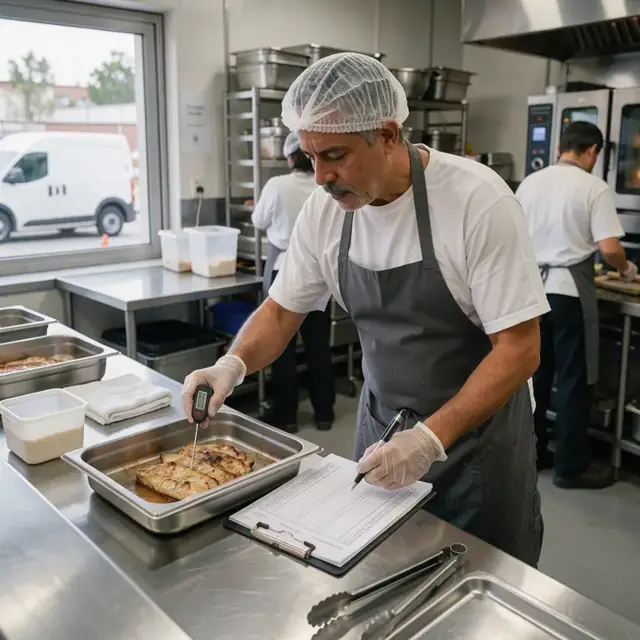
Compliance and Safety Clerk
Maintain daily sanitation checklists, temperature logs and track renewal of permits and certifications.
Works in: Ambitious Tasks, Ambitious Sheets, Ambitious Docs · Workflows: Safety, sanitation and permit tracking
Automates
- Generates shift-specific checklists
- Records temperatures and cleaning completions
- Alerts before license or certification renewals
- Compiles logs for client or health department review
Stops for a person
- Kitchen supervisors confirm accuracy of temperature and sanitation entries
- The account manager verifies which local rules apply at each site
- People perform and document all corrective actions
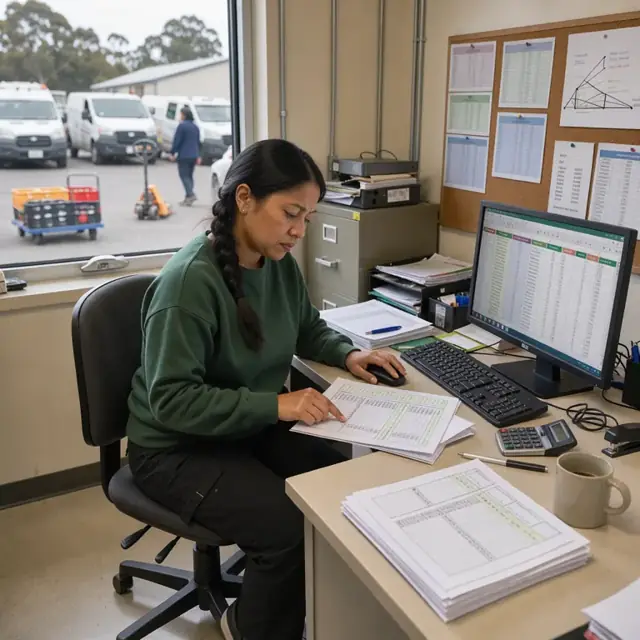
Billing Reconciler
Reconcile actual meal counts and consumption against forecasts to prepare client invoices.
Works in: Ambitious Sheets, Ambitious Docs, Ambitious Tasks · Workflows: Billing and consumption reconciliation
Automates
- Compares served meals and waste to forecasts
- Applies contract pricing rules
- Drafts itemized invoices with supporting detail
- Flags variances for review
Stops for a person
- The account manager reviews and approves every invoice before sending
- Any contract interpretation questions are resolved by the owner or account manager
Workflows
Meal volume forecasting
Starts when: Weekly on institutional schedule updates or daily at set cutoff
- Pull historical meal counts and current client calendar including holidays, exams or shift changes
- Adjust forecast for known events, weather or attendance patterns
- Generate daily production targets by meal period and diet type
- Flag significant variance from normal volume for review
- Export targets to purchasing and production schedules
Watch for: Forecast accuracy affects both overproduction waste and underproduction shortages; Client calendars and headcounts change frequently without notice
Bulk purchasing and inventory control
Starts when: After forecast and menu lock and on daily low-stock alerts
- Explode scaled recipes into consolidated ingredient requirements
- Subtract current inventory from needs to generate order quantities
- Draft purchase orders by supplier for staples, fresh produce, dairy and disposables
- Receive and log incoming deliveries against orders
- Update par levels and track waste from overproduction or spoilage
Watch for: Large volume purchases require lead time and storage space planning; Just-in-time fresh items must arrive within safe temperature windows
Production and kitchen scheduling
Starts when: Daily before first shift
- Load daily production targets and batch sheets
- Assign batch start times to equipment and staff to meet service deadlines
- Sequence cooking so hot and cold items finish together
- Create task lists for prep, cook, assembly and cleanup stations
- Flag any equipment conflicts or capacity shortfalls
Watch for: Multiple meal periods require overlapping production without cross-contamination; Equipment such as ovens, kettles and refrigeration has fixed capacities
Service line and delivery dispatch
Starts when: Prior to each meal period
- Confirm final meal counts and any last-minute adjustments
- Assign staff to service lines, tray lines, carts or delivery routes
- Generate load sheets for each station or vehicle with item counts and temperatures
- Draft start-time notifications to client contacts
- Log actual servings, leftovers and any service issues
Watch for: Meals must reach service at precise temperatures and times; Multiple buildings or remote sites require coordinated transport
Safety, sanitation and permit tracking
Starts when: Every shift and on calendar-based renewal dates
- Generate daily sanitation and temperature monitoring checklists
- Record cook and cooler temperatures from staff entries
- Track cleaning schedules for all equipment and surfaces
- Monitor expiration of food handler certifications, licenses and insurance
- Compile monthly or quarterly logs for client review
Watch for: Local health department rules vary by site and institution type; Client audits may require specific log formats and retention periods
Billing and consumption reconciliation
Starts when: After each meal period and at month end
- Compare actual servings and waste against forecasts
- Calculate charges per contract terms including per-meal rates or subsidies
- Draft itemized invoices with supporting consumption data
- Flag variances or overages for discussion with the client
- Archive records for contract audits
Watch for: Contracts often include volume discounts, rebates or fixed monthly fees; Client accounting departments require specific invoice formats
Bot templates for this industry
- Food Service Contractors (7 bots)
Source: U.S. Small Business Administration, Office of Size Standards, Table of Small Business Size Standards Matched to North American Industry Classification System Codes, version March 2023 (effective 2023-03-17, NAICS 2022). Size standards are shown for reference only.