

Automotive Oil Change and Lubrication Shops
Automotive oil change and lubrication shops handle drive-in appointments and walk-ins for quick service oil changes, fluid top-offs, filter replacements and basic inspections on passenger vehicles and light trucks. The specialists turn customer requests into booked appointments with the right bay and technician, convert each vehicle service into a parts and consumables pull list, schedule the bay and lift time, track fluid and filter inventory with reorder points, generate service checklists that meet manufacturer intervals, prepare customer-facing invoices and maintenance reminders, and maintain regulatory logs for used oil and filters. Oil, filters, wiper blades and shop supplies stay with the shop owner who confirms all purchases and any upsell recommendations.
What makes this business different
- Vehicle-specific oil grades, capacities, filter part numbers and service intervals that must be matched exactly to make, model, year and mileage
- Bay and lift scheduling with tight turn times, accommodating both scheduled appointments and same-day walk-ins
- Bulk oil, filters and lubricants purchased in volume with par levels, rotation and waste-oil disposal tracking
- Manufacturer-recommended service checklists, multi-point inspections and digital or paper service records
- Used oil, used filters and hazardous waste handling with manifests and disposal logs
- Customer vehicles that arrive with low fluids, warning lights or additional issues discovered during service
- Repeat customers on mileage or calendar-based maintenance plans who receive reminders before due dates
Specialist bots

Service Intake Coordinator
Turn every customer request into a booked appointment with the correct vehicle service specification.
Works in: Ambitious Tasks, Ambitious Docs · Workflows: Appointment booking and vehicle intake
Automates
- Reads incoming calls, texts and online bookings
- Matches vehicle to correct oil grade, filter and interval
- Checks bay availability and suggests times
- Drafts confirmations with arrival instructions
- Creates the service task and checklist
Stops for a person
- The shop owner or lead technician approves any non-standard service requests
- A person calls or messages the customer to confirm or upsell
- Payment and insurance questions are handled by staff

Bay and Technician Scheduler
Build the daily bay schedule that balances appointments, walk-ins and technician availability.
Works in: Ambitious Tasks, Process Optimizer · Workflows: Daily bay and technician schedule
Automates
- Assigns vehicles to bays and technicians
- Creates timed sequence for each job
- Flags jobs needing extra time or specialty fluids
- Generates bay cards for the floor
Stops for a person
- The lead technician adjusts assignments based on real-time shop conditions
- Any schedule changes that affect customers are approved before notification

Parts and Fluids Preparer
Convert the day's service schedule into accurate pull lists and maintain oil and filter inventory levels.
Works in: Ambitious Sheets, Ambitious Tasks · Workflows: Parts, fluids and consumables preparation, Inventory replenishment and waste tracking
Automates
- Calculates exact oil volumes and part numbers per vehicle
- Subtracts from current stock and flags reorder needs
- Builds pull lists for each bay
- Tracks bulk tank levels and waste volumes
Stops for a person
- The owner places all purchase orders and approves expenditures
- Any substitution of oil or filter brand is confirmed by the technician
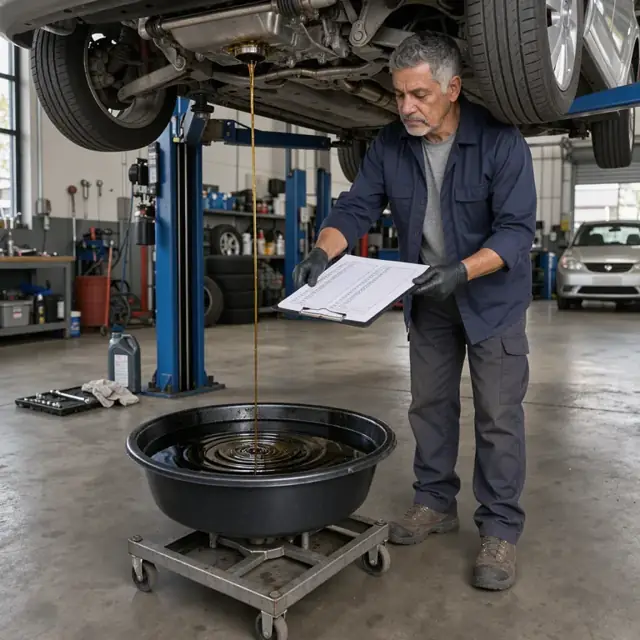
Service Checklist Verifier
Load the correct manufacturer checklist for each vehicle and record all service steps performed.
Works in: Ambitious Tasks, Ambitious Docs, Contract Analyzer · Workflows: Service execution and multi-point inspection
Automates
- Pulls the exact checklist by make model year and mileage
- Records fluids added, parts installed and inspection results
- Flags any additional issues discovered
- Drafts upsell recommendations for review
Stops for a person
- The technician personally performs and confirms every checklist item
- The owner reviews and approves all upsell recommendations before they are presented to the customer

Customer Invoicing and Reminder Host
Prepare accurate invoices, process payments and send maintenance reminders to customers.
Works in: Ambitious Docs, Email Buckets, Ambitious Tasks · Workflows: Invoicing, payment and maintenance reminders
Automates
- Generates itemized invoices from completed checklists
- Records payment and prints receipts
- Calculates next service date based on current mileage
- Drafts reminder messages and satisfaction surveys
Stops for a person
- A person reviews every invoice before it is given to the customer
- The owner approves all messages and offers sent to customers

Compliance and Waste Tracking Clerk
Maintain daily waste logs, equipment records and renewal reminders for shop licenses and certifications.
Works in: Ambitious Docs, Ambitious Sheets, Ambitious Tasks · Workflows: Regulatory and safety compliance logging
Automates
- Compiles daily used oil and filter disposal logs
- Tracks renewal dates for licenses and certifications
- Maintains current chemical inventory and SDS records
- Generates monthly waste summaries
Stops for a person
- The owner confirms which local disposal and environmental rules apply
- All filings, inspections and corrective actions are performed by people
- The bot organizes records but never certifies compliance
Workflows
Appointment booking and vehicle intake
Starts when: A customer calls, texts, emails or arrives for oil change or lubrication service
- Capture vehicle make, model, year, current mileage, requested service and any symptoms
- Match the vehicle to the correct oil type, filter part number and service interval using the manufacturer's lookup
- Check bay and technician availability against the daily schedule
- Confirm or propose appointment time and draft confirmation
- Create a service task with vehicle-ready spec and checklist
Watch for: Exact match to manufacturer oil specification is required; Walk-ins must be slotted into open bays without delaying booked jobs
Daily bay and technician schedule
Starts when: Start of each business day and as new appointments arrive
- Lock in confirmed appointments and slot walk-ins
- Assign each vehicle to a bay and technician by service type
- Build timed sequence including drain, replace, refill, inspection and paperwork
- Flag vehicles needing specialty fluids or extra time
- Print or display bay cards with vehicle details and checklist
Watch for: Lift and bay capacity limit daily volume; Service times vary by vehicle type and additional requested work
Parts, fluids and consumables preparation
Starts when: After schedule is locked and morning of service day
- Explode each scheduled job into exact oil volume, filter, gasket and consumable list
- Subtract from current inventory and flag low-stock items
- Draft pull list for technician or parts runner
- Track bulk oil tank levels and drum rotation
- Log any waste oil transferred to holding tank
Watch for: Filters and oil must be pulled before vehicle enters bay; Waste oil and filters must be segregated for proper disposal
Service execution and multi-point inspection
Starts when: When vehicle enters the bay
- Load manufacturer-specific checklist for the exact make model year and mileage
- Record oil drain time, new filter, new oil amount and any top-off fluids
- Complete under-hood, under-vehicle and tire pressure checks
- Note any additional issues found and draft upsell recommendations
- Capture before-and-after photos if requested by owner
Watch for: Technician must personally verify each checklist item; Any recommended repairs beyond oil change require owner approval
Inventory replenishment and waste tracking
Starts when: Daily after service and weekly
- Update inventory with fluids and parts used that day
- Calculate reorder quantities against par levels and supplier lead times
- Draft purchase orders for oil, filters, wipers and shop supplies
- Record waste oil volume, filter count and disposal manifest numbers
- Rotate stock to maintain freshness of lubricants
Watch for: Bulk oil deliveries require tank space and proper receiving logs; Hazardous waste disposal records must be kept for regulatory periods
Invoicing, payment and maintenance reminders
Starts when: After service is completed
- Generate itemized invoice showing services, parts, fluids and labor
- Record payment method and print or email receipt
- Draft next-service reminder based on mileage or calendar interval
- Add vehicle to maintenance history log
- Send customer satisfaction survey draft
Watch for: All charges must be reviewed before customer is charged; Maintenance reminders must use exact manufacturer intervals
Regulatory and safety compliance logging
Starts when: End of each service day and on renewal dates
- Compile daily used-oil, filter and hazardous-waste disposal log
- Update shop equipment inspection and calibration records
- Track technician certifications and shop license renewal dates
- Maintain current SDS sheets for all oils and chemicals
- Generate monthly waste manifest summary for review
Watch for: Disposal rules vary by state and municipality; The owner confirms which local environmental requirements apply
Bot templates for this industry
Source: U.S. Small Business Administration, Office of Size Standards, Table of Small Business Size Standards Matched to North American Industry Classification System Codes, version March 2023 (effective 2023-03-17, NAICS 2022). Size standards are shown for reference only.