

Linen Supply
Linen supply businesses collect soiled linens from commercial customers, process them at central plants through washing, drying, folding and packaging, then deliver fresh stock on fixed weekly routes. For an operation serving hotels, restaurants and healthcare facilities with weekly pickup and delivery cycles, the specialists convert service requests into route stops, route data into daily production schedules and laundry counts, and finished loads into packed delivery carts while tracking inventory par levels and repair needs. Wash formulas, stain treatment and folding standards stay with the plant manager.
What makes this business different
- Recurring weekly or bi-weekly service agreements with fixed pickup and delivery days for each customer
- High-volume processing of towels, sheets, tablecloths, napkins and uniforms that must be sorted by soil type, color and fabric
- Industrial washers, dryers and ironers with strict capacity and cycle-time constraints
- Inventory par levels per customer location so sufficient clean stock is always available
- Detailed tracking of damaged or missing items that are repaired, replaced or charged
- Wash formulas, temperature logs, chemical usage and sanitation requirements that vary by customer type
- Route efficiency for both pickup of soiled goods and delivery of fresh linens on the same truck runs
- Customer-specific folding, packaging and labeling standards
Specialist bots
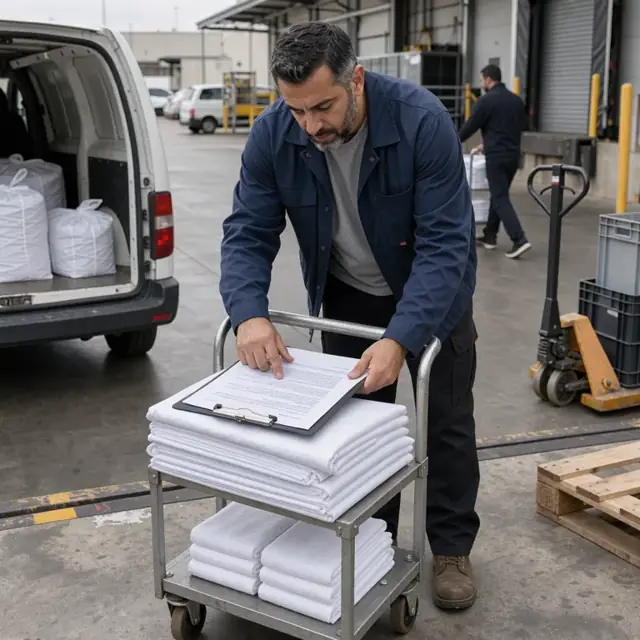
Account Intake Specialist
Convert new customer requests into signed service agreements with accurate par levels and route assignments.
Works in: Ambitious Docs, Contract Analyzer, Ambitious Tasks · Workflows: Service agreement and customer intake
Automates
- Reads inquiry messages and forms
- Builds draft service agreements with par levels and pricing
- Checks for special handling instructions
- Assigns customers to routes
- Creates initial inventory records
Stops for a person
- The owner approves and signs all agreements
- Pricing and special terms are confirmed by a manager
- First delivery quantities are verified before sending
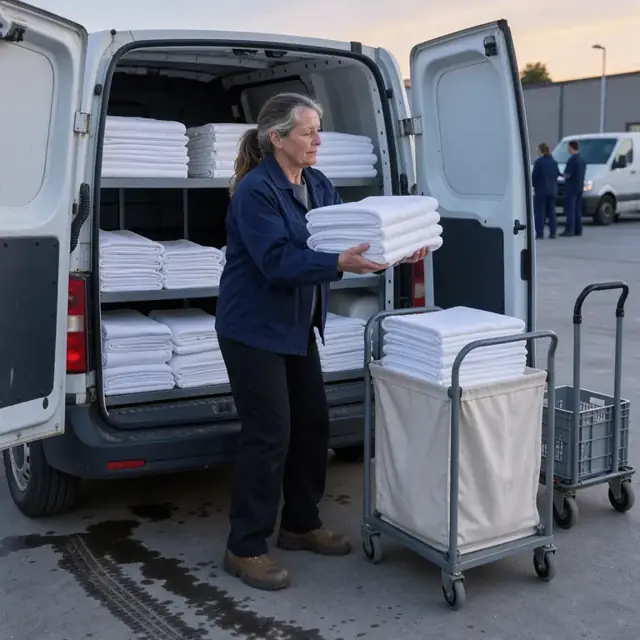
Route Dispatcher
Build daily pickup and delivery routes that balance truck capacity and customer time windows.
Works in: Ambitious Tasks, Ambitious Sheets · Workflows: Pickup and delivery route dispatch
Automates
- Pulls active customers for the next route day
- Calculates required clean linen quantities from par levels
- Optimizes stop sequence and truck load
- Generates packing lists and manifests
- Flags route exceptions
Stops for a person
- The driver reviews and approves the final route
- Changes to standing routes are confirmed by the owner
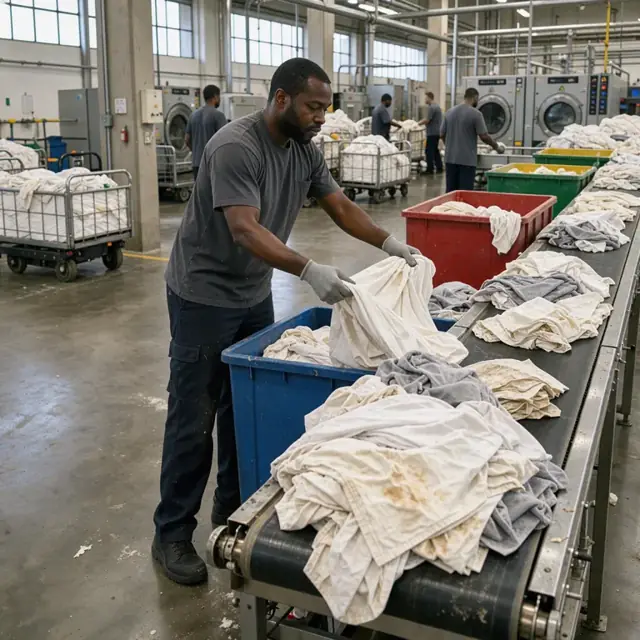
Soiled Linen Intake Sorter
Log, weigh, sort and record incoming soiled linens by customer and category while flagging discrepancies.
Works in: Ambitious Tasks, Ambitious Sheets, Ambitious Docs · Workflows: Soiled linen intake and sorting
Automates
- Creates intake logs from route manifests
- Calculates expected versus actual counts
- Sorts categories for production
- Flags damaged or missing items
- Generates production tasks for each load
Stops for a person
- The plant manager reviews and approves any missing-item charges
- Special handling for healthcare or heavily soiled goods is confirmed by staff
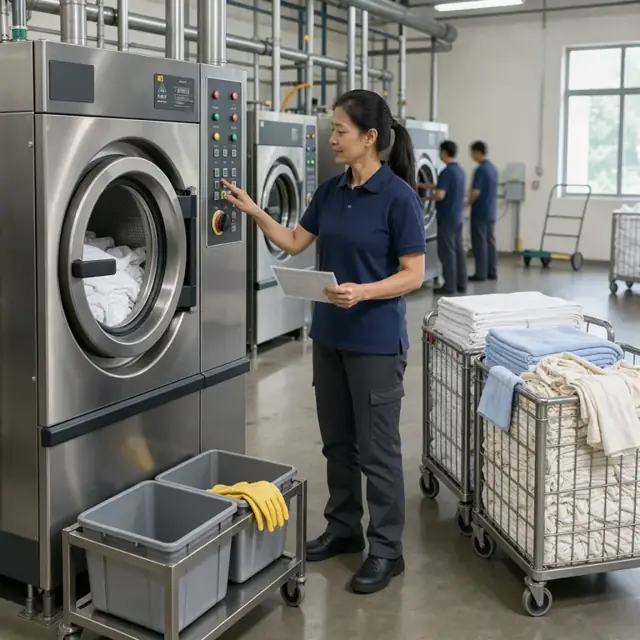
Production Planner
Turn sorted loads into machine schedules, wash formulas and timed production steps.
Works in: Process Optimizer, Ambitious Tasks, Ambitious Sheets · Workflows: Laundry production scheduling
Automates
- Groups loads into washer and dryer batches
- Applies correct wash programs and chemicals
- Sequences drying, ironing and folding
- Estimates completion times
- Highlights capacity bottlenecks
Stops for a person
- The plant manager confirms wash formulas for each customer type
- Any changes to scheduled machine times are approved by staff

Inventory and Replenishment Manager
Track clean linen counts against par levels and generate repair and replacement orders.
Works in: Ambitious Sheets, Ambitious Tasks, Ambitious Docs · Workflows: Inventory tracking and replenishment
Automates
- Compares processed counts to customer par levels
- Calculates usage trends and reorder needs
- Drafts lists of items needing repair or replacement
- Updates customer inventory records
- Flags low-stock situations
Stops for a person
- The owner approves all purchases and replacement charges
- Decisions on whether to repair or discard damaged linens are made by a manager

Packing and Cart Loading Coordinator
Assemble customer orders to exact folding and packaging standards and load them for delivery.
Works in: Ambitious Tasks, Ambitious Docs, Ambitious Sheets · Workflows: Clean linen packing and cart loading
Automates
- Pulls completed linens by customer and route order
- Applies customer-specific folding and labeling rules
- Builds delivery carts in route sequence
- Records exact quantities loaded
- Generates final manifests
Stops for a person
- A person performs final visual quality check before loading
- The driver confirms the loaded cart matches the manifest

Compliance and Sanitation Clerk
Maintain daily sanitation logs, machine records and permit tracking for the laundry operation.
Works in: Ambitious Tasks, Ambitious Sheets, Ambitious Docs · Workflows: Sanitation and compliance logging
Automates
- Generates daily temperature and chemical checklists
- Logs machine maintenance entries
- Tracks chemical and water usage
- Reminds about upcoming permit and certification dates
- Keeps customer sanitation requirements updated
Stops for a person
- The plant manager confirms all log entries and corrective actions
- People verify that local regulatory requirements are met
Workflows
Service agreement and customer intake
Starts when: A new customer inquires or requests service
- Capture customer details, frequency, linen types, quantities and special instructions
- Draft a service agreement with par levels and pricing
- Assign the customer to a weekly route and stop sequence
- Create initial inventory tags and first-delivery order
- Schedule the first pickup
Watch for: Customer par levels must match actual usage to avoid shortages or overstock; Special handling instructions for healthcare or food-service linens must be recorded exactly
Pickup and delivery route dispatch
Starts when: Night before each scheduled route day
- Generate the next day's route list from active service agreements
- Load customer-specific par levels and last delivery quantities
- Draft route sequence optimizing for truck capacity and time windows
- Print packing lists and customer manifests
- Flag any customers needing extra pickups or adjustments
Watch for: Routes must balance soiled pickup volume against clean delivery volume on each truck; Time windows for hotels and restaurants are narrow
Soiled linen intake and sorting
Starts when: Arrival of each route truck at the plant
- Weigh and log each customer's soiled bundles by type
- Sort linens by soil degree, color, fabric and customer requirements
- Scan or record any damaged or unusual items
- Compare counts against expected par and previous delivery
- Create a production task for each sorted category
Watch for: Healthcare linens often require separate handling and higher-temperature wash; Heavily soiled restaurant items need pre-treatment before washing
Laundry production scheduling
Starts when: After soiled intake each day and weekly
- Aggregate sorted loads into machine-capacity batches
- Apply correct wash formulas, chemicals and temperatures per category
- Schedule drying, ironing and folding steps in sequence
- Flag any special treatment or repair needs
- Estimate completion times for each customer's order
Watch for: Machines have fixed capacities and cycle times that cannot be exceeded; Drying and ironing create bottlenecks that must be anticipated
Inventory tracking and replenishment
Starts when: After each production run and weekly
- Count clean processed linens by type and customer
- Compare against par levels and usage trends
- Draft reorder quantities for worn or lost items
- Update customer inventory records
- Generate repair or replacement orders for approval
Watch for: Linens wear out and must be culled and replaced regularly; Customer-owned versus company-owned goods must be tracked separately
Clean linen packing and cart loading
Starts when: After production each day
- Fold, package and label according to each customer's standards
- Assemble orders by route stop sequence
- Load delivery carts or trucks with clean goods and manifests
- Include any replacement items or notes
- Record exact quantities loaded for each customer
Watch for: Folding and packaging standards differ by customer segment; Clean linens must be protected from re-soiling during loading and transport
Sanitation and compliance logging
Starts when: Every production day and on scheduled dates
- Generate daily wash temperature and chemical logs
- Record machine maintenance and calibration checks
- Track water usage, effluent and chemical inventory
- Monitor renewal dates for permits and certifications
- Keep customer-specific sanitation requirements current
Watch for: Different customer types require different wash temperatures and documentation; Local regulations on water discharge and chemical handling must be followed
Bot templates for this industry
- Linen Supply (7 bots)
Source: U.S. Small Business Administration, Office of Size Standards, Table of Small Business Size Standards Matched to North American Industry Classification System Codes, version March 2023 (effective 2023-03-17, NAICS 2022). Size standards are shown for reference only.